

I quit making bread for almost two years because of twelve minutes. That is not an exaggeration. Every Saturday I would get the flour out, mix the dough, and then stand at the counter kneading by hand while the rest of the house waited on me. Twelve minutes of pushing and folding, and my shoulder would start to complain. I am in my late fifties and I have cooked seriously for about thirty years, but that repetitive motion got to me in a way chopping never did. So I stopped. Store bread is fine, but it is not the same as pulling a hot loaf out of your own oven on a Sunday morning.
My neighbor Bill is the one who finally pushed me back into it. He has had a KitchenAid stand mixer on his counter for as long as I have known him, and one Saturday he handed me a warm slice of sourdough and said, "The machine does the kneading, Ray. That is the whole trick." I had always thought of a stand mixer as something for cakes and cookies, not for bread. Bill let me borrow his for a weekend. I made two loaves that Sunday, and I have not bought a loaf of bread since.
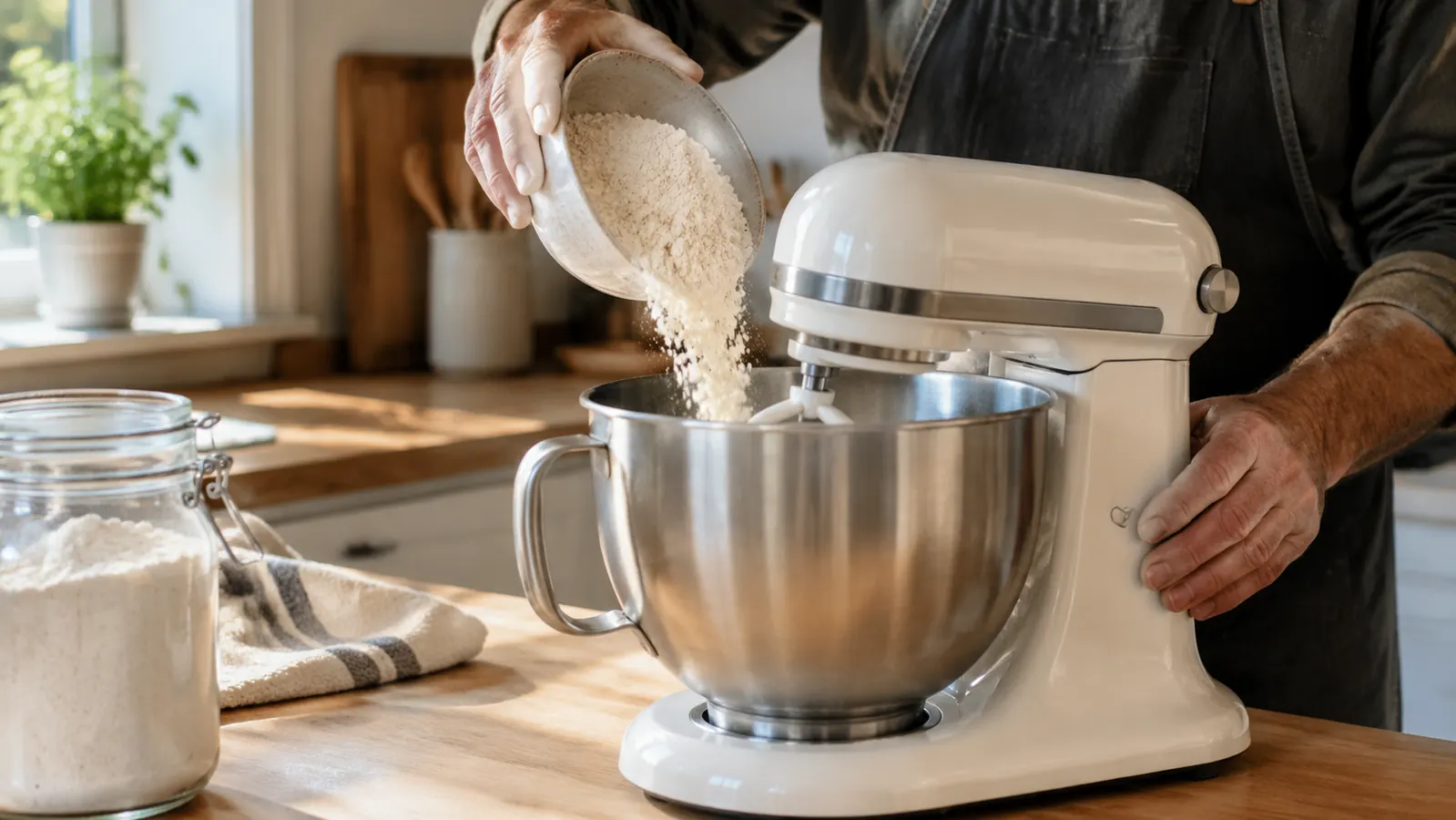
The KitchenAid Artisan 5-quart tilt-head mixer is the model I ended up buying for myself after that weekend. It is the KSM150PS, the one with the tilt head that lets you lift the bowl out with one hand. I have had mine for about eight months now, and it has changed my Sunday routine more than any other piece of kitchen gear I own. This is not a paid endorsement and I am not a chef. I am a home cook who wanted one specific job done well: kneading bread dough without wrecking my shoulder.
The first thing I noticed was the motor. The Artisan has a 325-watt motor, and that number matters more than the bowl size when you are making bread. A 5-quart bowl sounds small, but it handles a standard two-loaf batch of dough without straining. The dough hook does the work that used to take me twelve minutes by hand, and it does it in about eight. The machine walks a little on the counter at high speed, so I hold the top of the motor housing with one hand for the first minute. After that, it settles down and I can walk away.
The machine does the kneading, and that is the whole trick. Eight minutes in the bowl instead of twelve minutes by hand, and my shoulder stopped complaining.
The mixer that brought Sunday bread back
If you have given up on homemade bread because the kneading hurts or takes too long, this is the machine that fixes that specific problem. The dough hook does the work while you do the rest of the morning.
Amazon Check Today's Price on Amazon →The first loaf I made with my own KitchenAid was a plain white bread, the same recipe I had used for years. I measured the flour by weight, 500 grams, and let the machine knead for eight minutes on speed two. The dough came out smooth and elastic, the same texture I used to chase by hand. The second loaf was a 50 percent whole wheat, and that is where the machine really earned its place. Whole wheat dough is stiff and stubborn, and it used to take me closer to fifteen minutes by hand. The KitchenAid handled it without slowing down, though I did have to scrape the dough hook once halfway through.
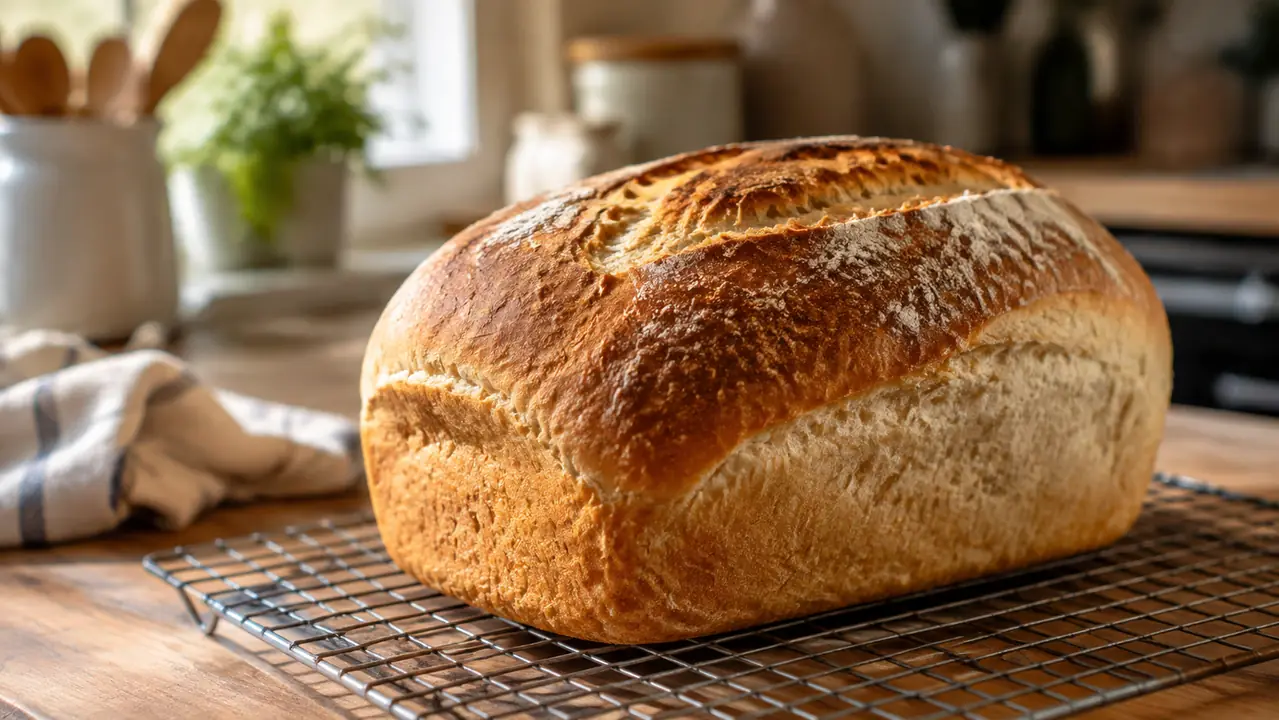
I have made bread almost every Sunday since. That is about thirty loaves in eight months. I have also used the mixer for things I never bothered with before: whipped cream for the grandkids, meringue for a lemon pie, and meatballs where the paddle mixed the ground beef and breadcrumbs without me getting my hands cold. My wife uses it for mashed potatoes on holidays, and she has started making her own pizza dough on Friday nights. The machine sits on the counter now, not in a cabinet, because it gets used at least twice a week.
There are tradeoffs, and I am not going to pretend otherwise. The KitchenAid Artisan is heavy, about 25 pounds, and it takes up real counter space. The tilt head is convenient, but you have to lock it down before you run it or the head bounces. The 325-watt motor is fine for bread dough, but I would not push it through a double batch of stiff bagel dough. I have also learned to start on speed two and let the dough hook work for a full minute before I check the consistency. If you add flour too fast, it clouds up the kitchen.
The build quality is what sold me. The Artisan is made with a metal body and metal gears, and it feels like something that will still be working in twenty years. I have had cheaper mixers before, and they all ended up with plastic gears that stripped or motors that smelled hot after a few batches of bread. The KitchenAid runs warm after a long knead, but it has never smelled hot, and it has never skipped a beat. That is the kind of thing I care about at my age. I would rather buy one good machine that lasts than replace a cheap one every two years.
What I'd Tell You If We Were Sitting at My Kitchen Table
If you are on the fence about a stand mixer because you think it is only for baking cakes, I would tell you this: the dough hook is the reason to buy it. Bread dough is the hardest thing a home mixer will ever do, and the KitchenAid Artisan does it without complaint. If you are in your fifties or sixties and your hands or shoulders are starting to tell you no, this is the machine that lets you keep making the food you grew up on. I am not saying you need the most expensive model. I am saying the Artisan is the one I bought after borrowing my neighbor's, and I have not regretted it once.
Bring back your own Sunday bread habit
The dough hook does the kneading, the motor does the work, and you get fresh bread without the shoulder pain. This is the mixer I reach for every single week.
Amazon Check Today's Price on Amazon →