
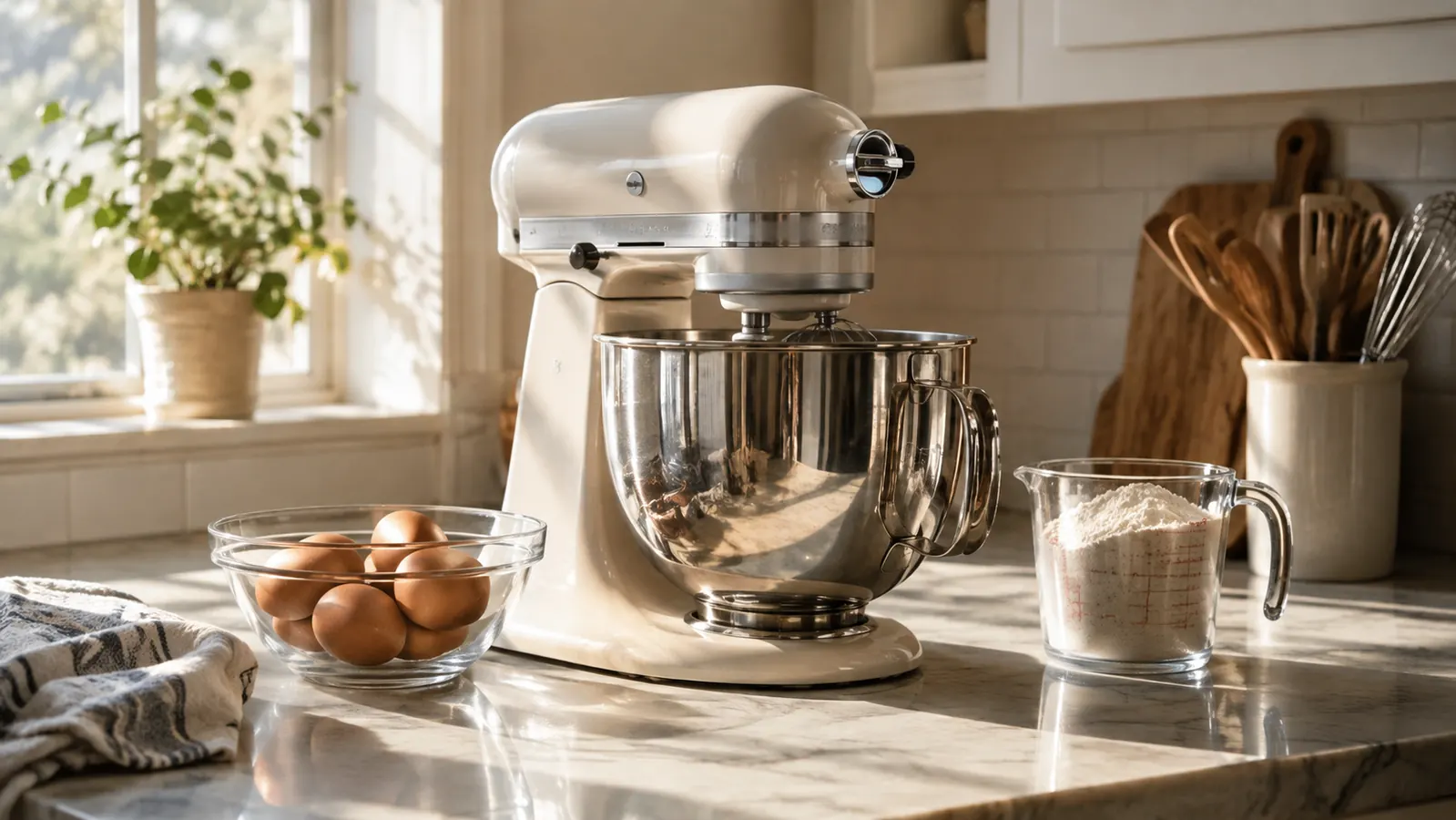
When someone asks me whether the KitchenAid Artisan is worth the step up from the Classic, I don't start with a spec sheet. I think about a Saturday in March when my wife and I tried to get through a double batch of brioche with the Classic on the counter. The dough was soft and sticky, the motor was groaning, and the head kept lifting. We got the bread made, but I had to stand there and feed the dough into the hook by hand. That was the moment I knew the Classic had a ceiling.
The short answer: the Artisan costs more because it gives you more. You get a 5 quart bowl, a more powerful motor, and a couple of extras the Classic leaves out. If you mix bread dough or thick cookie dough more than once a week, the Artisan is the one to buy. If your stand mixer only comes out for holiday sugar cookies, the Classic will do just fine and keep more money in your pocket. I do not think either purchase is a mistake, but I do think the Artisan is the right buy for most people who are reading this.
| KitchenAid Artisan (5 Qt) | KitchenAid Classic (4.5 Qt) | |
|---|---|---|
| Bowl size | 5 quart stainless steel | 4.5 quart stainless steel |
| Motor | 325 watt, 10 speeds | 250 watt, 10 speeds |
| Included tools | Flex edge beater, wire whip, dough hook, pouring shield | flat beater, wire whip, dough hook |
| Heavy dough | handles a 2 loaf batch without bogging down | needs rest stops on dense dough |
| Counter footprint | taller and slightly wider | a bit more compact |
| Best for | frequent bakers, bread and big cookie batches | occasional cakes, muffins and single loaves |
| Price | higher | lower |
Where KitchenAid Artisan Wins
If you bake more than twice a month, the Artisan is the better machine. The larger bowl alone changes how I cook. A dozen cookies worth of dough fits with room to spare, and a two loaf batch of whole wheat comes together without splitting it. When I do a double batch of pizza dough on a Sunday, it rides in the Artisan without me having to lean on the head to keep it in place.
The motor is the second advantage. The Classic will mix almost anything if you are willing to stop and scrape, but the Artisan turns a stubborn job into a regular one. I made a triple batch of peanut butter cookie dough in March and never once felt the motor change pitch. The Classic I used before the Artisan would have bogged down halfway through and made me add more flour a spoonful at a time.
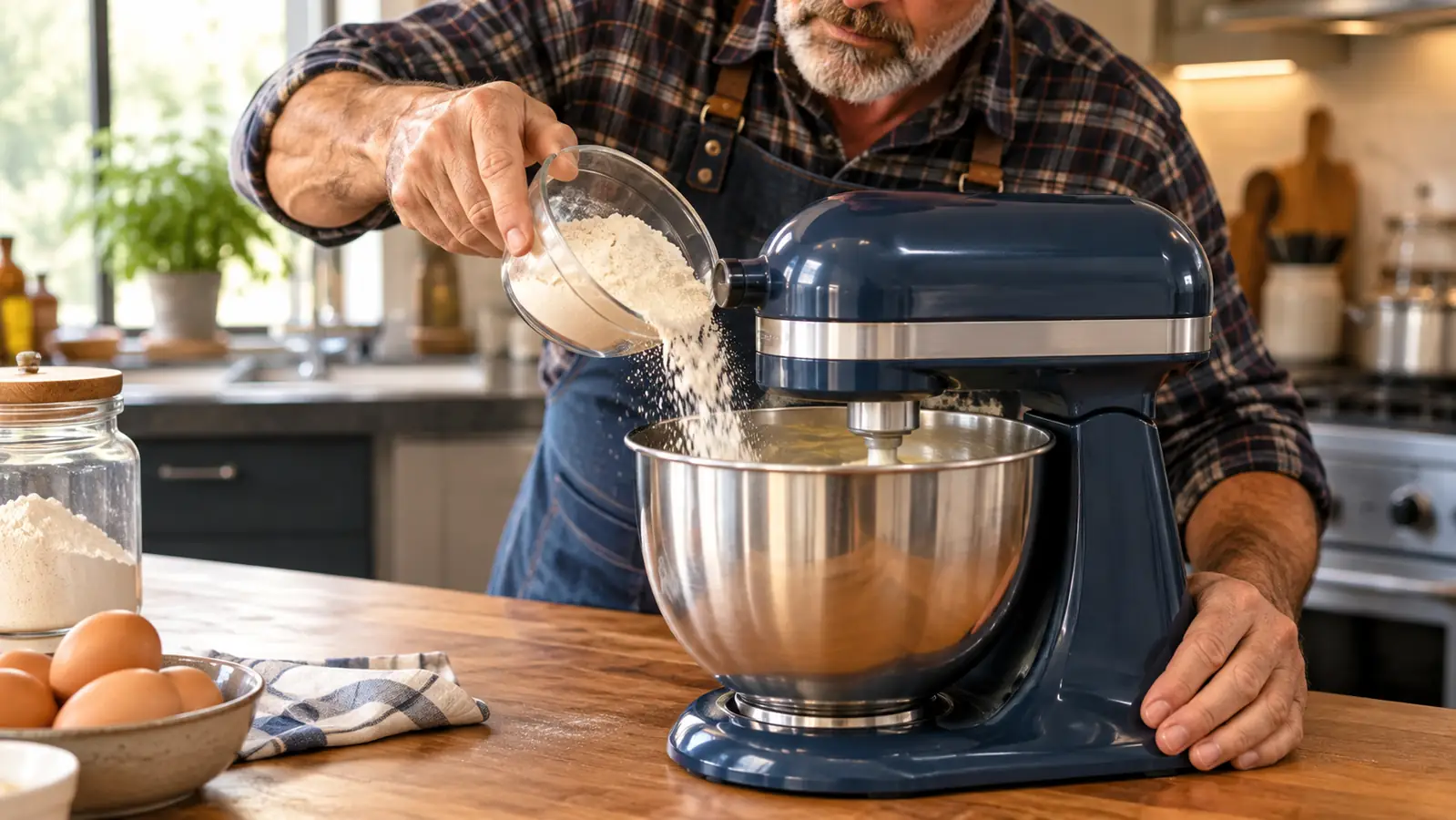
Where KitchenAid Classic Wins
The Classic wins on money and on the counter. It costs less, sits a little shorter, and gets the job done for the person who bakes a couple of times a month. It also fits under my upper cabinet, which the Artisan does not, and that matters in a galley kitchen. If your go to recipe is a single layer cake, a batch of muffins, or a one crust pie, the Classic will not let you down. It is not a weak version of the Artisan; it just has a smaller job description.
The Classic is also easier to move. It is a few pounds lighter and a bit shorter, so it slides into a cabinet shelf without a fight. My wife is comfortable reaching the Classic on the lower shelf by herself, while the Artisan lives on the counter because neither of us wants to haul it down twice a week. If your kitchen has limited counter space and you don't want a permanent mixer tower, the Classic is the honest pick.
Ready to bake bigger batches without babysitting the mixer?
The KitchenAid Artisan handles a two loaf bread batch where the Classic has to stop and cool down. If that's the kind of baking you do, this is the mixer to get.
Amazon Check Today's Price on Amazon →Who Should Buy Which
Buy the KitchenAid Artisan if you bake bread more than once a week, if you mix up big batches of cookie dough, or if you are tired of babysitting a mixer through a dense recipe. Buy the KitchenAid Classic if the mixer is mostly for holiday baking, if you only use it a handful of times a year, or if you would rather spend the difference on a good baking sheet and a proofing basket. Neither choice is wrong. The worst mistake is buying the more expensive mixer and then leaving it in the box because it feels too nice to get dirty. A mixer is a tool. Buy the one you will use, and use the one you buy.
The rule I give friends is simple: count how many times you used your last stand mixer in a year. If it was more than ten, the Artisan will pay for itself in saved frustration. If it was less than that, the Classic will do the job and leave you money for ingredients.
How I Tested
Over six weeks I ran both mixers through the same jobs in my kitchen. I made a white sandwich loaf, a 3 egg sponge, a double batch of chocolate chip cookies and a single batch of pizza dough. I also did what most reviews skip: I worked a heavy whole wheat bread dough and watched how much the head lifted and how long the motor took before it settled back to normal.
The Classic handled the sponge and the cookie dough fine. It struggled with the whole wheat dough to the point I had to pull it back to lower speeds twice. The Artisan churned through the same dough without the head rising; it still ran warm at the end, but it never felt close to quitting. That difference is small on paper and huge at the counter.
What the Extra Money Actually Buys
The Artisan and the Classic both use the tilt head design KitchenAid has sold for decades. The real differences are inside. The Artisan bowl holds 5 quarts to the Classic's 4.5, and that extra half quart means you can often mix a recipe in one batch instead of splitting it. It does not sound like much until you are making a double batch of rolls and the dough fits without climbing.
The motor is the bigger story. The Classic's 250 watt motor is fine for light mixing and thin batters, but it labors on anything dense. The Artisan's 325 watt motor does not turn the mixer into a commercial machine, but it gives you room to work with a real bread dough or a stiff oatmeal cookie dough without stopping to cool down. I measured the difference one afternoon with a 2 loaf rye bread batch: the Artisan finished in about nine minutes of mixing time, and the Classic needed two rest stops before it got through the same dough. I let the mixer rest for five minutes each time, and even after those breaks the Classic sounded strained on the last minute of mixing.
The Artisan also includes the flex edge beater and a pouring shield. The flex edge wipes the bowl while it turns, so I don't stop every thirty seconds to shove flour off the sides. The pouring shield lets me add dry ingredients while the mixer runs without dusting the counter. Those two pieces don't sound like much, but they are the difference between a mixer you enjoy using and one you hover over. I used the Artisan to make a batch of chocolate chip cookies the following Tuesday and finished the dough without a single scrape down.
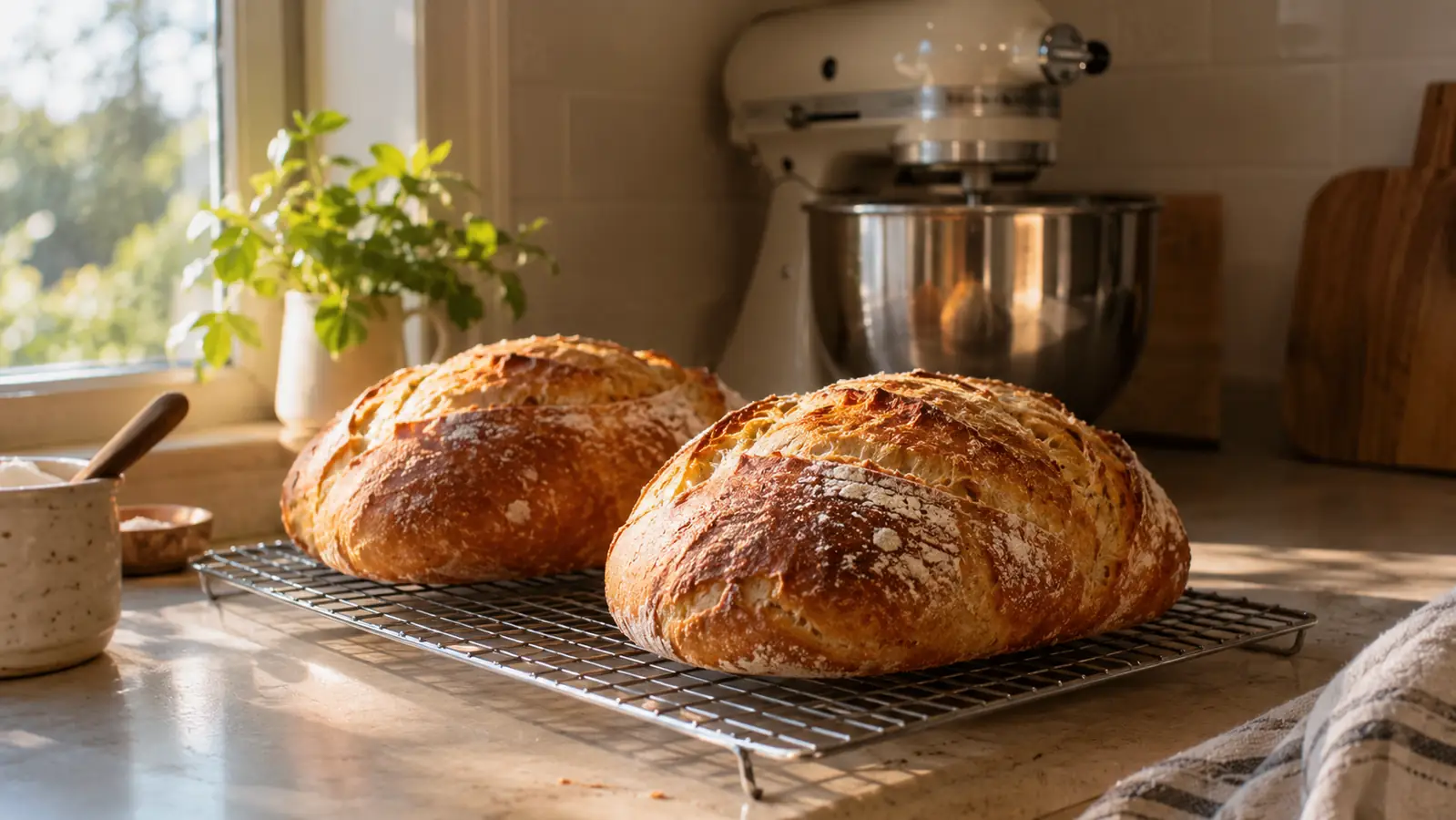
What the Artisan Does That the Classic Doesn't
For me, the biggest difference showed up in the first ten minutes of a bread bake. With the Artisan I can turn it on and walk away for a minute to fetch oil. With the Classic I have to stay because the head can inch upward on dense dough. That is not a made up issue; on my rye test the Classic rose about half an inch on high speed. The Artisan stayed locked.
The pouring shield changes how I add dry ingredients too. On the Classic I pour flour in a slow stream and still get a little dust on the counter. With the Artisan's shield, I can dump a cup at a time and the flour lands in the bowl, not on me. It feels like a small thing until you have made three loaves in a row.
The Practical Differences
Beyond the motor and the bowl, the two mixers feel different on the counter. The Artisan has a handle that is easier to grab when the bowl is full, and the tilt lock clicks firmly into place. The Classic has the same basic layout, but the smaller bowl means I have to be more careful when I add flour. During my whole wheat test, the Classic threw a small cloud of flour across the counter because I did not have a pouring shield in place.
Cleaning is also different. The Artisan's flex edge beater rinses clean faster because the scraper edge keeps most of the dough out of the corners. The Classic's flat beater collects dough in the center and needs a second pass with a scraper. The pouring shield on the Artisan comes in two dishwasher safe pieces. The Classic has nothing like it, so I end up wiping flour off the counter after every dry ingredient addition.
The Bottom Line
The Artisan and the Classic are both real KitchenAid mixers, not cheap lookalikes. The Artisan earns its higher price with a bigger bowl and a stronger motor. But it is not the right mixer for everyone. If I were starting over with a small kitchen and a light baking habit, I would have to think hard about the Classic. If I know I am going to make bread every week, I buy the Artisan and never look back.
I kept the Artisan on my counter for two months before writing this. The day it earned its place was a Sunday in April when I made a double batch of whole wheat bread, a pan of cinnamon rolls, and a batch of pizza dough in the same afternoon. The Artisan handled all three without a single stop. I added a batch of dinner rolls after that and it kept going, which made five doughs in one afternoon. My old Classic, the one I used for years before this test, would have needed a rest between each one. That is the whole argument.
Long-Term Honesty
After thirty years of cooking in my own kitchen, I've learned that no expensive tool fixes bad habits. The Artisan is not different. It will still struggle if you overload it. I would not try to knead a four pound batch of dough in it, and I would not run it on high for ten straight minutes. It has more power than the Classic, but it is not a commercial machine.
The Classic, for its part, is not a toy. Bill, my neighbor, has one from the late nineties that still whips cream and mixes a batch of brownies every week. Those older Classics were built well, and the current Classic shares the same basic frame. If you don't push it past its limits, it will last.
The honest truth is that the Artisan is not going to outlast the Classic by a wide margin. Both use similar motors, gears and plastic housings. The extra money buys you more bowl capacity, a stronger motor, and the included shield and flex beater. It does not buy a completely different lifespan. That is not a knock on the Artisan; it is just the truth.
When you're ready to stop hovering over heavy dough, the Artisan is waiting.
I've now run the Artisan through six weeks of real baking. If the bigger bowl and quieter motor sound like the change you need, check today's price and see if it fits your counter.
Amazon Check Today's Price on Amazon →