

I cooked on nonstick pans for twenty years before I bought my first 12-inch Lodge skillet. Those pans were excellent for about a year, and then the pattern always repeated: the coating went shiny in the middle, then sticky, then it was time to buy the same disappointment all over again. Last April I emptied the pan drawer, bought one 12-inch Lodge cast iron skillet, and made myself a deal. I would cook with it every day for a full year before I told a soul whether it was worth it. This is that report.
Here is the short version, in case you are in a hurry. Cast iron is not a quick fix, it is a long term tool. It heats slowly, it weighs like it means it, and it will demand a little of your routine. What it pays back is a sear no nonstick coating can touch, a pan that goes from stovetop to oven without ceremony, and a cooking surface that gets better the older it gets. A year in, this is the first pan I reach for on any given night.
The Quick Verdict
The last frying pan most kitchens need to buy. Slow to heat, heavy to lift, and it repays both with a sear your other pans cannot match.
Amazon Check Today's Price →One 12-inch skillet for steak, cornbread, eggs, roast chicken, and everything in between.
After a year of daily use, the pre-seasoning this pan ships with is still going strong. If you cook meat at home even once a week, this is where a kitchen budget goes furthest.
Amazon Check Today's Price on Amazon →How I've Used It
The pan has lived on my stovetop since the last weekend of April 2025. In twelve months it has seared over sixty rib-eyes, baked cornbread twice a week through the winter, fried Sunday eggs almost every week, roasted whole chickens, and browned chili and sausage gravy more times than I can count. It has also survived one trip through the dishwasher, which I am not proud of and will own in the tradeoff section.
My routine is short. The skillet sits on the back burner when it is idle. After supper I scrape it with a metal spatula, rinse it under hot water, dry it on a lit burner for ninety seconds, and wipe in a dime-sized drop of oil before it fully cools. That is the whole maintenance program. No soaks, no salt scrubs, no oven re-seasoning, for the entire year.
The pan does its best work when I treat it the way I treat a cold engine. Set it on the burner, turn to medium, and give it four or five minutes to come up to temperature before anything goes in. Cast iron does not like to be rushed. Rush it and food sticks. Give it the warm-up and eggs slide around like they do in the commercials.
The cooking milestones matter more than the count. My wife's cornbread recipe calls for a hot pan with a butter puddle in the middle, and the first time I baked it in this skillet instead of the glass dish, the bottom crust came out an inch of dark, crisp perfection she still talks about. My brother in law, who cooks on a restaurant range, asked what I had seared his steak in and then went and bought himself the same pan. Small stories, but they are the whole review.
What Makes This Pan Different
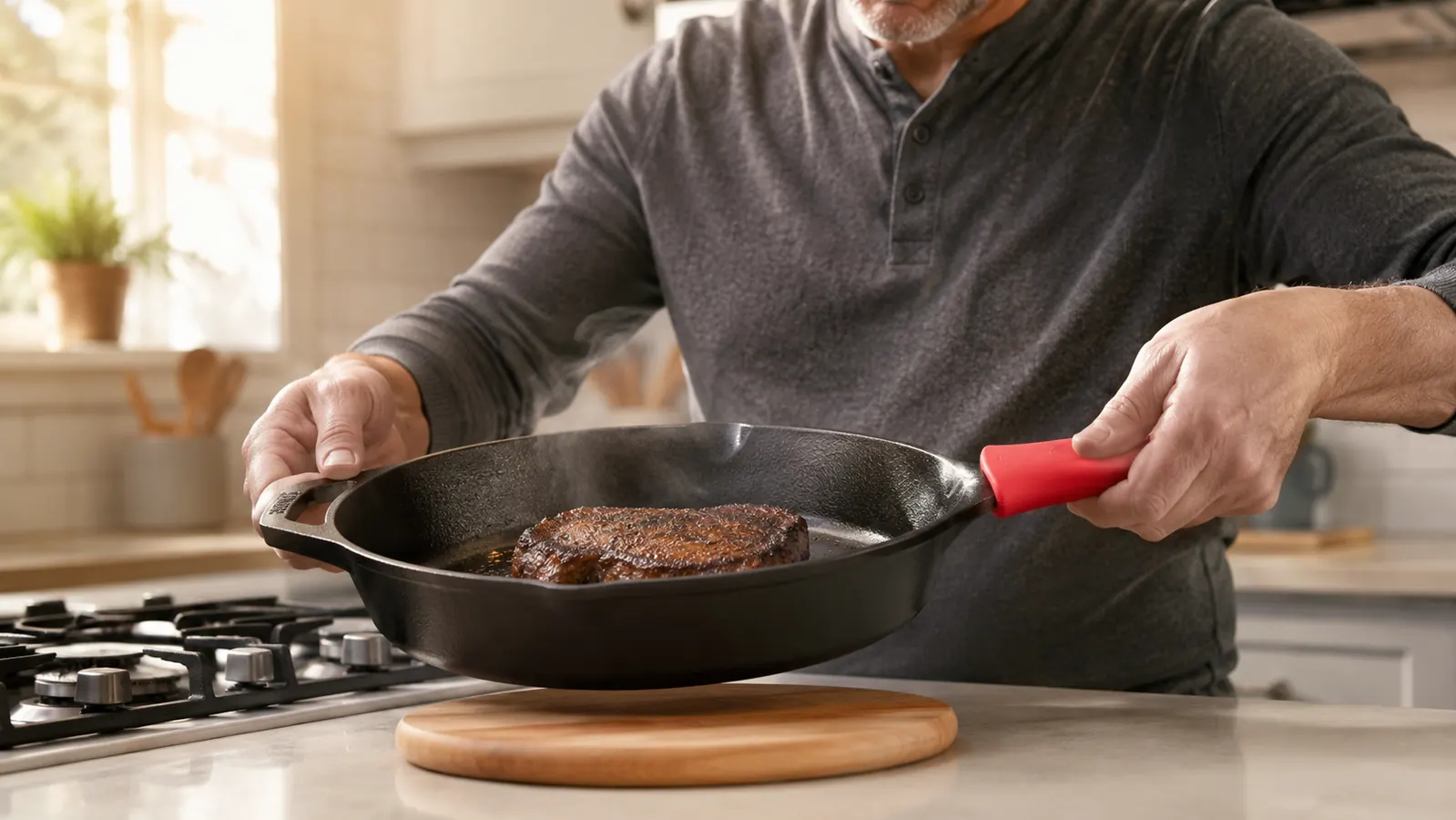
Start with the material. This is one solid piece of cast iron, about a quarter inch thick and just under eight pounds for the 12-inch size. No coating, no laminated layers, nothing that can flake, peel, or wear through. The nonstick pans I used before were being retired every eighteen months. This pan is built to hand down, and plenty of them have been. You can buy a Lodge today and find the same pan still working in kitchens that have had it since before World War II.
Lodge sells this pan pre-seasoned, which means it ships with a factory baked-on oil coating, and that coating is the start of your nonstick surface, not the end of it. The factory layer is decent. The layer you build with a year of cooking is better, and it is yours. Every sear and every batch of cornbread lays down another thin layer of baked-on oil, which is why the pan is slicker in month nine than it was in month one.
One thing about the cooking surface deserves an honest note. Lodge pans are cast and not milled, so the bottom has a fine texture, like very fine sandpaper. That texture is what gives the seasoning something to grip. It also means the pan is not glass-smooth the way a pricey vintage skillet is. Some cooks care about that. After a year of use, I do not, and I will tell you why in a minute.
There is a reason this pan has been the default answer in American kitchens for over a century. The design changed so little because it did not need to change. Cheap skillets from overseas are cast thin to save on freight, and thin cast iron warps, cracks, and sticks. The Lodge is cast heavy on purpose, and that deliberate weight is why it is still flat after a year of punishing heat.
How It Performed Over a Year
The clearest test is eggs. On day one, a fried egg needed a solid layer of butter and a confident spatula, and I turned my share of them into omelets by accident. By month three the eggs released cleanly on a light smear of butter. By month six I could flip two over easy without the spatula scraping for purchase. That curve, and not the day-one experience, is the real story of what you are buying.
The sear is the reason most people buy this pan, and it delivers. A rib-eye goes into a pan that has been heating on medium for six or seven minutes, and the crust that forms in that first browning is darker and better than anything my stainless steel pan produced, and years ahead of the nonstick ones. Cast iron does this because it stores heat. When a cold steak hits the surface, the pan temperature barely dips, so the meat browns instead of stewing in its own juices.
The oven job is the surprise. Cornbread goes into a 400 degree oven straight from the stovetop, the pan moves from burner to rack without a qualm, and the skillet comes to the table as the serving dish. A whole chicken roasts on the same preheated pan and the skin turns crisp because the iron radiates heat up into the bird. No other pan in my kitchen does that without some handle compromise.
Month one, my eggs stuck. Month nine, they slid. That curve is the entire reason cooks keep buying this pan, and it is the one thing no Amazon picture will show you.
The Tradeoffs You Need to Hear
Start with the one I own up front. The handle is forged as part of the pan and it gets hot. Stove hot, oven hot, no exceptions. Fill the pan with oil for frying and the handle will be too hot to touch long before anything else on the stove is. The pan ships with a silicone cover for that handle, and I keep it on full time. It is a small, honest fix, and it is included in the box, which is the right way to do it.
Weight is the second tradeoff, and it is a real one. A bare 12-inch Lodge is just shy of eight pounds, and full of food it is a serious lift. I have decent grip strength and I still use two hands to drain the drippings. If you have limited strength in your hands or wrists, this is the wrong pan for you, and that is not a criticism of the pan, it is a warning from someone who has cooked with it for a year. An 8-inch version might suit you better.
The rest is your own doing, and I mean that as a neighbor, not a lecture. The dry-and-oil habit is the price of admission, the same way the preflight walk-around is for my flying friends. Miss it on a wet morning and the pan will show a rust haze by suppertime. Rust is not a disaster, a scrub and a re-oil fixes it in five minutes, but it is a habit you have to build. And acid is the harder limit. Long-simmered tomato sauce pulls at the seasoning and can leave the food tasting faintly metallic, which is why my chili and my Sunday marinara still live in a stainless pot.
One more honest note on cleanup. The no-soap rule is not as rigid as the internet says. Modern dish soap will not ruin a seasoned pan, a quick pass with soapy water and a stainless scrubber on stuck crud is fine. What kills cast iron is not soap, it is sitting in water, and the dishwasher is a bath, not a rinse. Dry it thoroughly, re-oil it, and you are done.
What I Liked
- Builds its own nonstick surface with use, so it gets better instead of wearing out
- Goes from stovetop to a 450 degree oven without a second thought
- Sear quality that beat my stainless pan and embarrassed every nonstick pan I owned
- Ships pre-seasoned, ready to cook on day one
- Buy it once and hand it down, which is the whole point
Where It Falls Short
- Weighs close to eight pounds and needs two hands for most jobs
- Slow to heat and slow to cool, so there is no instant response
- Rusts by morning if you leave it wet
- Long acidic dishes can strip seasoning and taste metallic
- The cast-in handle gets hot; the included silicone cover is essential, not optional

Alternatives I Considered
The direct comparison is stainless steel, and it is a genuine fork in the road. Stainless heats faster, cools faster, shrugs off the dishwasher, and cannot rust. It is also the worst sticking pan ever manufactured until you learn its temperature trick, and it will never build a seasoning layer. I chose cast iron for searing and kept one stainless pot for the acid jobs. If you are weighing the two for real, I did a full head to head in my cast iron versus stainless steel comparison.
Carbon steel deserves a mention because it sits in the same family. It is lighter, heats faster, and seasons the same way, which is why professional kitchens love it. The trade is that a thinner carbon steel pan holds less heat, so the sear temperature drops harder when a cold steak hits the surface. For a home cook who wants one pan that does everything, cast iron is the simpler sell.
And the vintage option came up in every conversation I had with people who own these. A milled skillet from the 1940s is smoother, lighter, and a pleasure to handle, and it will cost you more than a new Lodge. After a year of use my Lodge has smoothed itself out enough that I stopped caring. The texture mellowed, the seasoning filled the low spots, and by month six the eggs could not have told the difference either.
Who This Is For
This pan is for the cook who wants to buy kitchen gear once. If you sear meat weekly, bake cornbread or roast vegetables in season, and do not mind a two-minute habit after supper, the 12-inch Lodge will outwork and outlive anything else you own. There are no electronics in it and no coating to protect. Give it the warm-up, keep it dry, feed it oil, and it will cook for you for decades.
Who Should Skip It
Skip it if you want a pan you can toss with one hand, this is not that. Skip it if your cooking is mostly quick acidic dishes, where the seasoning fight is not worth it and stainless is the better tool. Skip it if the dishwasher is a permanent part of your routine, because you will rust it. And be honest with yourself about the weight before you order the 12-inch. This is a pan that asks you to work with it, the way any good tool does, and that is not everybody's idea of helpful.
The Bottom Line
After a year and well over two hundred meals, my verdict has not moved since month three. The 12-inch Lodge is the best value in my kitchen by a wide margin, the first pan I would replace if it vanished tomorrow, and the only pan I expect to still own in twenty years. It is not perfect, and I have not pretended it is. It is heavy, it is slow, and it is opinionated about being dry. But it sears better than pans that cost several times as much, and it is built to be passed down. For a kitchen that wants to buy right once, that is the whole argument.
Ready to buy the pan you will still own in twenty years?
The 12-inch Lodge is the rare kitchen buy that outlives every cheaper alternative. Check today's price on Amazon, read the current buyer reviews, and make your own call.
Amazon Check Today's Price on Amazon →