
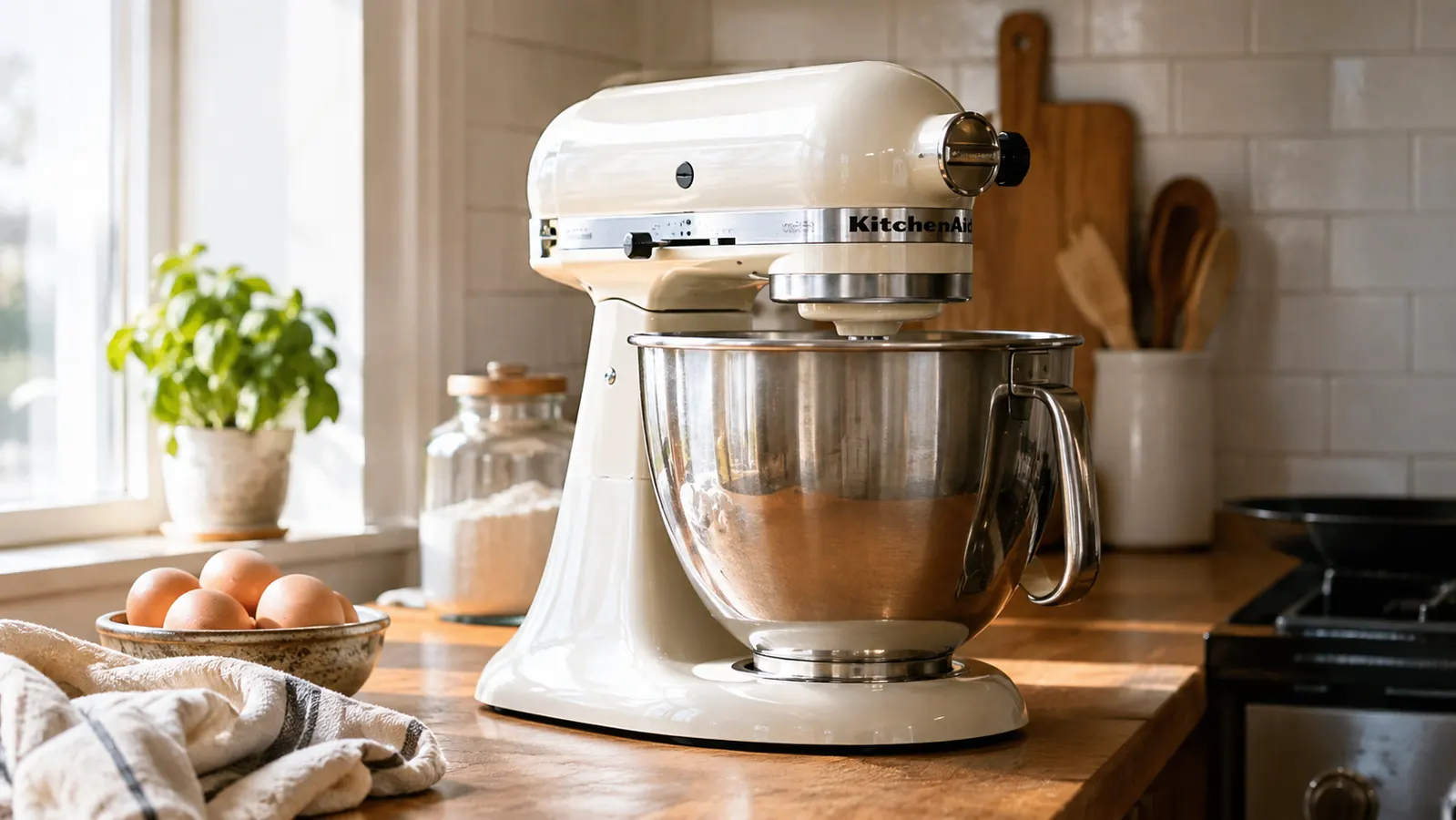
I have owned the same KitchenAid Artisan stand mixer for about twenty years. My wife and I got it as a wedding gift in the early 2000s, and it has outlived three hand mixers, two toasters, and a blender that gave up after a year. The hand mixers were not cheap ones either. They were perfectly fine for a while, then the beaters wobbled, the motor strained on stiff dough, and one of them started smelling like hot wire during a batch of mashed potatoes. I replaced each one and told myself the next would last. It never did.
The KitchenAid is different. It is the one piece of kitchen gear I would replace with the exact same model if it died tomorrow. This is not a review full of chef-speak. It is a list of ten concrete reasons, from a guy who cooks for a family and keeps a hangar full of tools, why a stand mixer outlasts every hand mixer you will ever buy.
The Last Mixer Most Kitchens Need
One KitchenAid Artisan has done twenty years of bread, cookies, frosting, and mashed potatoes in my kitchen. Check today's price on Amazon and see why it is the mixer people keep for decades.
Amazon Check Today's Price on Amazon →A gear drive instead of plastic gears that strip
Hand mixers use small plastic gears to step the motor speed down. Those gears are the first thing to go. I had a hand mixer that stripped its gears whipping stiff buttercream, and the beaters just stopped turning while the motor kept buzzing. The KitchenAid Artisan uses a metal worm gear and a direct drive. The motor turns the gear, the gear turns the shaft, and the shaft turns the beater. There is no little plastic part waiting to fail on the second batch of cookie dough.

A metal body that does not flex or crack
Pick up a hand mixer and squeeze the body. It flexes. The housing is thin plastic, and after a few years the seams get loose and the whole thing rattles. The KitchenAid Artisan has a die-cast metal body. It does not flex, it does not crack, and it does not transfer vibration into your hand. Mine has a small dent on the back edge from being moved around a crowded counter, and it is purely cosmetic. The mixer works exactly as well as the day we got it.
A motor that handles stiff dough without straining
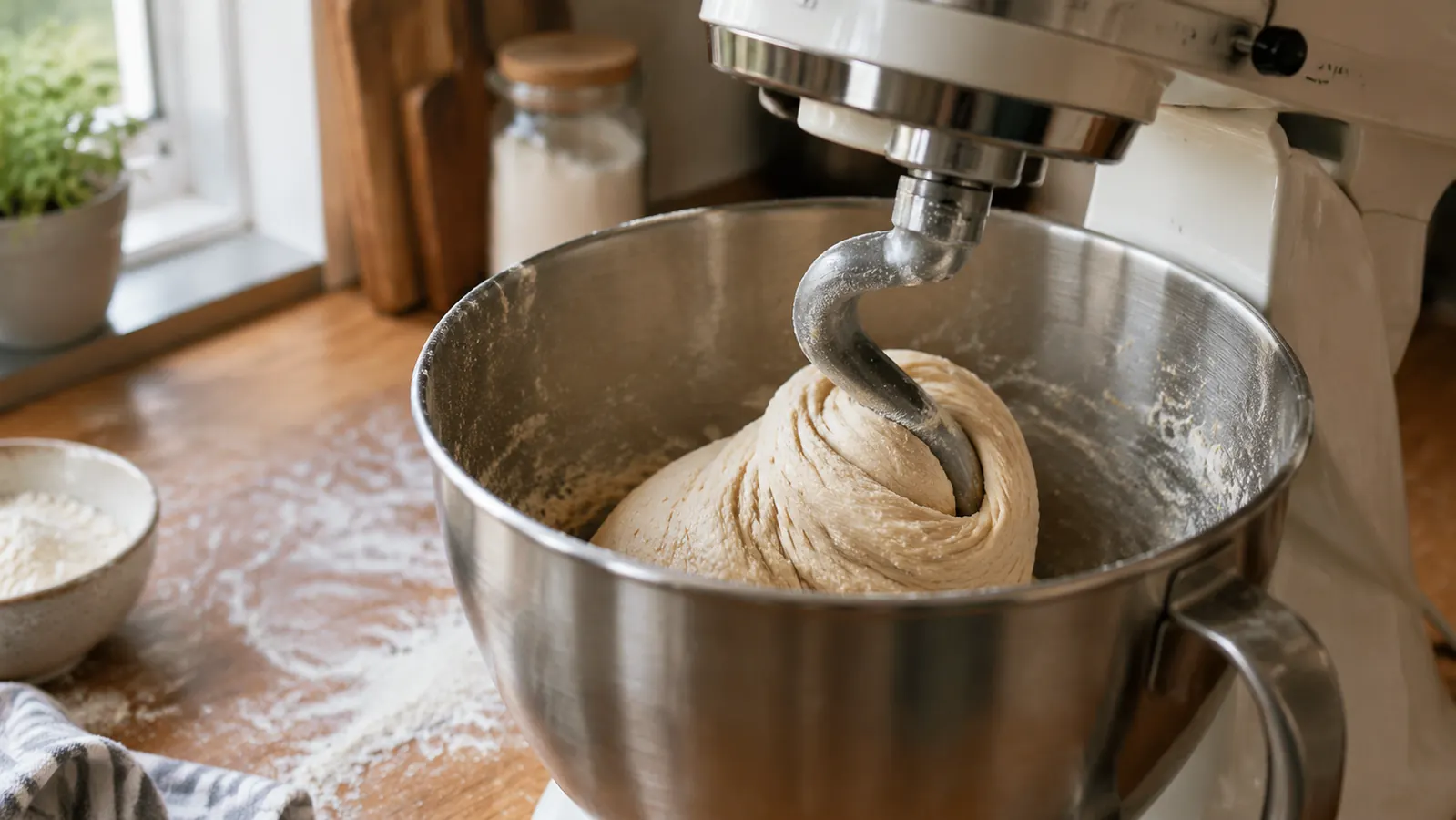
A hand mixer with a 250-watt motor struggles with bread dough. You can hear it labor, and if you push it, the motor heats up and the smell of hot plastic fills the kitchen. The KitchenAid Artisan has a 300-watt motor, but the difference is not just the number. The motor is paired with a gear drive that lets it work at low speed with high torque. It kneads a two-loaf batch of bread dough for eight minutes without breaking a sweat. I have done that every Saturday for years.
The bowl stays put, so your other hand is free
With a hand mixer, one hand holds the mixer and the other holds the bowl. You cannot add ingredients while mixing, and if the bowl slides, you chase it around the counter. The KitchenAid Artisan locks the bowl into the base with a twist. Both hands are free to add flour, scrape the sides, or hold a phone. That sounds like a small thing until you have made a few hundred batches of frosting with one hand holding a slippery metal bowl.
Ten speeds with a real difference between them
Most hand mixers have five speeds, and the difference between speed two and speed three is barely noticeable. The KitchenAid Artisan has ten speeds, and each one is a real step. Speed two folds egg whites without deflating them. Speed four creams butter and sugar. Speed six whips cream. Speed eight beats frosting until it is light. When a recipe says 'low speed' or 'medium-high,' you can actually set it and trust it.
Parts you can still order twenty years later
This is the reason that matters most to me. When a hand mixer breaks, you throw it away because nobody sells the part. When something on a KitchenAid wears out, you order the part and fix it. The Artisan has been made for decades, and the attachments and replacement parts are everywhere. I replaced the original flat beater after about fifteen years because the coating had worn. It cost a few dollars and took thirty seconds to swap. Try that with a hand mixer.
It kneads dough so your hands and wrists do not
I make bread most weekends, and before the KitchenAid, I kneaded by hand. A two-loaf batch takes about fifteen minutes of pushing and folding, and my wrists would ache by the end. The dough hook on the Artisan does the kneading in eight minutes, and the mixer does not get tired. My neighbor Bill, who is in his sixties, borrowed it for a batch of pizza dough and said it was the first time in years he made dough without his hands cramping.
It does the jobs a hand mixer cannot do at all
A hand mixer can whip cream and beat eggs. It cannot grind meat, roll pasta, or spiralize vegetables. The KitchenAid Artisan has a hub on the front that drives attachments, and over the years I have used it for all of those jobs. The meat grinder attachment handled a five-pound batch of pork shoulder for sausage. The pasta roller made a dozen sheets of fettuccine. The hand mixer in the drawer cannot do any of that, and no hand mixer ever will.
It stays put at full speed instead of walking off the bowl
Run a hand mixer at full speed in a thick batter and it tries to climb out of the bowl. You fight it the whole time. The KitchenAid Artisan is heavy enough, and the bowl is locked down enough, that it sits there and does the work. The head tilts back to release the beaters, and the bowl lifts off with a twist. Nothing about the design relies on you holding it in place.
It holds its value, so it is cheaper in the long run
I have seen used KitchenAid Artisan mixers sell for close to what a new hand mixer costs. That is not true of any hand mixer I have ever owned. A hand mixer is a disposable appliance. You use it until the motor or the gears give out, and then it goes in the bin. The KitchenAid is a tool. You can hand it down, sell it, or keep it for another twenty years. My daughter has already asked if she can have this one when we upgrade.
What I'd Skip
If you only make boxed cake mix once a year, a stand mixer is overkill. A hand mixer will do that job fine, and it takes up less drawer space. The KitchenAid Artisan is also not the mixer for someone who wants to whip a single egg white. It is a big machine, it takes up counter space, and it weighs about twenty-five pounds. If you are not going to use it for dough, frosting, or any of the attachments, you are paying for capability you will never use. Buy the hand mixer and be honest with yourself about it.
I replaced the original flat beater after about fifteen years because the coating had worn. It cost a few dollars and took thirty seconds to swap. Try that with a hand mixer.
Twenty Years of Proof, One Mixer
My KitchenAid Artisan has outlasted three hand mixers and is still going. If you want the last mixer you will buy, check today's price on Amazon.
Amazon Check Today's Price on Amazon →