
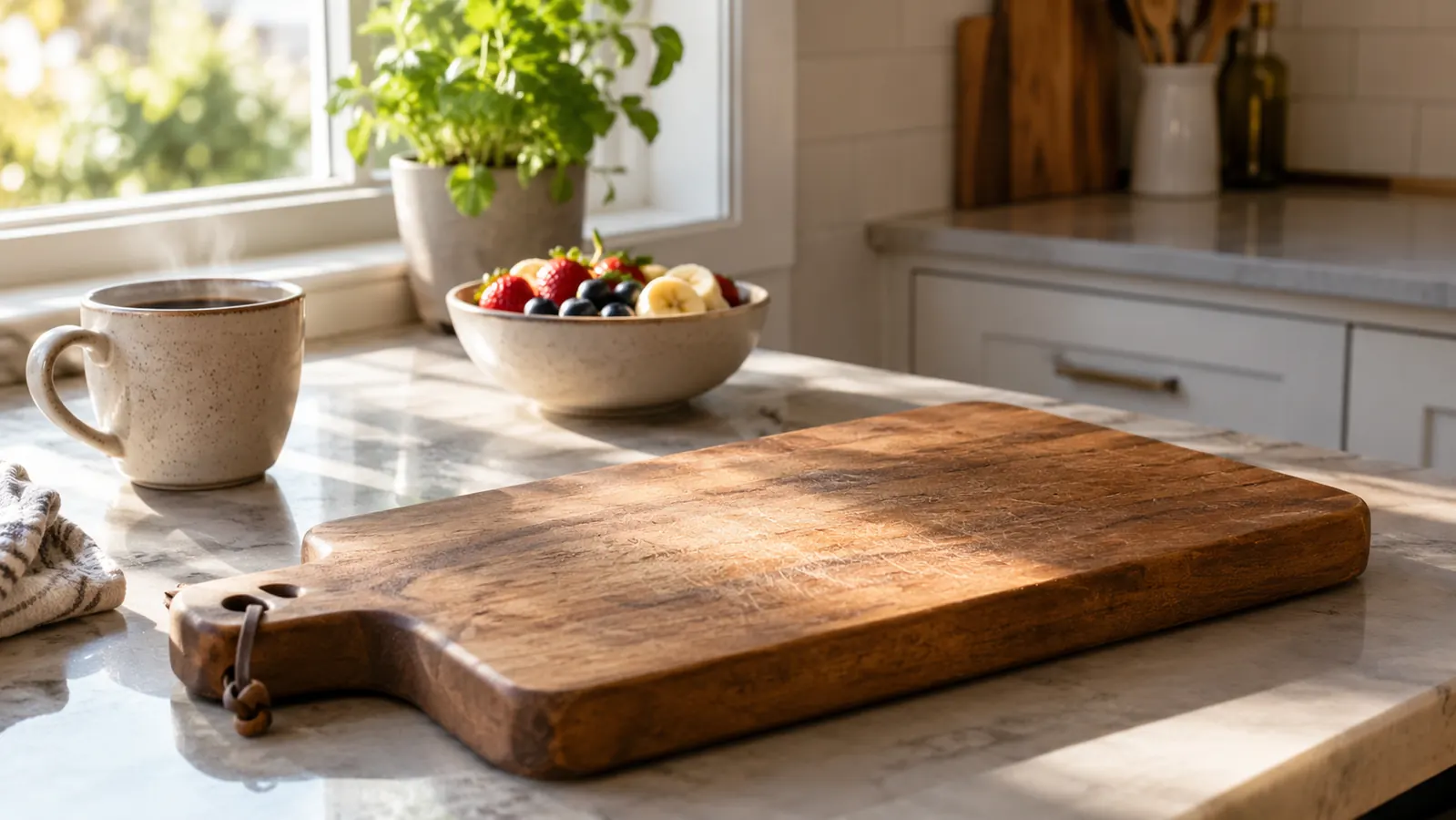
I have cooked seriously for about thirty years. In that time, I have owned a dozen cutting boards, from cheap plastic to a thick edge grain maple that split on me last spring. That split is what pushed me to look at end grain. After a lot of reading, I settled on the Sonder Los Angeles Alfred board, a 17 by 13 inch end grain walnut board that weighs almost ten pounds. I have used it nearly every day for six months. This is the honest review I wish I had read before I bought it.
The board arrived in a heavy cardboard box with foam corners. I unwrapped it and set it on the counter. My first thought was that it looked like a piece of furniture, not a cutting board. It has a warm, rich tone that comes from the walnut, and the surface is a mosaic of small end grain blocks. My wife, who does not get excited about kitchen tools, said it looked nice. She has since used it more than I have. I have to say, the craftsmanship is obvious. The corners are square, the edges are smooth, and the rubber feet are attached securely. You can tell it is not a mass produced board.
The Quick Verdict
Beautiful and a joy to cut on, but you have to be ready for the weight and the monthly oiling.
Amazon Check Today's Price →The Best End Grain Board I've Owned in Thirty Years
If you cook every day and want a board that will last, this Sonder Los Angeles board is worth the counter space. It is heavy, it needs oil, but it cuts like nothing else.
Amazon Check Today's Price on Amazon →How I've Used This Board for Six Months
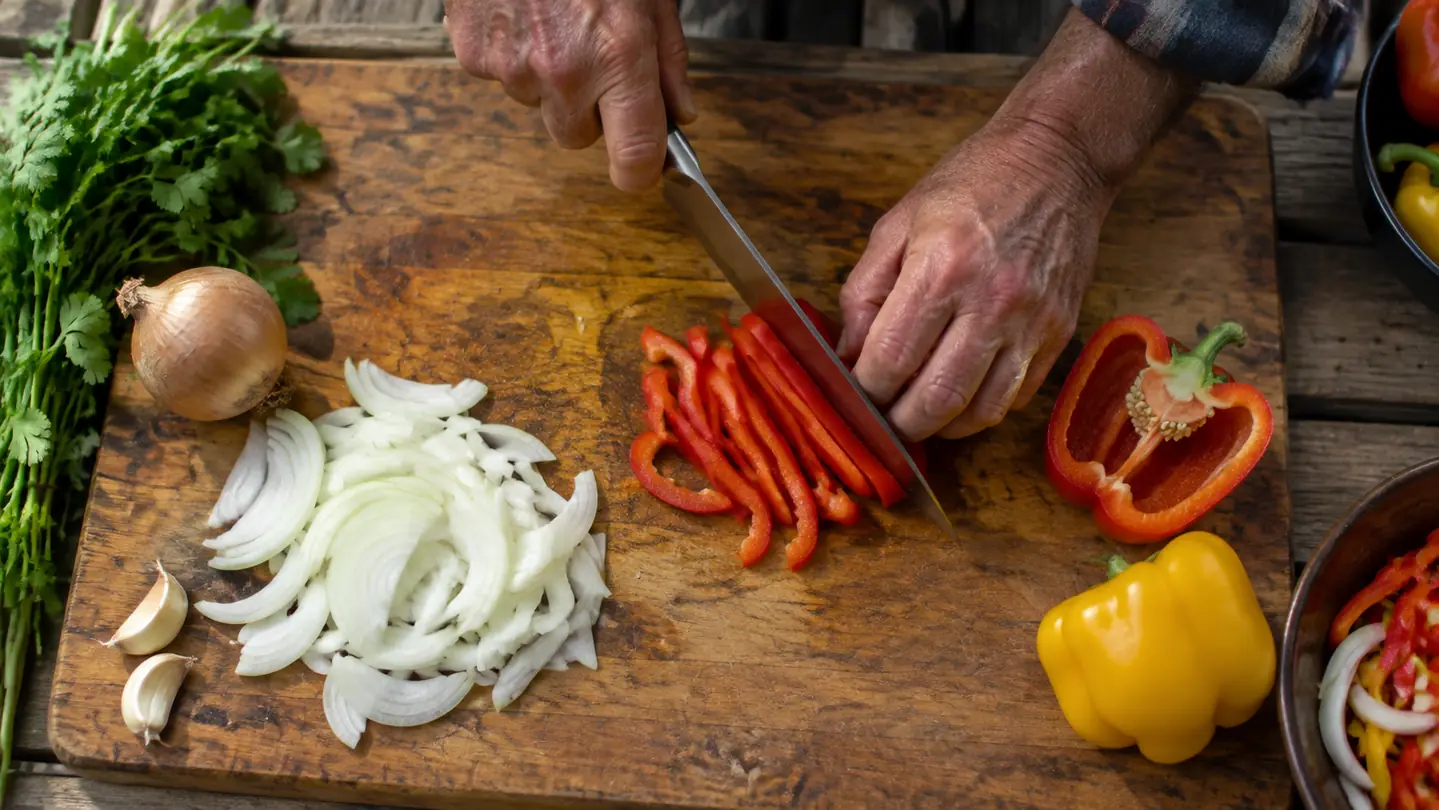
I keep the board on the counter next to the sink. It is big, and it takes up a lot of space, but I use it every day. On a typical weekday, I chop onions, peppers, and garlic for dinner. On weekends, I break down a whole chicken or slice a roast. The board does not slide around, thanks to the rubber feet. I have had other boards that needed a wet towel underneath to stay put. This one sits still. The rubber feet are not just for grip; they also keep the board from sitting directly on the counter, which allows air to circulate and prevents moisture from getting trapped underneath.
One Tuesday in early March, I was making a big batch of chili for a neighborhood get together. I had about three pounds of onions and peppers, plus a pound of mushrooms and a few cloves of garlic. I spent a solid forty minutes at the board, and it never moved. The juice from the vegetables pooled in the juice groove, which runs along one side. I used the flat side for the mushrooms. I was impressed by how well it held up. I also noticed that the board did not absorb the onion smell the way my old board did. I wiped it down with a damp cloth and a little vinegar, and the smell was gone. That was a pleasant surprise.
The board is thick, an inch and a half. That thickness means it does not flex at all. My old maple board was a quarter inch thinner and it would bend slightly when I pressed hard. This board is solid as a rock. I have used it for heavy tasks like splitting a butternut squash, and it does not even creak. The weight, which I initially worried about, turned out to be a benefit for stability. I also like that the board is large enough to hold a whole chicken or a large roast. It is 17 inches by 13 inches, so there is plenty of room. I have used it for carving a turkey, and the juice groove caught all the liquid.
The first week was a learning curve. I did not oil it right away, and after three days, the surface felt dry and looked a little gray. I called the company, and they told me to oil it every day for the first week. I did that, and by the end of the week, the board had a rich, deep color. The oil brought out the natural variation in the walnut. I learned that the board needs that initial seasoning, just like a cast iron pan. It is not a set and forget product.
I have also used the board for a large batch of stir fry. I cut all the vegetables and meat on the board. The board stayed put. The end grain surface made it easy to see the cut lines. After washing, it looked as good as new. I have had this board for six months, and it still looks almost the same as the day I bought it. That is a testament to the quality.
The Oiling Routine Nobody Mentions
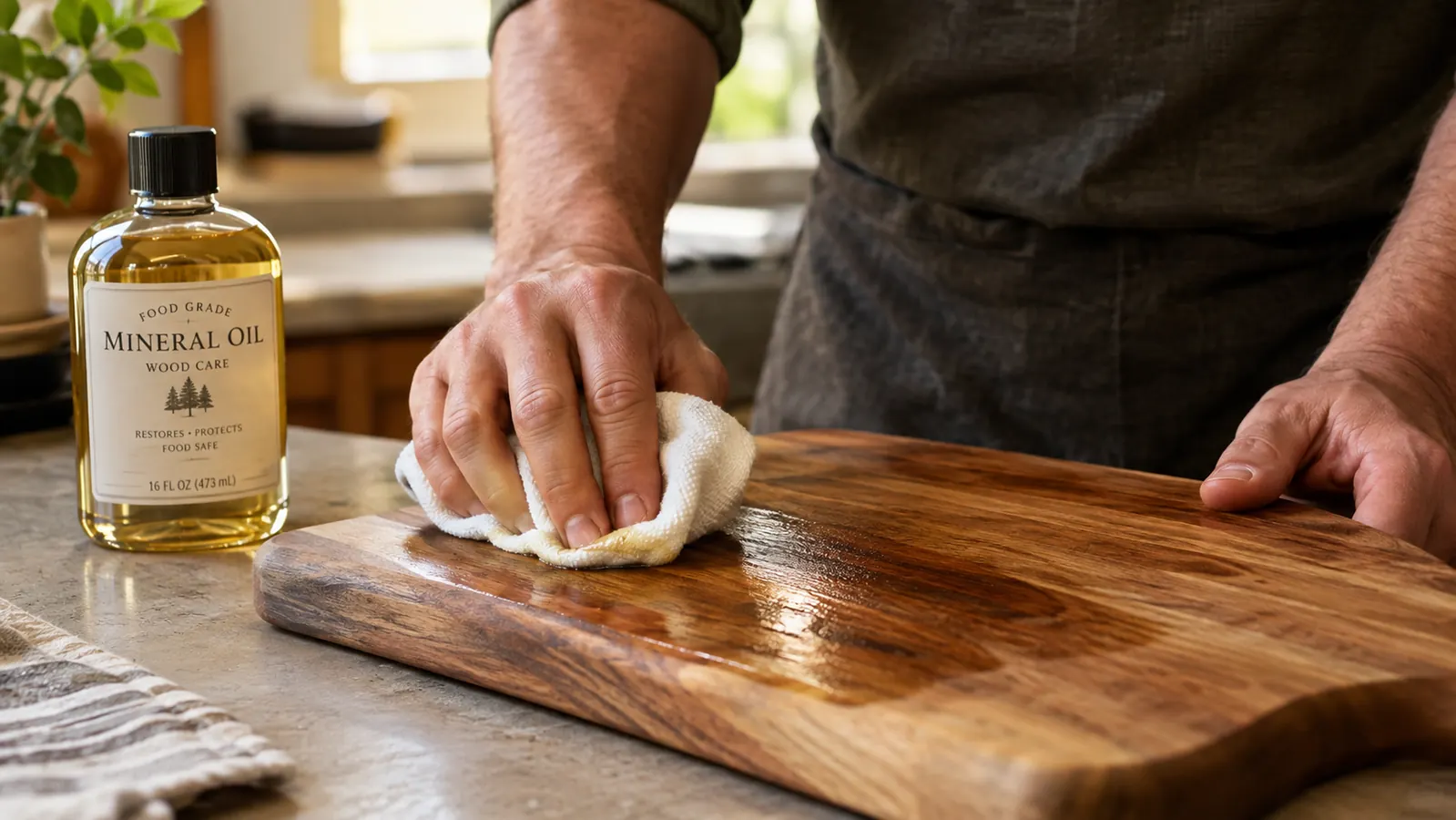
Here is what nobody tells you about an end grain walnut board: it needs oil, a lot of it, and on a regular schedule. I use food grade mineral oil, the kind you can buy at any pharmacy. I put a generous amount on a paper towel and rub it into the surface until the board stops absorbing it. The first month, I did this twice a week. The board looked dry after a day, especially near the edges. I thought I had bought a defective board, but I read online that end grain walnut is especially thirsty. It has a lot of exposed end grain, and that soaks up oil faster than edge grain.
After about six weeks, I settled into a rhythm. I oil it on the first of every month. If I skip a month, the board starts to look a little ashy and the surface feels rougher. I noticed a faint smell of old oil, not unpleasant, but not fresh either. I set a reminder on my phone. My wife laughs at me, but it works. I use a quarter cup of mineral oil and a lint free cloth. I pour the oil on the board and spread it evenly, then let it sit for twenty minutes. I wipe off the excess and let it dry overnight. In the morning, the board has a smooth, satin finish.
I also learned that walnut is a softer wood than maple. That means it is more forgiving on knife edges, but it also means it scratches more easily. I have a few deep scratches from a moment when I used a serrated knife on it, which I should not have done. They are still visible, but they do not affect the surface. The end grain self heals to a degree, but not completely. I have learned to use the right knife for the job. I also learned to avoid cutting on the same spot repeatedly. I try to move my cutting area around the board so the wear is even. That is a tip I picked up from a woodworking forum.
I also learned to oil the edges. The first time I oiled, I only did the top surface. The edges looked dry and started to crack. I read that the edges are just as important because they are end grain too. Now I oil the edges and the underside as well. It takes a little more oil, but it prevents the board from warping. I have not had any cracks since I started doing that.
The Weight and Handling Reality
The board weighs ten pounds. That is not a guess. I put it on a kitchen scale and it came in at 9.8 pounds. Ten pounds is heavy for a cutting board. It is not something you want to move around a lot. I keep it on the counter, and I have a designated spot for it when it is not in use. I used to store it upright in a cabinet, but I nearly dropped it once when I was reaching for something else. Now it lives on the counter, out of the way but ready. The counter space is a tradeoff, but I think it is worth it.
If you have any kind of shoulder or back issue, be careful. I am a fairly strong guy, but I have to use two hands to lift it. My wife cannot move it, and she does not try. She asks me to get it down. That is fine, but it is something to know before you buy. Also, it is thick. It does not fit in most knife blocks or under a standard cabinet shelf. You need a spot where it can lie flat. I have a shelf in my pantry that is just wide enough, but I have to slide it in carefully. If you have a shallow cabinet, it will not work.
One more thing about the weight: it is actually a benefit for cutting. Because it is so heavy, it does not slide or bounce. When I chop, the board stays put. I have used lighter boards that moved around, and that is annoying. This board is like an anvil. It takes up space, but it does its job. I also find that the weight helps when I am using a cleaver. The board does not jump. That is important for safety.
I had one close call. I was carrying the board to the sink, and I bumped the corner against the counter. The board slipped out of my hand. I caught it before it hit the floor, but it was close. That made me realize that I need to be more careful. I now use two hands and a towel. I also keep it in a place where I do not have to move it often.
The Cutting Surface and Knife Feel
The surface of the board is made up of small walnut blocks with the grain running vertically. This is the end grain construction. When you cut, the knife blade goes between the wood fibers rather than across them. That is why the board is gentler on knife edges. I noticed a difference within a week. My main chef's knife, which I normally sharpen every two months, went four months before it needed attention. I tested this by cutting a tomato. The blade sliced through without crushing the tomato. That is a good sign.
The board also absorbs the impact of the knife. It is quieter than my old maple board. There is a satisfying thunk when the blade hits the wood, but it is not a loud crack. The knife marks are shallow and they close up over time. I have seen this happen. I made a deep cut with a cleaver, and after a few minutes, the surface was smooth again. It is almost like the wood heals itself. I have also noticed that the board does not retain odors. I cut garlic and onions, and after a quick wipe, there is no lingering smell. That is a big plus.
I have also used the board for dough. The flat side is perfect for rolling out pie crust and kneading bread. The walnut does not stick much, and a light dusting of flour is all it needs. The juice groove side is for meat and vegetables. Having two sides is a nice feature. I have used the juice groove for carving a turkey and the flat side for a loaf of bread. It is versatile. I also use the flat side for slicing cheese and fruit. The board is large enough to hold a cutting board and a bowl without crowding.
I also tested the board with a few different knives. I have a 10 inch chef's knife, a paring knife, and a bread knife. The bread knife left a few scratches, but the chef's knife and paring knife did not. The end grain is forgiving. I also noticed that the board does not dull the edge as quickly as my old edge grain board. I am happy with that.
Two Sides, Two Jobs
The board has a juice groove on one side and a flat surface on the other. I use the groove side for anything that has liquid, like a roast or a watermelon. The groove catches the juice and keeps it from running onto the counter. I use the flat side for bread, pastry, and anything that needs a clean, even surface. This is a thoughtful design. The groove is about a quarter inch deep, and it runs all the way around, with a small channel at one corner to pour out. It works well. After six months, the groove still looks clean.
I have had boards with a juice groove before, but they were never deep enough. This groove is deep and wide. I have used it for carving a roast, and the juice pooled in the groove without spilling over. I also like that the groove is not too deep to be a nuisance. It is easy to clean. I wash it with a damp cloth and dry it immediately. I never put it in the dishwasher. The board is too large for most dishwashers anyway, but even if it fit, I would not risk it.
I have used the juice groove for a watermelon. The board is large enough to hold a half watermelon. The juice did not overflow. I used the flat side for cutting a baguette. The bread did not slide. The board is versatile. I also like that the board is reversible, so I can have a clean side for bread while the other side is for meat.
Who This Is For
If you cook a lot and have the counter space, this board is a pleasure to use. It is for someone who wants a tool that will last for years and who does not mind a little maintenance. It is for the person who appreciates the feel of a good knife on a good surface. My neighbor Bill came over one afternoon, used the board to chop onions, and ordered one the next day. He has a bigger kitchen, so the weight is not an issue for him. He has been using his for three months now, and he says it is the best board he has owned.
It is also for someone who wants a showpiece. The board is beautiful. It looks good on the counter, and it draws compliments. My daughter, who is grown and out of the house, saw it and said it looked like a piece of art. She is right. It is functional art, but you have to be willing to take care of it. I have had guests ask about it, and I tell them it is a Sonder Los Angeles board. They are surprised at the price, but they understand once they use it.
I hosted a small dinner party for my son and his wife. I used the board to prep a salmon dish. My son, who is not a cook, commented on how nice the board looked. He said it made the kitchen feel more professional. I told him it was the board I use every day. He was impressed. That is the kind of reaction you get with this board.
Who Should Skip It
If you have a small kitchen, limited storage, or any kind of back problem, this board is not for you. Ten pounds is a lot, and it will not fit in most cabinets. It also requires regular oiling. If you are not going to do that, the board will dry out, crack, and you will be disappointed. For most people, a cheaper edge grain board or a good plastic board will serve you just as well. I have a plastic board that I use for raw meat, and it is fine. This board is not a replacement for that.
I almost talked myself out of buying it because of the weight and the maintenance. But I am glad I bought it. It is the best cutting board I have owned. However, it is not a product I would recommend to everyone. It is a specialty item for a dedicated cook. If you are not that person, save your money and buy a board that is easier to live with. If you are that person, you will love it.
I have a friend who bought a cheaper board after seeing mine. He said he did not want to deal with the oiling. He returned it within a month because it started to warp. He told me he wished he had bought the Sonder Los Angeles. I told him it was not too late. But he is a casual cook, so I think he is better off with a plastic board.
What I Liked
- End grain is gentle on knife edges
- Heavy and stable, does not slide
- Beautiful walnut appearance
- Two usable sides with juice groove
- Self healing surface reduces visible knife marks
Where It Falls Short
- Weighs ten pounds, hard to move
- Requires monthly oiling or it dries out
- Thick, does not fit in standard storage
- Soft wood scratches more easily than maple
- Costs more than a plastic or edge grain board
The board is ten pounds of walnut that will outlast my knives, but it demands a monthly oiling and a permanent spot on the counter.
Ready to Upgrade Your Cutting Board?
If you cook every day and want a board that will last, this Sonder Los Angeles board is worth the counter space. It is heavy, it needs oil, but it cuts like nothing else. Click below to see today's price on Amazon.
Amazon Check Today's Price on Amazon →