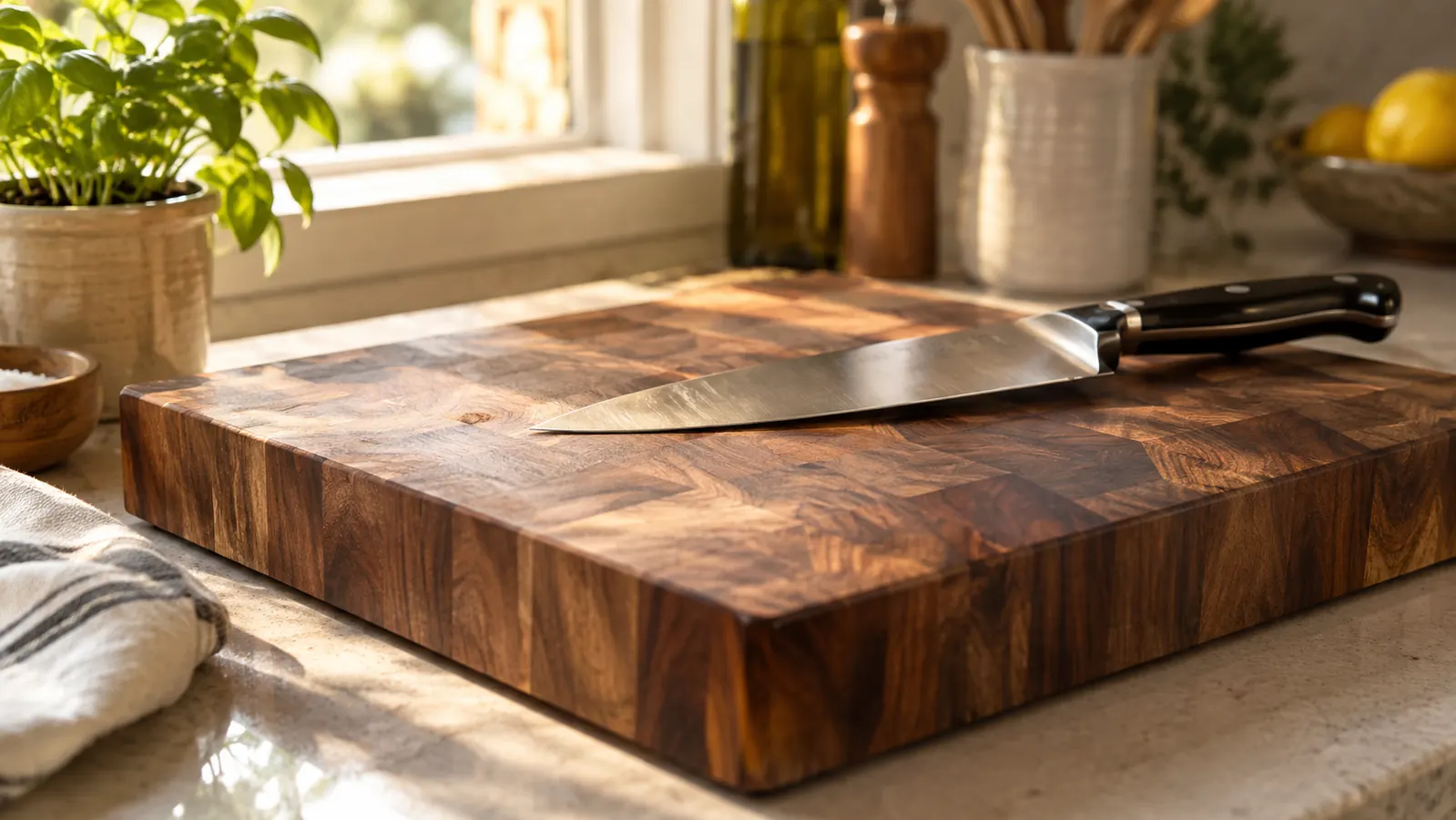
I paid good money to have my knives sharpened, and then I went and ruined them on the wrong board. That was the old me. The new me bought the Sonder Los Angeles Alfred, a 17 by 13 inch walnut end-grain board, and figured out in about a week why the man who sharpens my knives kept telling me to throw out the plastic. Here are ten reasons, in the order I discovered them, why an end-grain board is the cheapest edge insurance you can buy.
The short version is this: end grain is cut across the fibers, so the surface is a field of upright fibers that part when the blade lands and close right behind it. Every other surface you cut on fights the edge. This one gets out of the way. If you've ever paid to have a knife sharpened and then watched it go dull in a month, this is the fix that actually sticks.
Keep the edge you paid to sharpen
The Sonder Los Angeles Alfred walnut board is the one that stops dulling your knives. See what it's going for today.
Amazon Check Today's Price on Amazon →The fibers open and close behind your blade
End grain is wood cut across the fibers, so the face of the board is a field of upright fibers standing on end, like a bundle of drinking straws. When your knife comes down, the fibers part. When the blade passes, they close right back up. The edge never drags across a hard, flat surface the way it does on plastic or bamboo. That's the whole difference, and it's a big one. Every other board you own fights your edge. This one gets out of the way.
You sharpen less, and less often
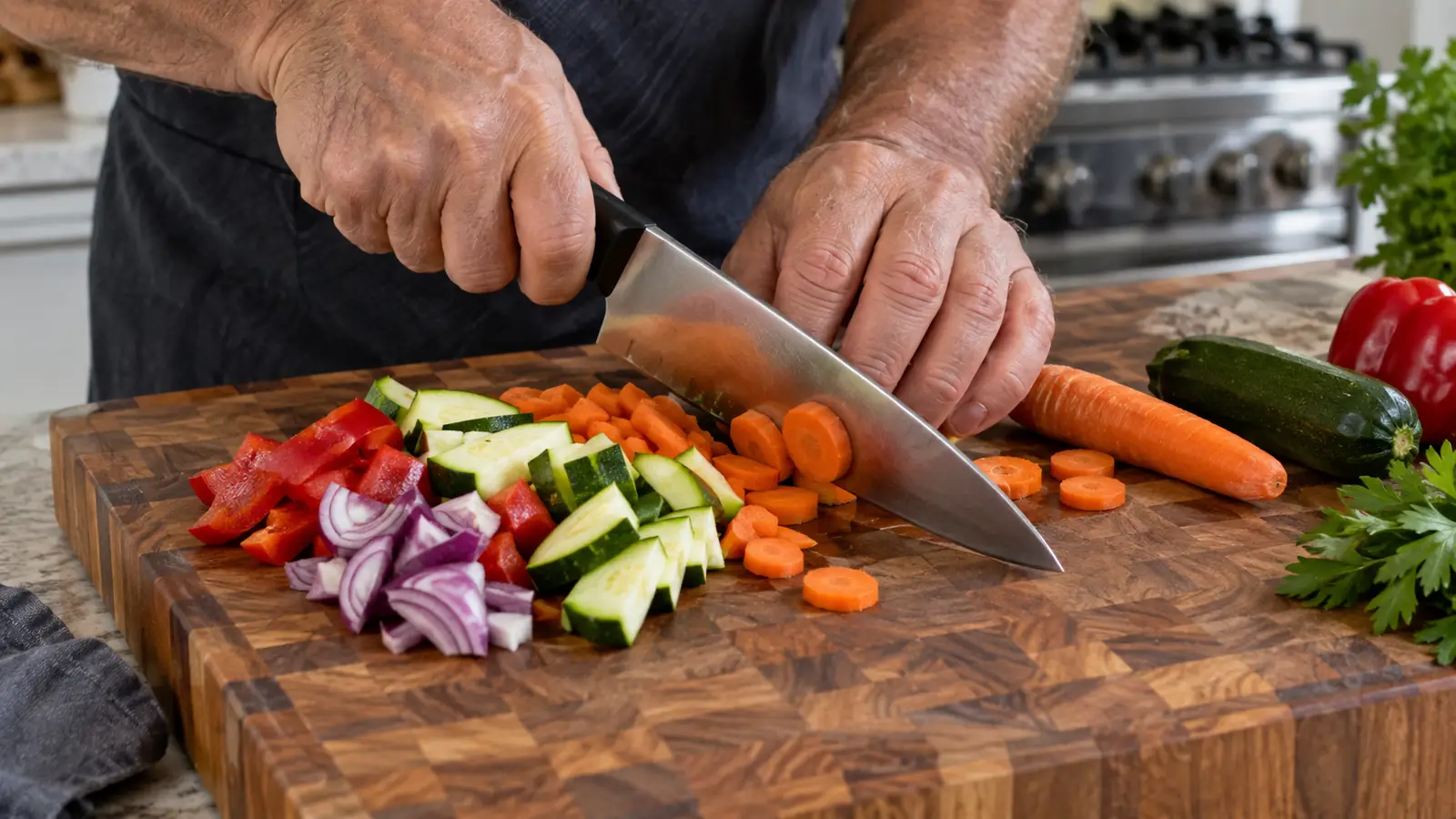
Every pass on a sharpening stone removes steel, so the fewer passes you make, the longer the knife lasts. In my kitchen, the knives that live on the Sonder Los Angeles board go back for sharpening about half as often as the ones I used to cut on plastic. Three weeks of steady cooking instead of one week before the edge starts to go. That's not marketing math, that's just what happens when the board stops grinding against the edge between meals. And it's not about money, it's about having an edge at dinner time without thinking about it.
The surface heals itself, so it stays flat
Knife marks sink into end grain and the fibers close back up, so the board doesn't develop a low spot the way a face-grain board does. A flat board means your blade meets it at the same angle every single time, which keeps your edge consistent. A board with a rut in the middle is a board that's grinding your edge at an angle you never chose. After a year of daily use, mine is still as flat as the day it arrived.
It's quieter, and my wife noticed before I did
A steel blade on a hard wood board is loud. On end grain it's a soft thump. I didn't think about it until my wife asked why the kitchen had gotten quiet. She doesn't care about edges, but she cares about not wincing every time I'm chopping. That counts for something when the board lives on the counter in the middle of the room. Quiet is a feature you only notice after you have it.
The board gives, so the edge doesn't roll
A knife edge is a thin wedge of steel, and slamming it into a hard surface rolls it. End grain absorbs the impact because the board gives a little under the blade. It's the difference between landing on a concrete pad and landing on a spring. Less impact on the edge means a straighter edge for longer, and a straighter edge is a safer edge. A dull knife is the one that slips. I keep a steel in the drawer, but a steel only straightens a slightly tired edge. It can't fix one that's been rolled flat by a hard board.
It does double duty as a serving board
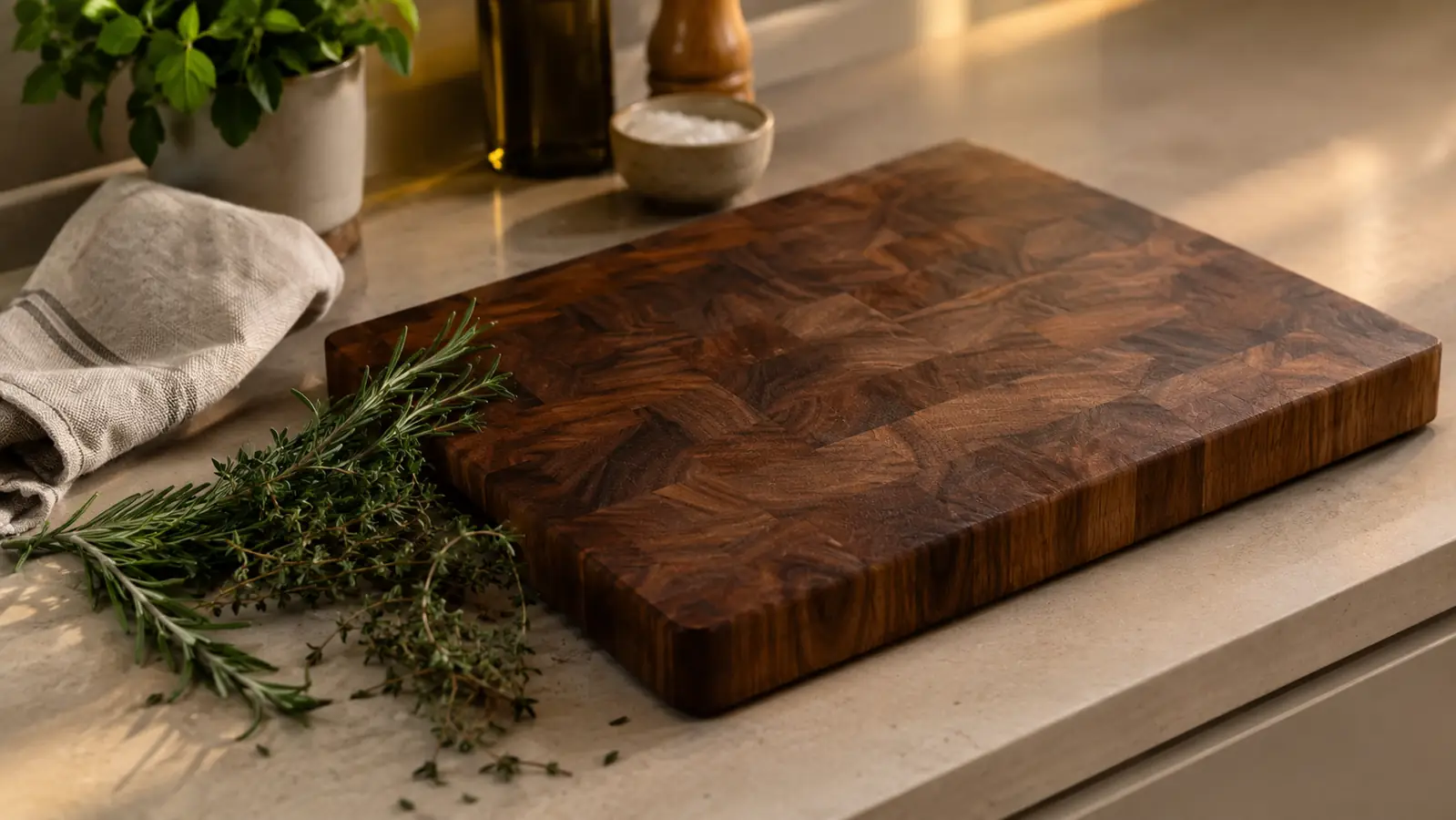
Because it's real wood, you can carry it to the table with a roast or a fresh loaf on it and it looks right. A plastic board stays in the kitchen. This one earns its counter space twice a day. The 17 by 13 size is just right for a big cutting job and a small gathering, and when dinner is over it wipes down and goes back to work. One board doing two jobs is a board that earns its place.
It's built to live on the counter
The Sonder Los Angeles board is thick, heavy, and good-looking enough that you won't shove it in a cabinet. And a board that lives on the counter is a board you actually use. The best edge protection in the world is the board you reach for without thinking. This one is that board. I've had knives I babied in a drawer that still got dull. The board that's always out, always used, always oiled, is the one that keeps the edge honest.
It's the cheapest edge insurance you'll ever buy
I won't quote a number here because the price moves around, but a good walnut end-grain board costs less than what most sharpening services charge for a single visit, and it protects your knives every single day for years. That's the math that sold me. You pay once, and it works every time you cook. Compared to what I used to spend keeping edges alive on the wrong board, this thing paid for itself in the first season.
Care is two oilings a year, not a project
Mineral oil, twice a year, ten minutes, done. I keep a small bottle in the pantry and rub it in after a good cleaning. That's the whole maintenance schedule. No special soap, no dishwasher, just a wipe down and an oiling when the surface starts to look dry. I treat it the way I treat a good tool in the hangar, and it responds the same way. Give it a little care and it never complains.
It'll outlast every knife you own
With that twice-a-year oiling, a walnut end-grain board is a buy-it-for-life piece. I've got a thirty-year-old maple board in the garage that's still flat and still in service. Knives come and go, stones wear out, but a good board stays. This is the one I'd hand to my son and expect to still be flat when he hands it to his kids. That's not a romantic idea, it's just how wood behaves when you don't fight it. That's the real reason I stopped cheaping out on boards.
What I'd Skip
If you can't stand the idea of oiling a board, or you want something you can toss in the dishwasher, an end-grain board isn't for you. Wood needs a minute of care, and it never goes in the dishwasher. If most of your prep is raw chicken and you want a surface you can sanitize with a bleach wipe, a plastic board is honestly the safer call. End grain is for the cook who wants to keep an edge and doesn't mind thirty seconds of maintenance twice a year. If that sounds like a chore, save your money and keep the plastic. There's no shame in it, it's just not the tool for that job.
The best edge protection in the world is the board you reach for without thinking, and this one earns its spot on the counter.
Save the edge you just paid to sharpen
The Sonder Los Angeles Alfred walnut end-grain board keeps your knives sharp longer, and it'll still be flat when the knives are done. See what it's going for today.
Amazon Check Today's Price on Amazon →