
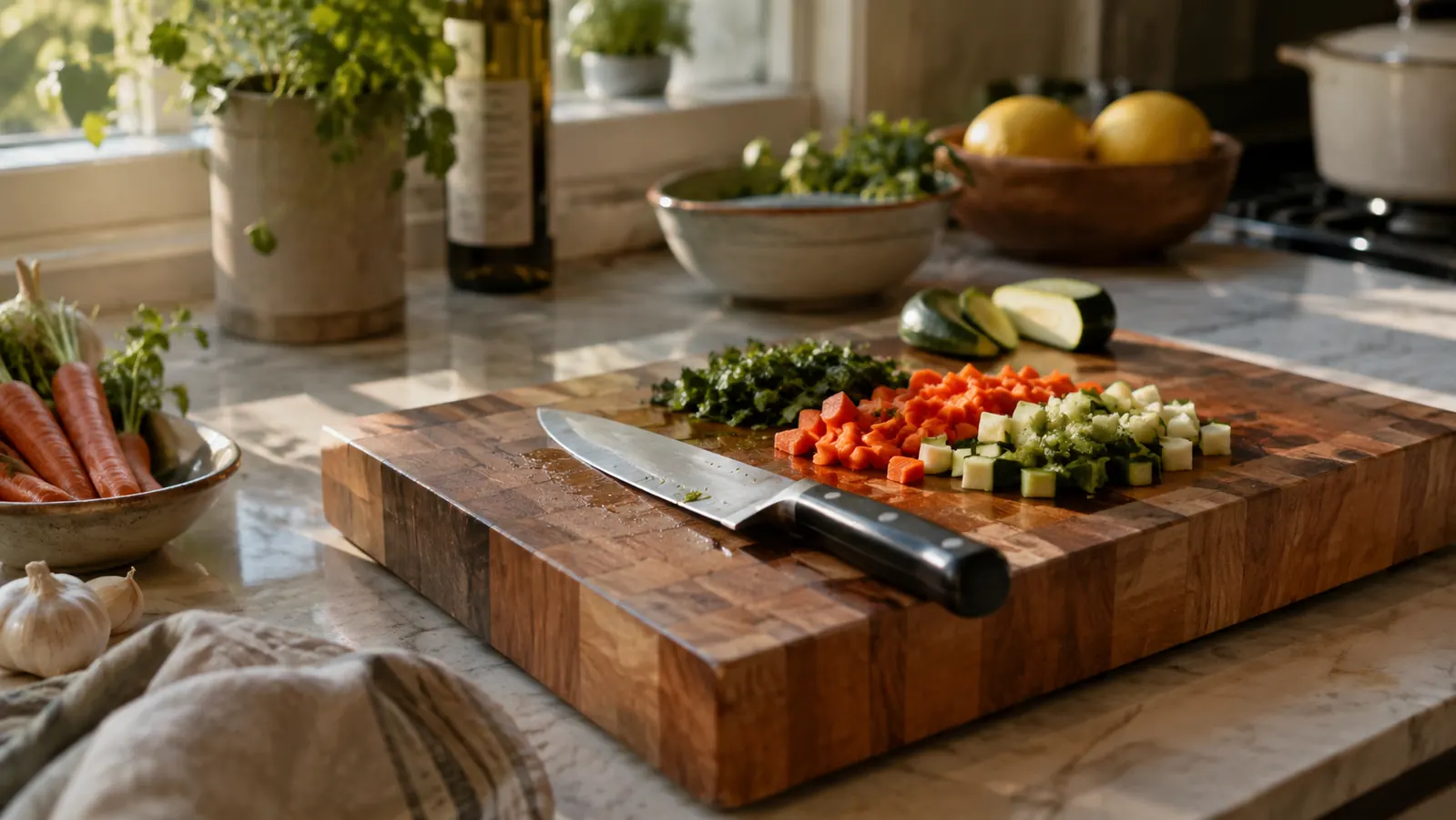
For thirty years I prepped dinner on a warped plastic board the size of a magazine. It slid around the counter, it smelled like last Tuesday's onion, and every knife I owned needed sharpening twice a month. I figured that was just how kitchens worked. Then my neighbor Bill mentioned, almost in passing, that an end grain board had fixed all of that for him. I laughed it off for about two weeks. Then I bought the Sonder Los Angeles Alfred cutting board, and I have been annoyed at myself ever since for waiting that long.
The counter in our house has never been generous. It is a stretch of laminate maybe four feet long between the sink and the stove, and for two people who actually cook, it is tight. My wife and I have managed for years. She does the prep, I do the pans, and we have learned to work around each other. But the board was always the weak point. A thin plastic sheet does not hold still, and when you are dicing onions one-handed while reaching for a pan, a board that walks across the counter is a board that gets you into trouble.
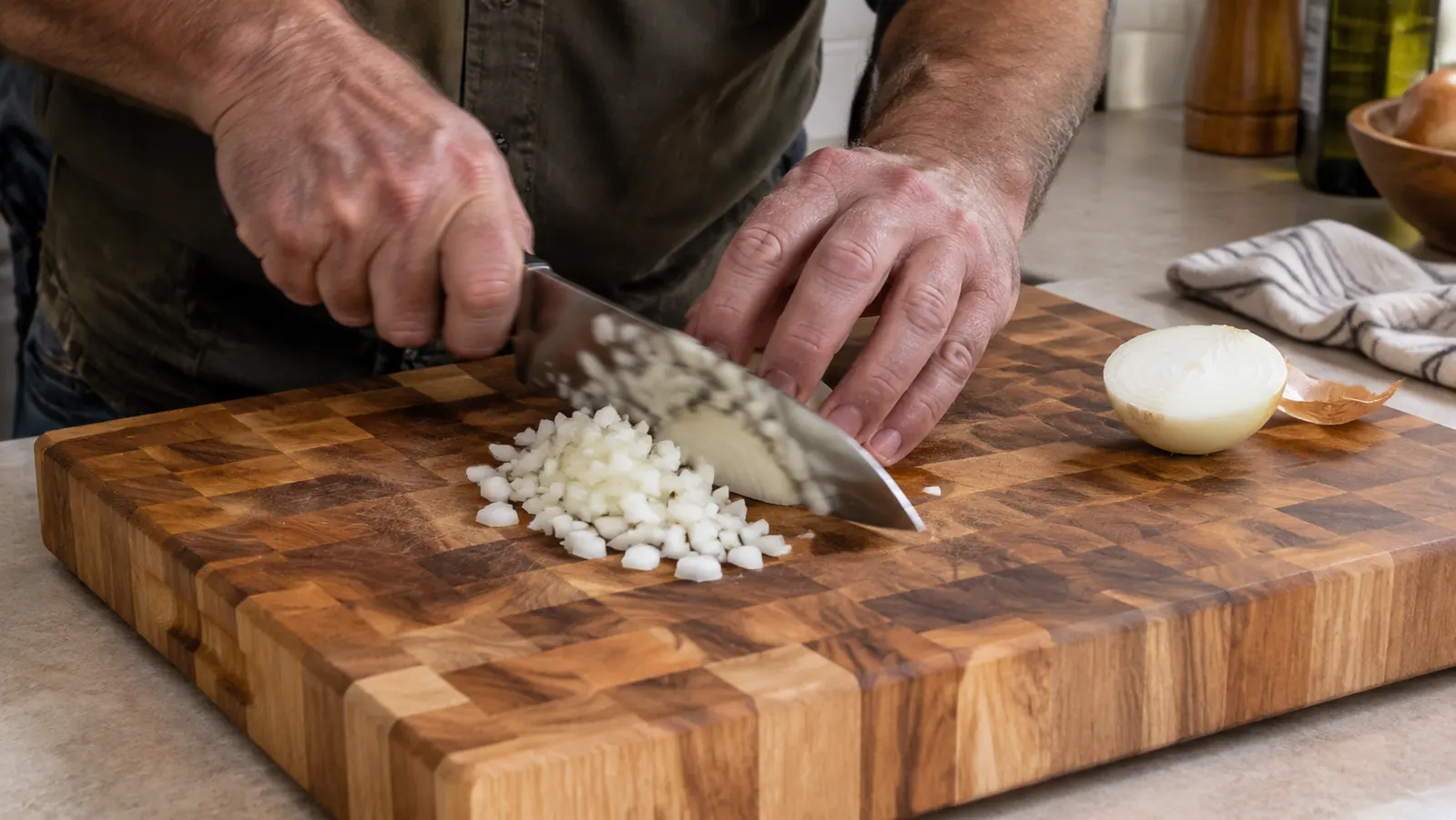
The thing that finally pushed me over the edge was a Sunday roast. I had a five-pound chuck on the counter, a knife that had gone dull mid-slice, and the board spinning under the meat like it was trying to escape. My wife looked at me and said, very calmly, 'You have complained about that board for ten years. Go buy a real one.' So I did.
The Sonder Los Angeles Alfred is a 17 by 13 inch block of end grain walnut, an inch and a half thick. That size matters more than I expected. It covers the prep zone properly, so I am not juggling a cutting area the size of a postcard. And end grain construction means the knife edge drops into the wood fibers instead of scraping across them, the way it does on a flat grain board. The difference showed up in the first week. My knives stay sharp for weeks now, not days.
The board is heavy, which is the whole point. It sits on the counter and it does not move. No rubber feet, no clamp, no damp towel underneath. I stopped fighting the board and started just working on it. That sounds like a small thing. It is not.
My knives stay sharp for weeks now, not days. That alone was worth the switch.
The board that ended thirty years of fighting my counter
The Sonder Los Angeles Alfred is the 17x13 end grain board I have used every day since that Sunday roast. If your board slides and your knives keep going dull, this is the fix.
Amazon Check Today's Price on Amazon →What surprised me was how much easier prep got on my hands and shoulders. I am not a young man, and my joints let me know it most mornings. On the old thin board, I was pressing down hard to get through anything, because the board flexed and the knife did the work badly. On the Sonder Los Angeles board, the knife does the work and I just guide it. Chopping a pile of onions for a pot of chili used to be a chore that left my wrist aching. Now it takes a few minutes and my hand feels fine afterward.
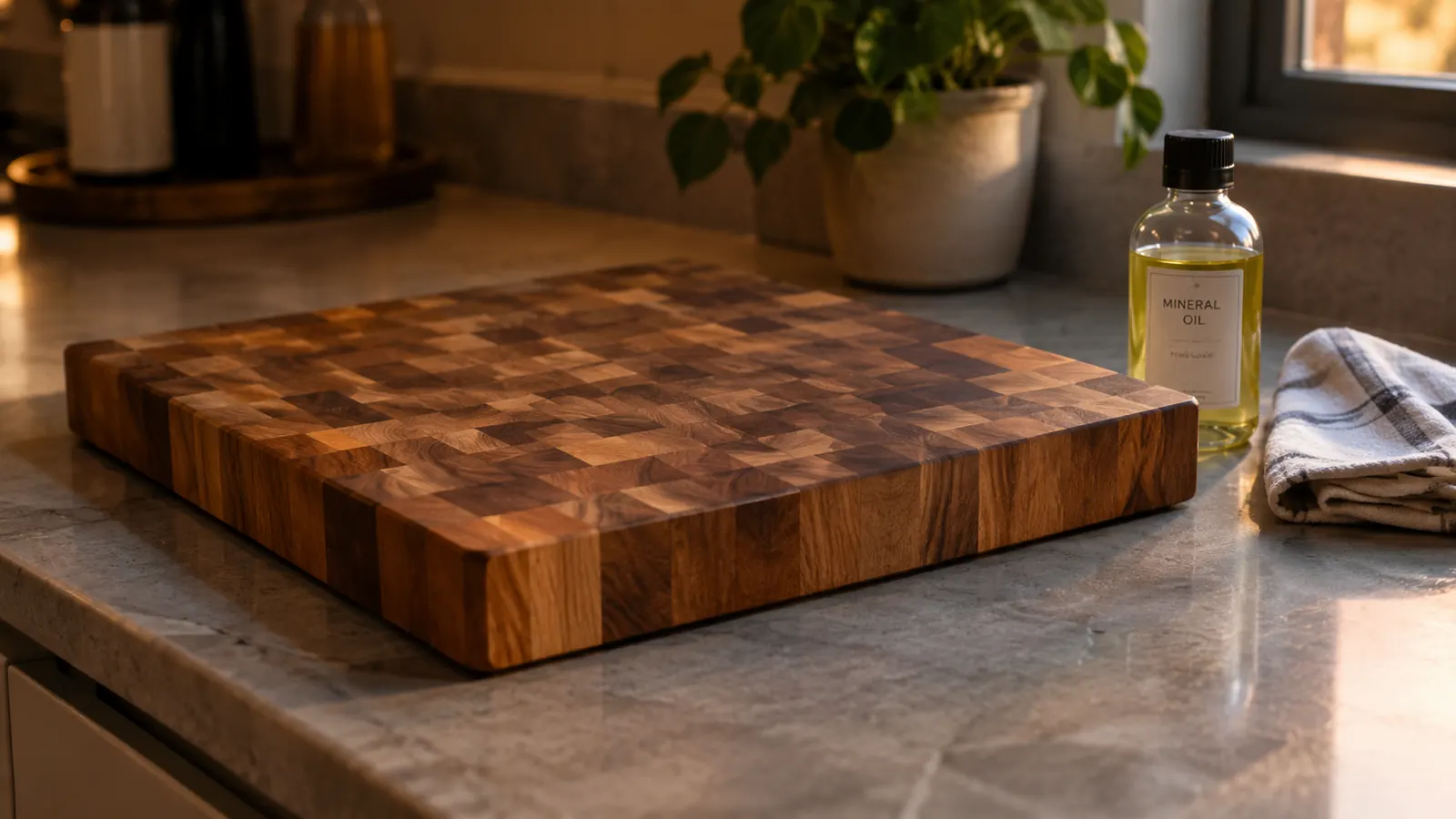
There are honest tradeoffs, and I would be lying if I said there were not. The board is heavy, about seven or eight pounds, so it is not something you toss in a drawer. It lives on the counter in our house. It needs a little care: you do not soak it, you do not run it through the dishwasher, and every month or so I rub it down with mineral oil. That takes five minutes. In exchange, I get a surface that has held up for months of daily use without a single crack or warp. The plastic boards I used before lasted a year, maybe two, before they looked like they had been through a war. This one looks the same as the day it arrived.
The size was the thing I nearly got wrong. I almost bought a smaller board, because the counter is small and I figured a smaller board would fit better. Bill talked me out of it, and he was right. A board that is too small gives you less room, so you stack things on top of each other, so you are moving stuff around to make space. The 17 by 13 size is the floor for real cooking. It fits on our counter with room to spare, and it gives me a proper work zone for the first time in thirty years.
The first time my wife used it, she did not say anything for a minute. Then she said, 'This board is not moving.' That is the whole review, right there. A cutting board's only job is to hold still and take the abuse, and this one does both without complaint.
I will also say this: it changed how I feel about the counter itself. The kitchen is the one room in the house that gets used every single day, and for years it felt like a compromise. A cramped counter, a flimsy board, knives that never quite worked. One good board did not fix everything, but it fixed the part I touched most. That is worth something.
What I'd Tell You If We Were Sitting at My Kitchen Table
Here is the plain version. If you cook on a board that slides, that flexes, that you are forever wiping down and replacing, stop. Buy one good end grain board and be done with it. Get the biggest size your counter honestly fits. Take care of it with mineral oil and a dry cloth, and it will outlast every plastic board you have ever owned, and probably outlast the counter. I waited thirty years because I thought a cutting board was a cutting board. It is not. That is the whole lesson, and it cost me a lot of dull knives to learn.
Buy the right board once and stop thinking about it
That is the whole argument. The Sonder Los Angeles Alfred has held up through months of daily cooking at my house, and it is the first board I have owned that I expect to keep for decades. Check today's price on Amazon.
Amazon Check Today's Price on Amazon →