
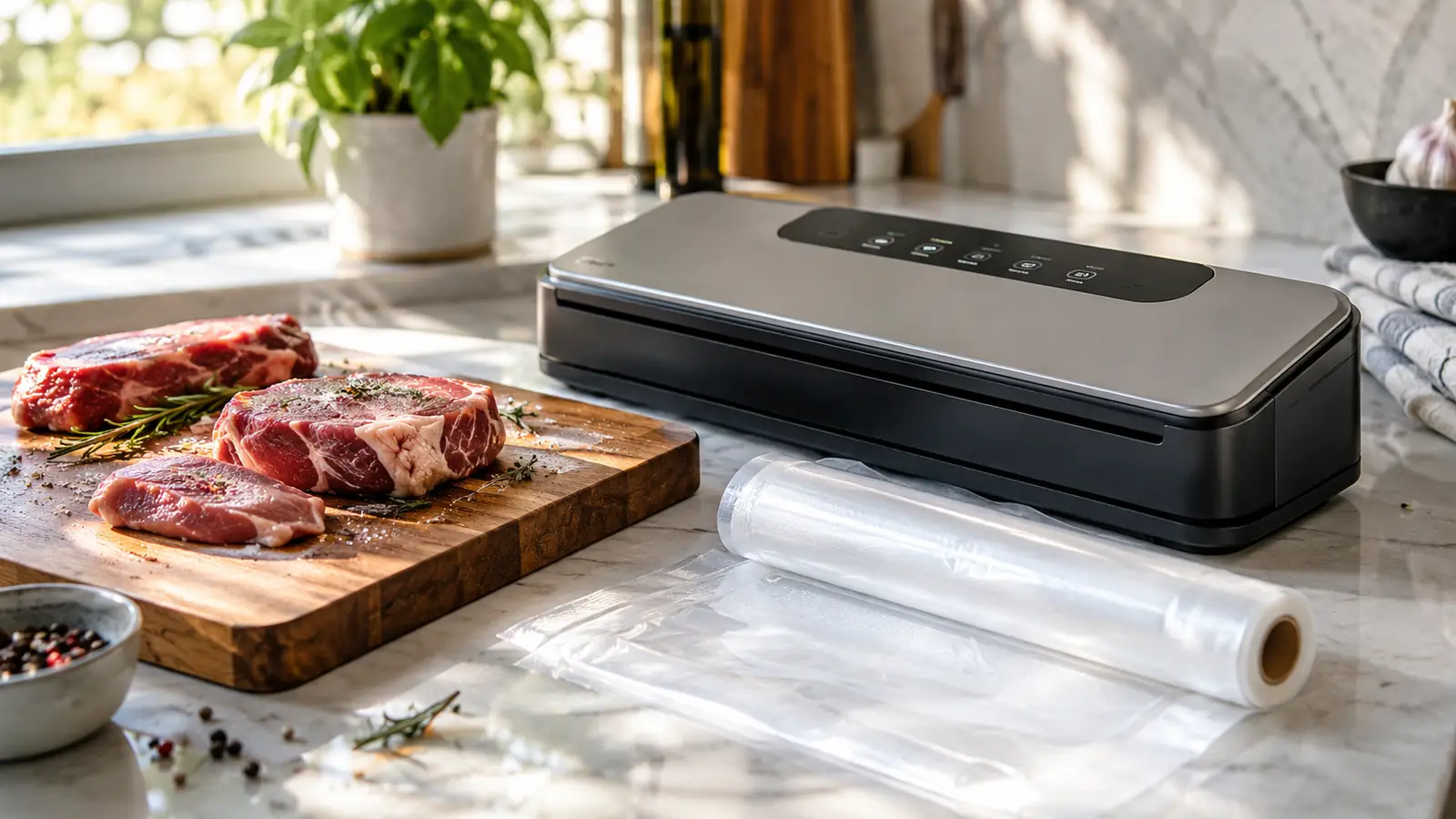
I've had the FoodSaver V4400 on my kitchen counter for fourteen months now. I bought it after a frustrating winter where I threw out three pounds of chicken breasts and a whole pork loin because freezer burn had turned them into leather. I'm not a chef and I don't run a restaurant. I just cook for my wife and me, and sometimes for the grandkids when they visit. The machine promised to fix that problem, and it mostly did. But there are a few things about the V4400 that nobody tells you in the product listing, and the biggest one is what the bags cost over a year.
I almost didn't buy it. My neighbor Bill had a cheap sealer that died after six months, and I figured all of them were like that. But I'd been reading about the FoodSaver brand for years and the V4400 had the features I wanted: a pulse mode for delicate items, a built-in roll storage, and an accessory port for canisters. I found a deal online, ordered it, and set it up on a Saturday morning. The first thing I did was read the manual cover to cover, which is something I almost never do. It told me to pre-freeze moist foods for two hours before sealing. I didn't listen, and that's when I learned why that advice exists.
The Quick Verdict
Great sealing power for the money, but budget for the bags and don't expect it to handle liquids or moist foods well.
Amazon Check Today's Price →Ready to stop wasting food?
The V4400 has kept my freezer organized for over a year. Check today's price on Amazon and see if it fits your kitchen.
Amazon Check Today's Price on Amazon →How I've Used It
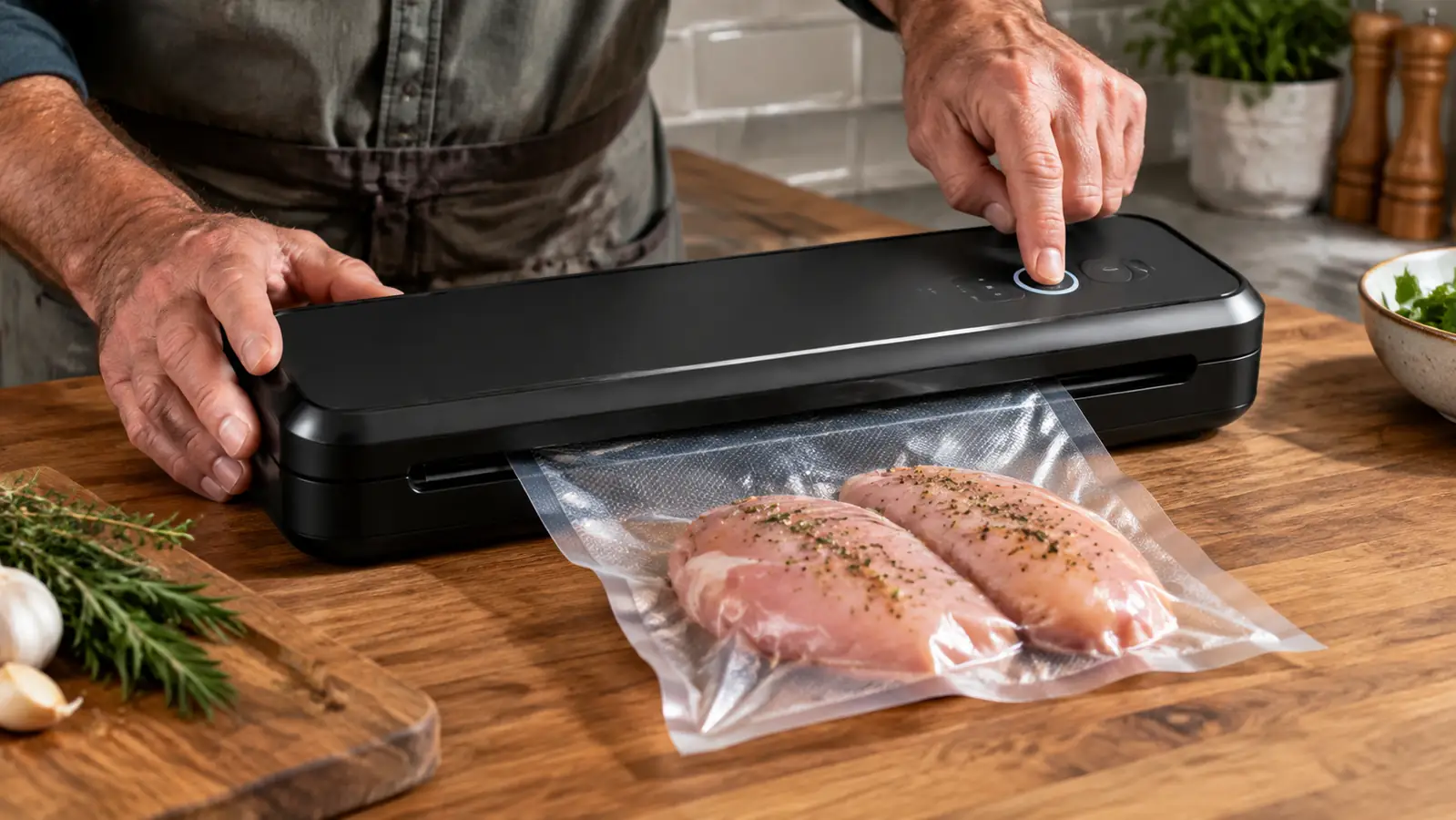
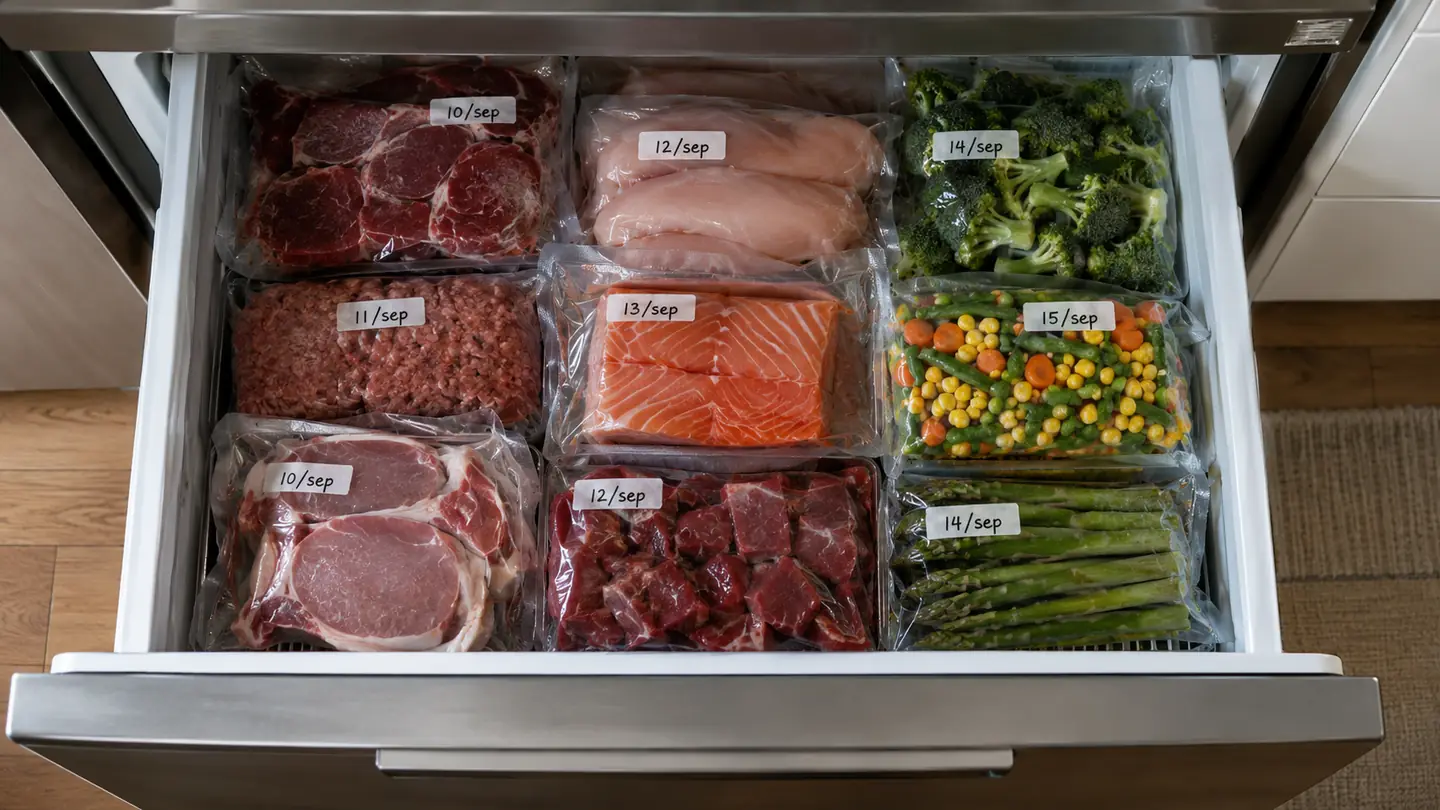
I've used the V4400 almost every week since I bought it. My routine is simple: I buy meat in bulk when it's on sale, portion it out, seal it, and freeze it. On a typical Sunday, I'll do three or four packs of chicken thighs, a couple of pounds of ground beef, and maybe a pork roast. Each pack gets labeled with the date and the cut. I keep a roll of FoodSaver bags in the drawer underneath, and I cut them to size as I go. The built-in cutter and seal bar make that part quick, though I have to be careful to leave enough room at the top for the seal. I've also started using it for things like cheese and leftover casseroles. The cheese stays fresh for weeks, and the casseroles are easy to reheat in the oven after they come out of the bag.
The first test came in February. I had bought a large beef brisket on sale, about nine pounds, and I wanted to freeze half of it. I cut it into two portions, sealed them, and put them in the deep freezer. Six weeks later, I thawed one of them and cooked it low and slow. It came out just as tender as if it had been fresh. That was the moment I stopped questioning whether the machine was worth the counter space. The other half is still in the freezer now, and I plan to use it for a summer barbecue. I've also sealed whole chickens, which is a little awkward because of the shape, but the pulse mode helps me get the air out without crushing the bird.
I also tried to seal a batch of homemade soup once. That was a mistake. I filled a bag with chicken broth, put it in the vacuum chamber, and hit the button. The liquid got sucked up into the hose and made a mess. I had to take the whole machine apart and clean the inside. After that, I learned to freeze soups in a container first, then seal the solid block. The manual does say that, but I had to learn it the hard way. That's one of those things nobody tells you in the reviews. On another occasion, I tried to seal some blueberries straight from the fridge. They got squished into a purple paste. The pulse mode saved the day, but I had to be very gentle. Now I only seal berries after they've been flash-frozen on a tray.
The Bags Are Where the Cost Hides
The machine itself is the cheap part. What I didn't budget for was the bags. I go through about a roll of FoodSaver bags every three weeks. I use them for meat, leftovers, and the occasional dry goods like rice or pasta. When I added up what I was spending on bags over a year, I realized it was more than the machine cost. That's not a complaint about the machine; it's just the reality of owning any vacuum sealer. The bags are a consumable, and you have to factor that in. I also use the accessory canisters, but those are a one-time purchase. The bags are the ongoing cost.
I've tried a few off-brand bags to save money, and the results were mixed. Some of them sealed fine, but the seals didn't hold as long. The texture of the bag matters. FoodSaver bags have a channeled texture that lets the air escape evenly. Cheaper bags sometimes have a smoother surface, and the air gets trapped in spots, which defeats the purpose. I ended up sticking with the FoodSaver brand bags, even though they cost a little more, because they work consistently. I also learned that the bags have a shelf life. I bought a big pack once and left them in the garage over the summer. When I used them in the fall, the seals weren't as strong. Now I store the rolls in the kitchen cabinet away from heat and humidity.
I also found that the bags last longer if I use them for multiple purposes. For example, I'll seal a batch of ground beef, and when I use it, I can cut open the bag, wash it out, and reuse it for something dry like crackers. The seal might not be as strong the second time, but for short-term storage it works fine. That cuts down on the number of new bags I need to buy. I've also started using the roll to make custom-sized bags for odd-shaped items like a half a cabbage or a wedge of cheese. That's more efficient than using a pre-made bag.
What It Does Well
Where the V4400 shines is with dry foods and raw meat. The vacuum strength is strong enough to pull the air out of a bag of chicken thighs in a few seconds. The pulse mode is a nice touch, too. I use it for things like bread and berries, where a full vacuum would crush them. You hold the button down, and it lets you control exactly how much air you remove. It takes a little practice, but once you get the feel, it's easy. I've used it on fresh herbs from the garden, and they stay vibrant for weeks in the fridge.
The accessory port is another feature I use regularly. I bought a set of FoodSaver canisters and use them for things like coffee beans, flour, and even the occasional salad greens. The canisters have a valve on top that connects to the hose, and they seal with a satisfying pop. It's a nice way to keep dry goods fresh without using a bag every time. I also have a mason jar attachment that lets me vacuum-seal jars of homemade sauce. That's been really useful for me. It's just a handy way to store leftovers without plastic.
The build quality is solid. I've had it for over a year, and it still seals as well as it did on day one. The lid hinges feel sturdy, the buttons have a good click, and the sealing strip hasn't worn out. I've read about some people having problems with the seal bar after a year, but mine has been fine. I'm careful to wipe the gasket after each use, and I think that helps. The machine also has a nice footprint. It fits on my counter without taking up too much space, and I don't have to put it away between uses.
Where It Falls Short
The biggest limitation is moisture. If you try to seal anything with liquid, like marinades, soups, or even juicy raw meat that hasn't been pre-frozen, the machine will pull the liquid into the vacuum chamber and make a mess. The manual tells you to pre-freeze for two hours, but that's not always convenient. I've learned to either pat meat dry or freeze it first. It's not a dealbreaker, but it is a limitation you need to know about. I also found that sealing oily fish like salmon can leave a residue on the sealing strip. You have to clean it right away or it gets sticky.
Another thing that bugs me is the noise. It's not loud, but it's not quiet either. The pump runs for about twenty seconds per seal, and it makes a sound that's somewhere between a vacuum cleaner and a coffee grinder. If you're sealing a batch of meat on a Sunday morning, you'll hear it in the next room. I've gotten used to it, but it's worth knowing before you buy. The wife has complained a couple of times, but she's also the one who benefits from having thawed chicken ready to go.
The automatic bag detection is a feature that works most of the time, but not always. Sometimes it doesn't detect the bag, and you have to lift the lid and put the bag in again. It's not a big deal, but it happens often enough that I've stopped relying on it. I just press the seal button manually. It's a minor annoyance, not a dealbreaker. I also wish the machine had a separate slot for the roll cutter; as it is, you have to pull the bag through the built-in cutter, which can sometimes tear the bag if you pull at an angle. You get used to it, but it's not perfect.
The learning curve is real. When I first got the machine, I wasted a few bags because I didn't leave enough room at the top for a proper seal. I also overfilled bags and couldn't get the air out. After a few weeks, I got the hang of it, but it's not a plug-and-play device. You need to read the manual and practice. There are also some accessories that I bought that I never use, like the bottle stopper. It's a nice idea, but I rarely have wine left over that needs sealing.
The machine is the cheap part. What I didn't budget for was the bags.
Who This Is For
If you buy meat in bulk, hunt, fish, or garden, the V4400 is worth the money. It'll keep your harvest fresh for months, and you'll actually eat it instead of throwing it out. I know a guy who uses his to seal up whole salmon fillets after a fishing trip, and he says they taste as good as the day he caught them. If you're someone who likes to cook big batches and freeze portions, this machine makes that easier than anything else I've tried. I've also used it to store homemade sausage and jerky, and it keeps them from going stale.
It's also great for people who want to save money by buying in bulk. My wife and I buy a whole pork loin when it's on sale, cut it into chops and roasts, and seal each piece individually. That way we're not stuck eating the same thing every night for a week. We can pick and choose what we want from the freezer, and everything tastes fresh. The same goes for ground beef. I'll buy a five-pound chub, brown it, and seal it in one-pound portions. That saves me a lot of time on busy weeknights.
Who Should Skip It
If you mostly buy pre-packaged food and don't cook in large quantities, you probably don't need a vacuum sealer. The bags are an ongoing cost, and if you're only sealing a few things a month, it's hard to justify. A set of good food storage containers might be a better investment for you. I'd also say that if you're living alone and cooking for one, the V4400 might be overkill. You're better off buying smaller portions and using them up before they go bad.
You should also skip it if you do a lot of wet or liquid sealing, like soups and marinades, unless you're willing to pre-freeze everything. The V4400 is not the machine for that. I'd look at a chamber vacuum sealer instead, though those are a bigger investment. For my needs, the V4400 is the right balance of price and performance, but I can see why it wouldn't be right for everyone. If you're not sure, I'd suggest borrowing one or buying a used model to see if it fits your routine before spending on a new one.
What I Liked
- Strong suction that pulls a tight seal quickly
- Pulse mode lets you control vacuum for delicate foods
- Accessory port works with canisters and mason jars
- Built-in roll storage and cutter save counter space
- Durable build that has held up well for over a year
Where It Falls Short
- Bags are an ongoing cost that adds up over a year
- Struggles with moisture and liquids unless pre-frozen
- Noisy during the vacuum cycle
- Automatic bag detection can be finicky
- Steep learning curve for proper sealing technique
Weighing the bag cost against the food you'll save?
For me, the V4400 paid for itself in reduced waste within a few months. See today's price on Amazon and decide if it works for your kitchen.
Amazon Check Today's Price on Amazon →