
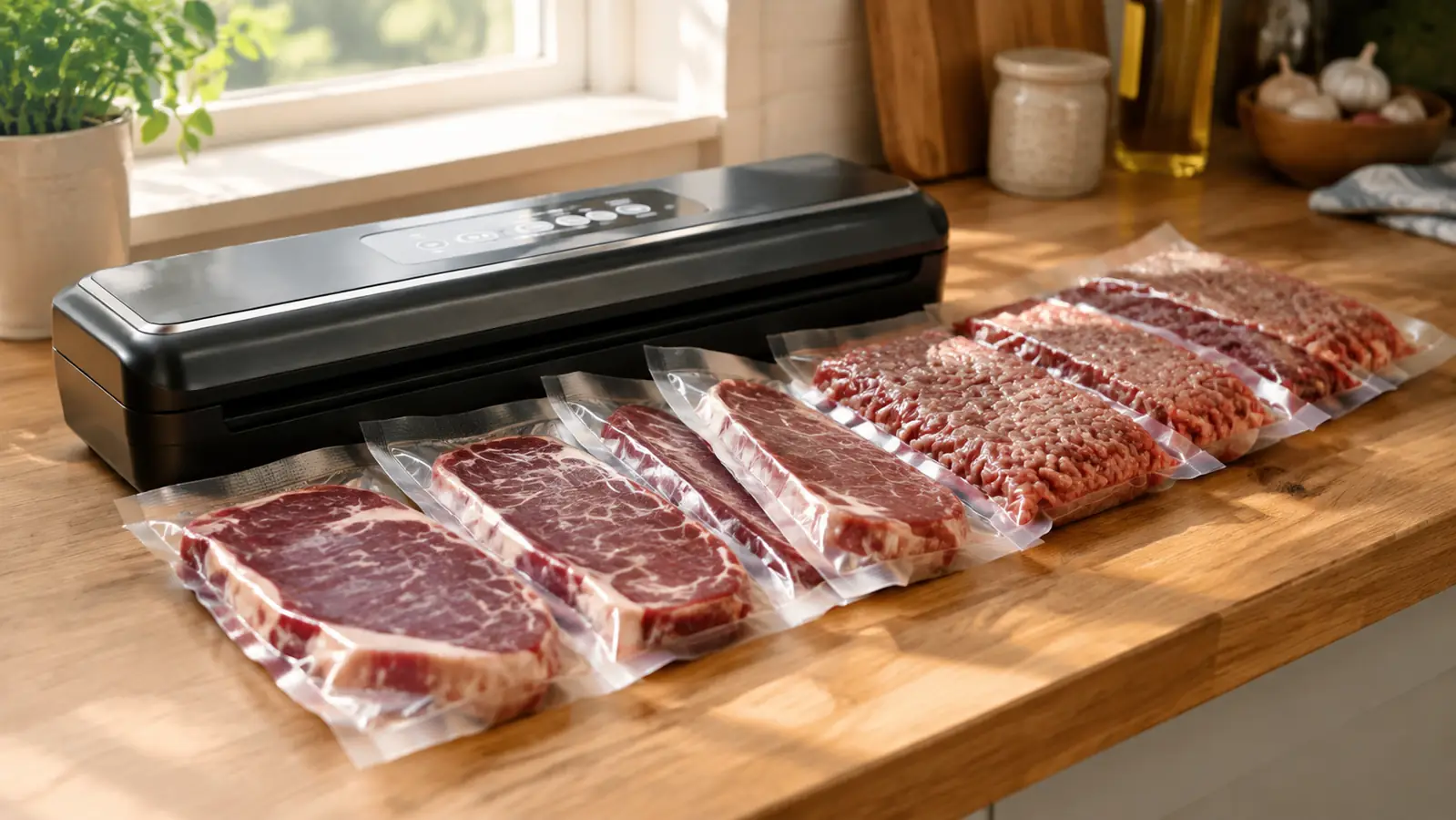
Short answer first. For a home kitchen, an edge sealer like the FoodSaver V4400 is the right machine, and a chamber sealer is a piece of equipment you buy when the bags start costing you more than the machine ever did. That crossover point is a long way out for most people. I have run both for a year now and I still do about eighty percent of my sealing on the edge machine, because it is the one that lives on the counter and gets used.
The two work differently in a way that explains everything else. An edge sealer grips the open mouth of a textured bag and sucks the air out through it, then heats a bar across to seal it. A chamber sealer puts the whole bag inside a box, pumps the air out of the box so the pressure inside and outside the bag equalizes, then seals. Every practical difference below comes out of that one distinction, so it is worth holding on to.
| Edge Sealer (FoodSaver V4400) | Chamber Sealer | |
|---|---|---|
| Bag cost | Needs textured or channeled bags, and they cost several times what flat bags do. | Uses plain flat pouches, far cheaper per bag. This is the whole argument. |
| Machine cost | A normal appliance purchase, in the range of a good stand mixer. | Several times the machine cost, and that is for an entry model. |
| Size and weight | Sits on a counter or lives in a cupboard. One person can move it easily. | Heavy, deep and permanent. It needs a dedicated spot and a sturdy one. |
| Wet and liquid foods | Struggles. Liquid gets pulled toward the seal bar and can ruin the seal. | Handles soups, brines and marinades without complaint. No contest. |
| Speed for a big batch | Each bag is a separate operation with a cooling pause between cycles. | Faster in sustained use, and it does not need to rest between bags. |
| Seal reliability | Very good on dry goods, less so if there is moisture at the bag mouth. | Consistent regardless of what is in the bag. |
| Learning curve | Load the bag, close the lid, press the button. Nothing to understand. | Pump oil, cycle times, seal bar settings. Not difficult, but it is equipment. |
| Right for most homes | Yes, and comfortably so for anyone sealing under a few hundred bags a year. | Only once bag volume is high enough to pay back the difference. |
Where the Edge Sealer Wins
It wins on the two things that decide whether a machine gets used: it costs what a normal person will spend on a kitchen appliance, and it fits somewhere. My FoodSaver lives in the cupboard under the coffee maker and comes out three or four times a week. A chamber machine cannot do that. Mine sits on a rolling cart in the utility room because it is too deep for the counter and too heavy to be lifting in and out of a cupboard, and the practical result is that I use it in planned sessions rather than on impulse.
That difference matters more than the spec sheets suggest. Half of what a vacuum sealer is actually good for is small and unplanned. Half a block of cheese. The back half of a loaf of bread. Three chicken breasts left from a family pack. Those jobs never justify walking to another room and warming up a pump, so on a chamber-only setup they simply do not happen, and the food goes into a zip bag and gets forgotten. The FoodSaver catches all of that because it is right there.
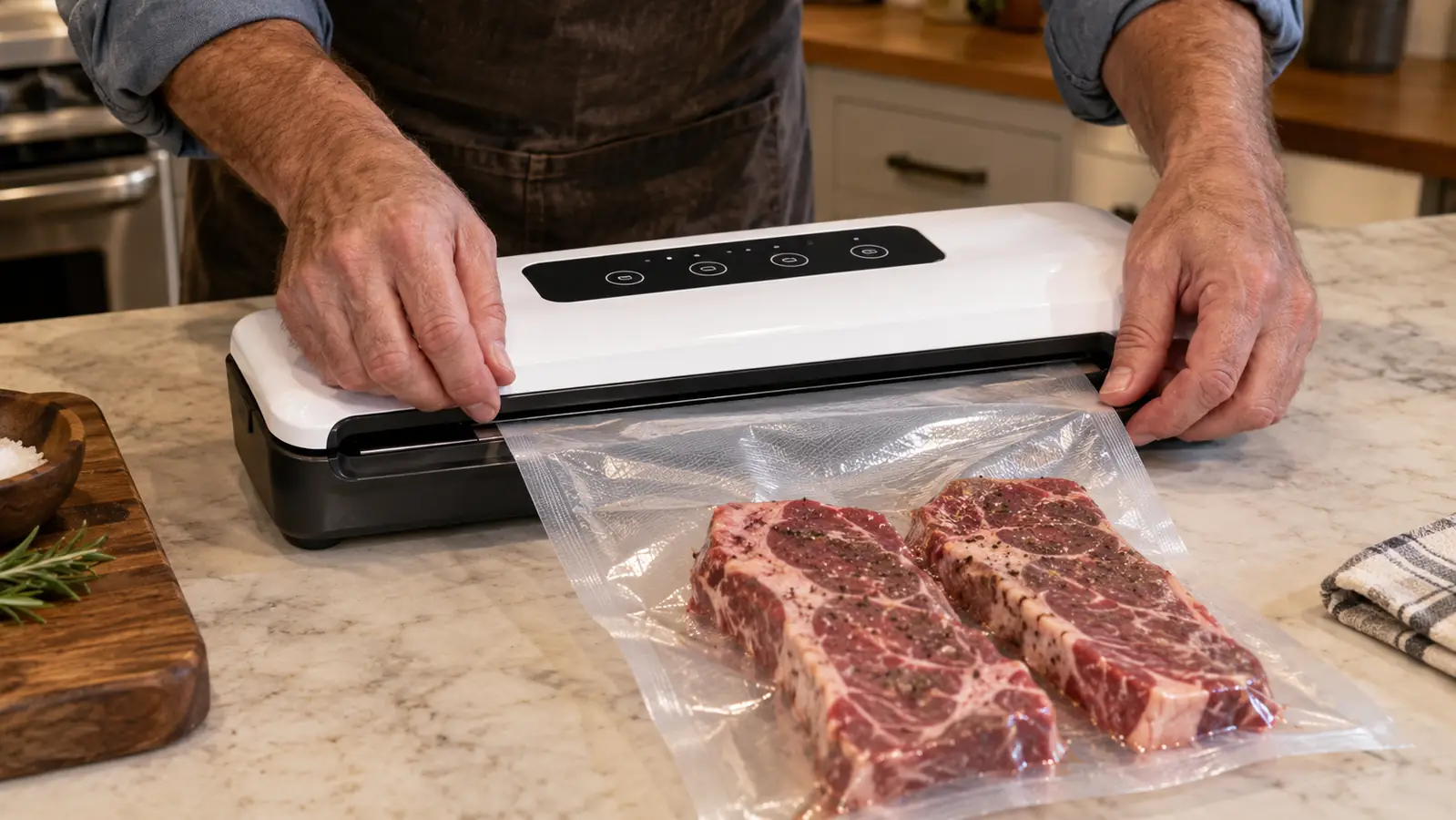
The V4400 also has the roll storage and cutter built into the body, which sounds like a small convenience and is not. You pull the length you want, cut it square against the built-in bar, seal one end, and you have a custom bag in about twenty seconds. Being able to make a bag exactly as long as the thing you are sealing is what keeps the bag bill down on an edge machine, because the standard pre-cut sizes waste material on every single seal. I would not buy an edge sealer without a cutter on board again.
There is a durability point in the edge sealer's favour that surprised me. I expected a machine at this price to be the sort of thing you replace every few years, and I said as much to my neighbor Bill when I bought it. Mine has run somewhere north of three hundred bags now and the only maintenance it has asked for is wiping the drip tray and pulling the gasket out to clean under it, which takes a minute and which I do about once a month. The gasket is the part that eventually goes on these machines, and it is a replaceable part rather than a reason to buy a new sealer, which is the difference between an appliance and something disposable.
Where the Chamber Sealer Wins
Bags. That is the headline and everything else is secondary. An edge sealer physically requires a bag with channels or texture on the inside, because the air has to have a path to travel along once the bag is pressed flat. Those bags cost several times what a plain flat pouch costs. A chamber machine does not care about texture, because it is not pulling air through the bag at all, so it uses the cheapest pouches made. Run enough bags and the machine pays for itself out of that difference alone.
The number that matters is how many bags a year you actually run. I worked mine out last November and it came to a little over three hundred, counting deer season and the hog share. At that volume the payback on a chamber machine is measured in years, not months, and that is why I still call the edge sealer the right machine for most homes. If you are putting up a garden, running a hunting camp, or buying half a steer every year, your number will be several times mine and the arithmetic flips.
The second thing a chamber machine wins outright is anything wet. Soup, stock, chili, brine, a marinade you want to force into meat overnight. On an edge sealer, liquid is the enemy, because the vacuum drags it toward the seal bar and once moisture is in the seal the bag will fail, sometimes not until it has been in the freezer for a month. There are workarounds and I use all of them, and none of them is as good as simply not having the problem. The first time I sealed a quart of stock in a chamber machine and just walked away from it, I understood why people who put up a lot of food end up owning one.
The last thing the chamber machine wins is one nobody mentions until they own one, which is that it does not care how full the bag is. On an edge sealer, a bag with a little air left at the top after sealing is a bag you filled too full, and you learn by failing a few. The chamber machine pulls the whole box down to the same pressure regardless, so a bag with one steak in it and a bag with six behave identically. When I put up the tenderloins in October I ran twenty-two bags of wildly different sizes through it without adjusting anything, and every one came out the same.
The Machine That Actually Gets Used
The FoodSaver V4400 is the two-in-one with a bag roll and cutter built into the body, automatic bag detection and a moist setting for the jobs that give edge sealers trouble. For most home kitchens this is the right machine, not the compromise. Check the current price and what comes in the box.
Amazon Check Today's Price on Amazon →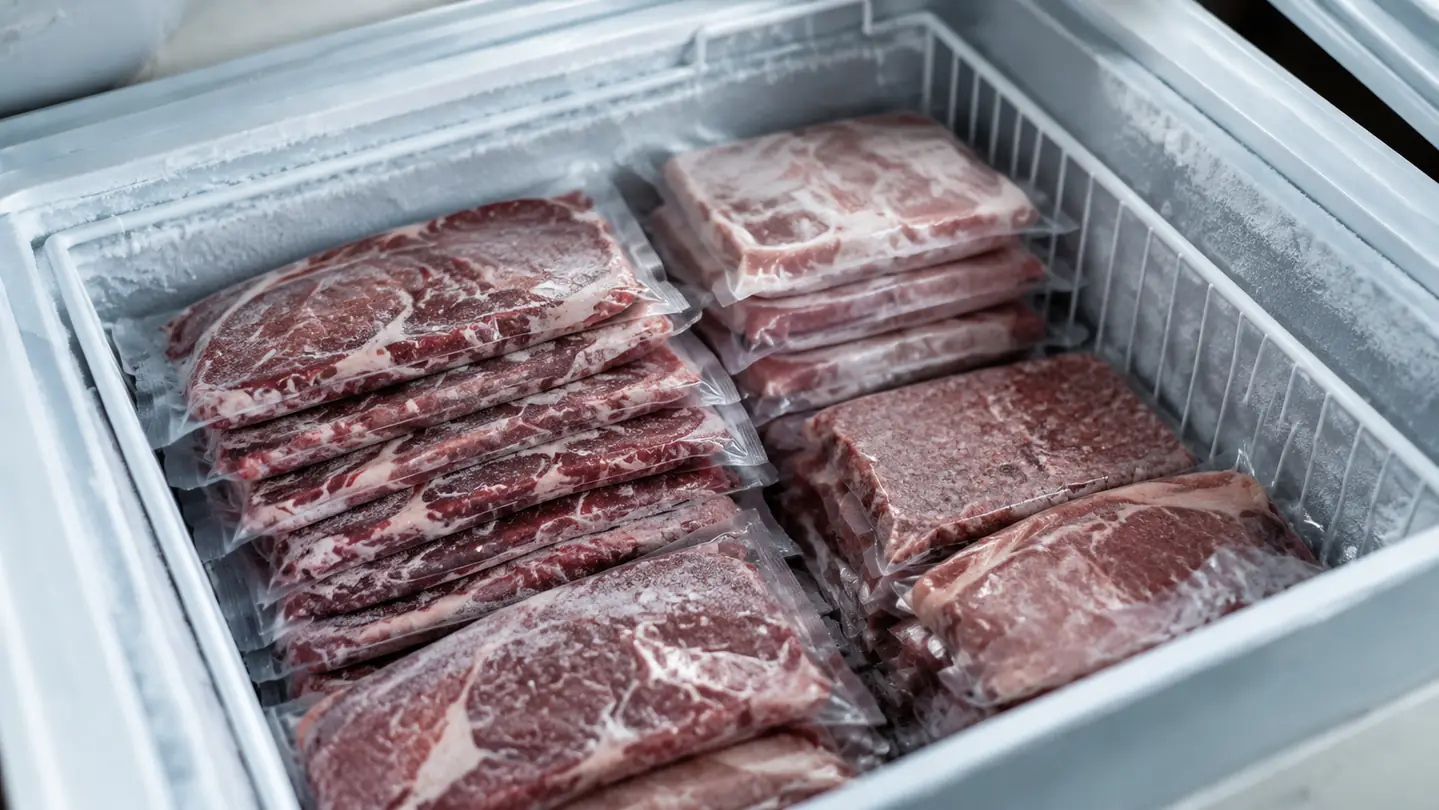
The Workarounds, and How Well They Hold Up
Since most people reading this will end up with an edge sealer, here is what actually works on the wet-food problem. Pre-freeze anything loose or juicy on a sheet pan until it is firm to the touch, usually two hours, then bag it. Firm food does not release liquid while the pump is running, and this single habit solved about ninety percent of my failed seals. For ground meat I press it flat in the bag first, freeze it flat, and stack the finished bricks like books.
For genuinely liquid things, the trick is to freeze the liquid in a container first, pop the block out and seal the block. It works, it is a nuisance, and it takes a day of planning. The moist setting on the V4400 helps at the margins by shortening the vacuum and lengthening the heat, but it is a compromise and it will not save you if there is standing liquid at the bag mouth. Leave three inches of clear bag above whatever you are sealing and you will fail far fewer bags than somebody who leaves one.
On big batches, the thing to know about an edge sealer is that the seal bar needs to cool between cycles. Mine wants about twenty seconds and it tells me so with a light. Ignoring that and forcing bags through back to back is how you get weak seals in the middle of a long session, which you then do not discover until March. When I have forty bags to run I stage everything first, bag it all, then seal in a rhythm with a pause built in, and I have not had a batch failure since I started doing that.
Two smaller habits are worth the sentences. Wipe the inside of the bag mouth with a paper towel before you seal, every time, even when it looks clean, because a smear of fat is enough to stop the plastic bonding and fat is invisible against clear film. And double seal anything going into the freezer for more than six months, meaning run a second seal about half an inch inside the first. It costs a moment and a quarter inch of bag, and it is the difference between opening a package in eighteen months and finding meat or finding a grey disappointment.
Who Should Buy Which
Buy the edge sealer if you are sealing a few hundred bags a year or fewer, if the machine has to share space with everything else in a normal kitchen, and if most of what you seal is meat, cheese, bread and dry goods. That covers the overwhelming majority of households, including plenty of people who cook seriously. The FoodSaver will not be the limiting factor in your kitchen and the money you save over a chamber machine buys a lot of meat.
Buy the chamber machine if you are putting up food at volume, if you regularly seal liquids, or if you are running something closer to a small operation than a household. Deer camps, big gardens, anybody buying beef by the quarter. In those situations the bag cost is a genuine running expense and the chamber machine stops being an indulgence and starts being the cheaper option.
The way to work out which group you are in is to count, not to guess. Go and look at your freezer and count the sealed packages in it, then think about how many times you have refilled it this year. If the answer comes out under about two hundred bags, the arithmetic is not close and the edge machine wins comfortably. Between two hundred and five hundred, it depends how much of your sealing involves liquid. Past five hundred a year and you are buying bags often enough that the chamber machine is the cheaper way to live, and the counter space stops being the deciding factor.
If you already know you are heading toward the second group but you are not there yet, buy the edge sealer now anyway. It will still be useful the day the chamber machine arrives, because the small unplanned jobs never go away, and mine has kept its place on the shelf for exactly that reason.
Start With the One You'll Reach For
For most kitchens the FoodSaver V4400 is not the compromise choice, it is the correct one. Bag roll and cutter on board, automatic bag detection, and small enough to actually live within reach. See where the price sits today before you spend more than you need to.
Amazon See the FoodSaver on Amazon →