
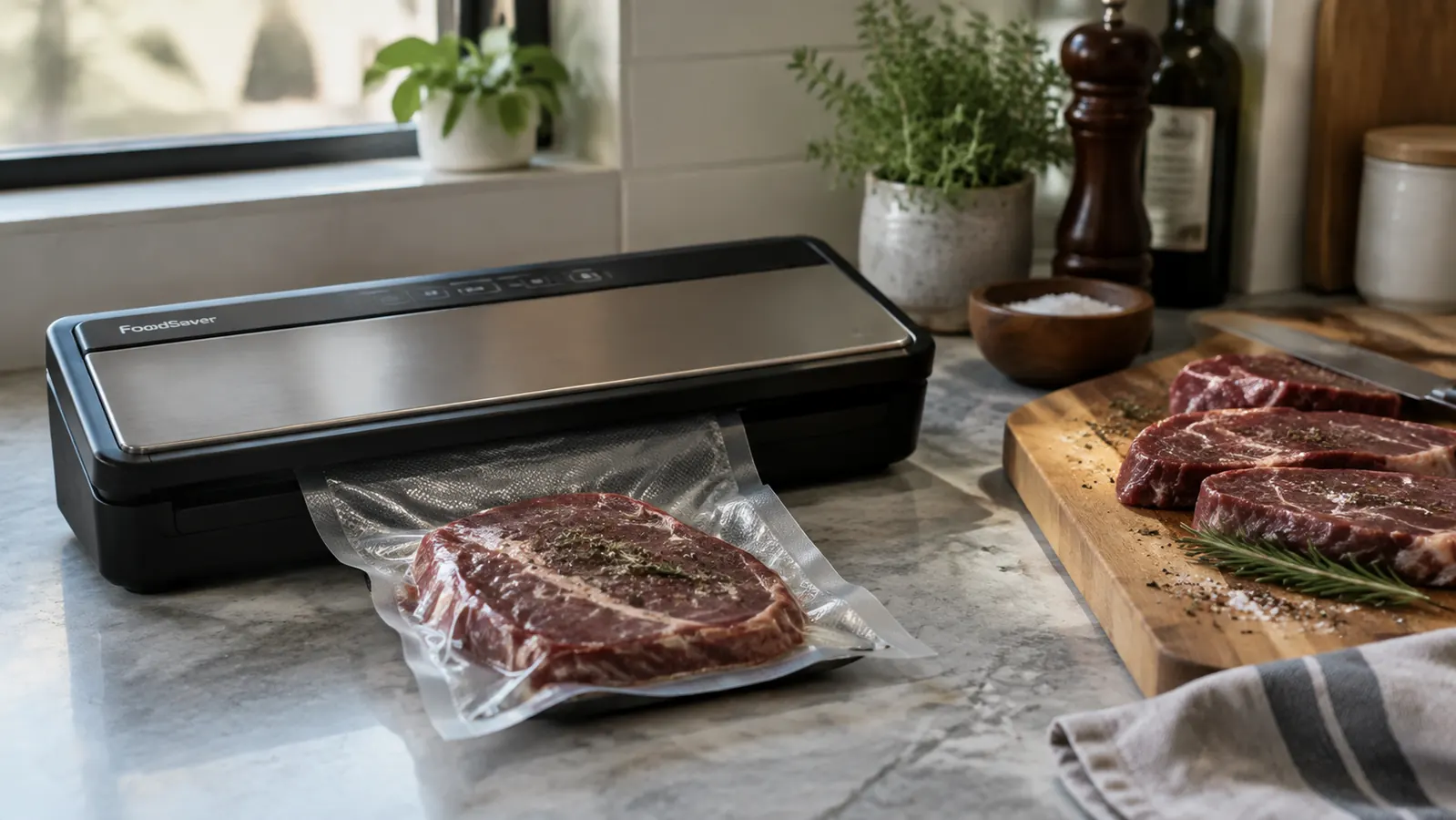
The first time I ran the FoodSaver V4400, I was standing over a folding table in my garage with a freshly butchered deer and a roll of bags I had already spent too much on. Eleven months later, that same machine has sealed venison roasts, split chicken breasts, a bushel of peppers from my neighbor Bill's garden, and about forty pounds of pork shoulder I broke down for the freezer. It has run through a full deer season and every week of the year in between, and it has not missed a single seal. That is not a claim I could make about any sealer I owned before it.
I have cooked seriously for thirty years, and I have owned cheaper sealers that lasted two seasons before the heating strip gave out or the vacuum pump started sounding like a tired alternator on a cold morning. The V4400 is the first sealer that has survived a full year of heavy use without one repair and without one bag that failed to hold. I am not a chef and I do not write for food magazines. I am a guy who buys meat in bulk, processes a deer most falls, and refuses to pay retail for things I can freeze myself. This is that review, written after a year of real work in my own kitchen, with all the tradeoffs left in.
The Quick Verdict
A year of deer season, bulk pork, and sous vide with zero missed seals. The automatic bag detection is the real deal, the seals hold in the freezer, and the only real complaint is the cost of the bags.
Amazon Check Today's Price →If you break down one deer or one beef quarter a year, this is the sealer to own
After eleven months and hundreds of seals, the V4400 has not missed once. It handles thick roasts, thin fish fillets, and everything in between. Check the current price before you buy a cheaper sealer you will replace in two seasons.
Amazon Check Today's Price on Amazon →How I've Used It
My routine starts in the fall. Deer season comes first, and I break down whatever I bring home into roasts, backstrap portions, and burger chubs. Each one gets weighed, bagged, and sealed within a day of processing. That is maybe forty seals in one weekend, and the FoodSaver V4400 does not slow down or complain. The vacuum pump pulls hard on the first cycle, and it pulls exactly the same on the fortieth. I have run back-to-back bags with frozen meat and with wet marinade dripping off the edge, and it handles both without flinching.
The rest of the year it earns its keep on grocery day. When chicken breast or pork loin goes on sale, I buy two or three times what I need, split it into meal-sized portions, and seal it the same afternoon. Ground beef gets flattened into patties or pressed thin in the bag so it stacks flat and thaws fast in cold water. I also use it for vegetables from Bill's garden, peppers and green beans mostly, and for big blocks of cheese that I portion out and seal so they do not mold in the back of the fridge. The sous vide gets a workout too. Steaks go in at 130 degrees for a couple of hours and come out better than anything I used to do in a pan.
I should be clear that this is not light use. The machine sits on my counter full time and gets used most weeks. It has sealed wet meat, dry goods, and the occasional bag of soup I froze flat. In eleven months I have never had to clean the drip tray because a bag leaked, for the simple reason that a bag has never leaked. That single fact is why this review exists, and it is the thing I would tell anyone who is on the fence about spending more on a sealer than the cheapest option on the shelf.
What the Automatic Bag Detection Actually Does
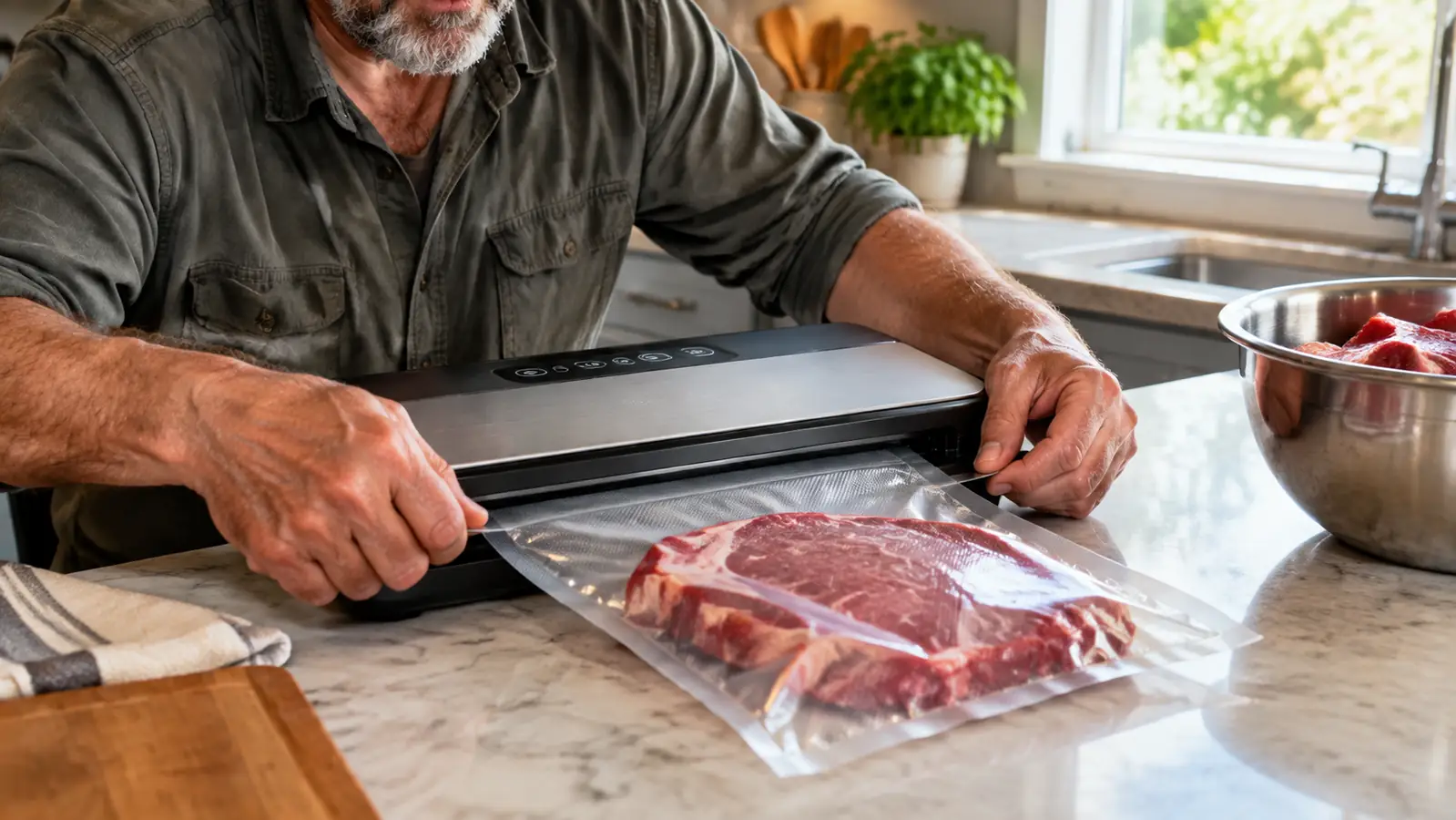
The 2-in-1 name comes from the automatic bag detection. Older sealers make you choose between a vacuum and seal cycle, and you can burn a bag or leave too much air in it if you get the timing wrong. The V4400 senses the bag in the channel, starts the vacuum on its own, and seals when it decides the air is out. It sounds like a small thing, but it removes the single biggest source of wasted bags and ruined seals. You drop the open end in, close the lid, and walk away, which is exactly what I want from a machine I use forty times in a weekend.
The one thing to learn is that it needs the bag to sit flat in the channel. If you feed it crooked, it will still seal, but you get a weaker seam. After my first weekend I got the habit of laying the bag in straight and giving the lid a firm push, and I have not had a weak seal since. The built-in bag cutter on the side of the machine is handy too, though I still prefer the pre-cut bags for speed on busy days.
Seal Strength and a Year of Freezer Time
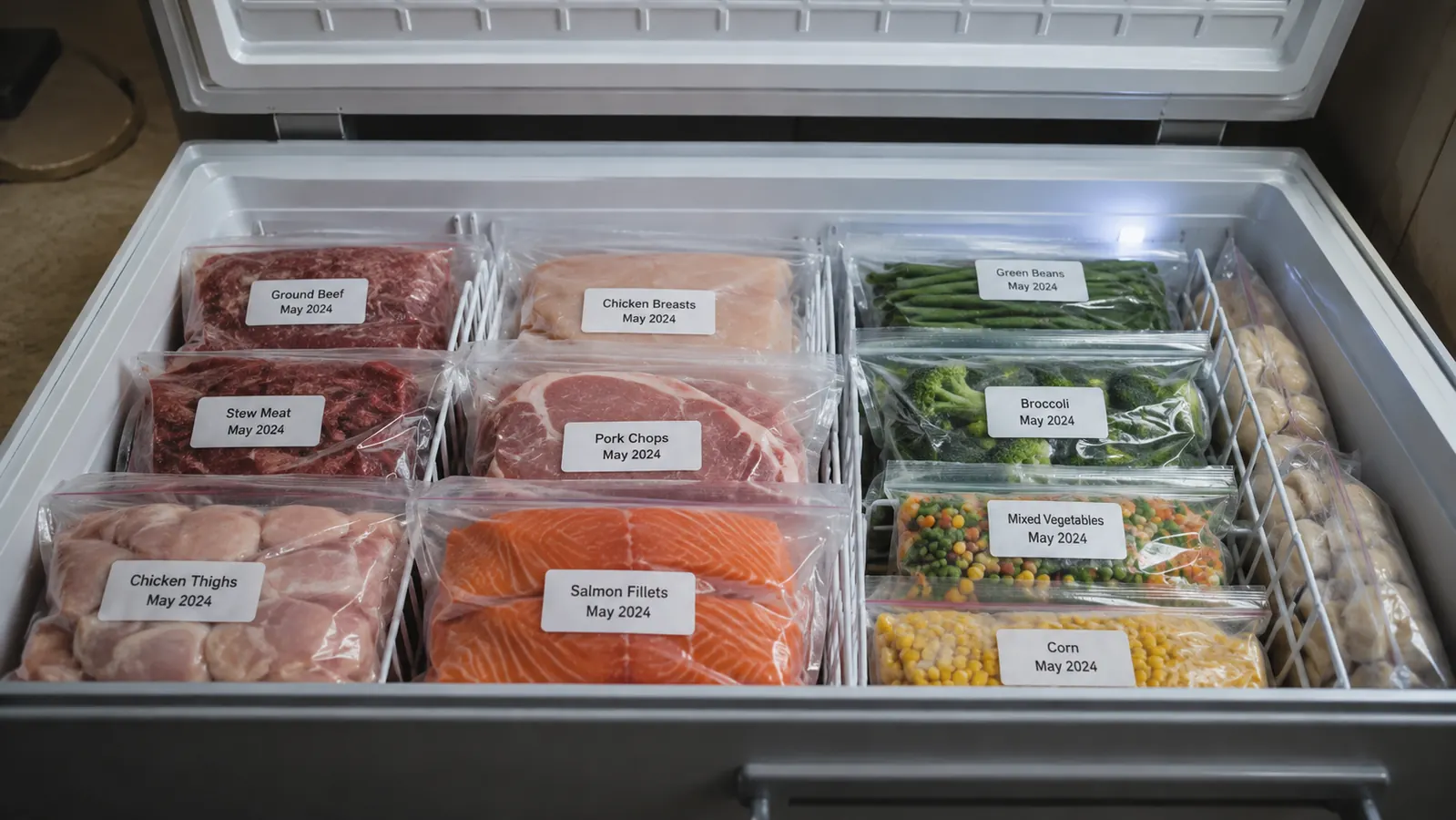
The real test of any sealer is what comes out of the freezer months later. I pulled a venison roast from last November in August, and the bag was still tight, with no frost inside and no freezer burn on the meat. The seal held through months at zero and a thaw in cold water. I have found the same with pork, chicken, and the peppers I sealed at the end of the summer. Meat that used to go gray and dry in three months now looks and cooks the way it did the day I bagged it.
The vacuum strength is part of it. The V4400 pulls a tight vacuum, and the bag clings to the meat so the surface has no air pocket to burn. It also has a moist-dry toggle that I use for anything wet, which stops the machine from pulling marinade or juices into the seal channel where they can weaken the seam. I use the moist setting for soup, stew, and any meat that has been in a brine, and I have never had a bag fail to seal because of liquid. That toggle alone is worth having over a basic sealer, and it is the reason I can seal a batch of wet meat without babysitting the machine.
The Accessory Hose and the Canisters
The V4400 has an accessory port on the front with a hose that fits the FoodSaver canisters and jar sealers. I use it most for jars of dry goods, rice, flour, and coffee beans. You press the hose into the lid, the machine pulls the air out, and the jar stays sealed until you crack the lid. For coffee beans that I buy in bulk, it has made a real difference in how long they stay fresh, and for flour it keeps the pantry moths out in a way a paper bag never will.
The canisters work the same way. I have a couple of the round ones that I use for cheese and for leftover salsa, and they keep things fresh far longer than a plain container. The hose also fits the wide-mouth jar adapter, which means I can use cheap mason jars instead of buying more plastic. It is not the reason I bought the machine, but it has turned out to be the feature I use more than I expected, and it is the reason the sealer does not just sit idle between deer seasons.
The Learning Curve and the First Few Bags
Nobody is born knowing how to use one of these. My first weekend I wasted three bags learning to leave enough room in the bag for the seal channel, and I sealed one bag with too much air because I pulled it out before the cycle finished. Both are user error, not machine error, and both stopped happening within the first session. By the second weekend I could seal a bag without looking at the controls. That is the honest learning curve, and it is short.
The instructions are decent, but the machine is simple enough that you barely need them. Load the bag, close the lid, push it down, and let the automatic detection do the rest. The display shows the seal count, which I appreciate because it tells me when the internal parts have done a lot of work. The built-in bag cutter and the storage for the roll are small touches that make the whole thing feel considered, the kind of details you only notice after months of use.
Where It Wears Thin
No machine is perfect, and the V4400 has real weaknesses. The first is the bags. This is not a cheap sealer to run, because the pre-cut bags and rolls add up over a year. I budget for it the way I budget for fuel, and I have looked hard at whether a chamber sealer would be cheaper in the long run. For the volume I do, the answer is no, but it is a fair question for anyone sealing every single week.
The second weakness is the noise. It is not loud enough to be a problem in the house, but the pump is clearly working, and if you seal a batch of forty bags in an afternoon you will hear every one of them. The third is the footprint. It is not huge, but it is not small either, and it takes up permanent counter space in my kitchen. None of these are deal breakers, but they are honest tradeoffs that a review should mention, because the marketing photos never show a machine that has been on the counter for a year.
What I Liked
- Automatic bag detection that has never missed a seal in eleven months
- Strong vacuum that keeps meat good in the freezer for months
- Moist-dry toggle handles wet food and marinades without leaking
- Accessory hose works with jars and canisters for dry goods
- Built-in bag cutter and storage for the roll
Where It Falls Short
- Bags and rolls add up over a year of heavy use
- The pump is clearly audible during every cycle
- It takes up permanent counter space
- You still need to learn to load the bag straight for the best seam
Eleven months, hundreds of seals, and not one bag has come out of my freezer with frost inside. That is the whole review in one sentence.
Who This Is For
The V4400 is for anyone who breaks down large amounts of meat on a schedule. If you process a deer every fall, buy beef by the quarter, or stock up when chicken goes on sale, this machine pays for itself in what you stop throwing away. It is also for sous vide cooks who want a sealer that pulls a tight vacuum and seals reliably every time, and for anyone tired of replacing a cheap sealer every couple of seasons. If any of that sounds like you, this FoodSaver is the sealer I would buy again tomorrow.
It is also for people who value not thinking about the machine. The automatic detection means you drop the bag in and walk away, and it does the rest. In my kitchen, where I am often doing three things at once during a weekend cook, that is worth real money. If you cook like me, thirty years in, and you want gear that does its job without fuss, this is that kind of gear. It has earned the counter space.
Who Should Skip It
If you only seal a few bags a month, the V4400 is more machine than you need, and the cost of the bags will annoy you more than the convenience helps. A basic sealer will do the job for light use, and the money you save can go toward better bags. The same goes for anyone with very limited counter space, since this is a machine that wants to live out in the open.
And if you are sealing every single day, or running a small business out of your kitchen, you should look hard at a chamber sealer before you buy this. The chamber style is faster, uses cheaper bags, and it will handle volume the V4400 was not built for. For a home cook who processes a deer and buys in bulk, the V4400 is the right call. For daily commercial volume, it is not, and pretending otherwise would be a disservice to anyone who reads this and seals professionally.
After a year in my kitchen, the V4400 has earned the counter space
It has sealed a full deer season, bulk chicken, garden vegetables, and weekly sous vide, with zero missed seals. If that matches your cooking, check today's price and stop throwing money at freezer burn.
Amazon Check Today's Price on Amazon →