
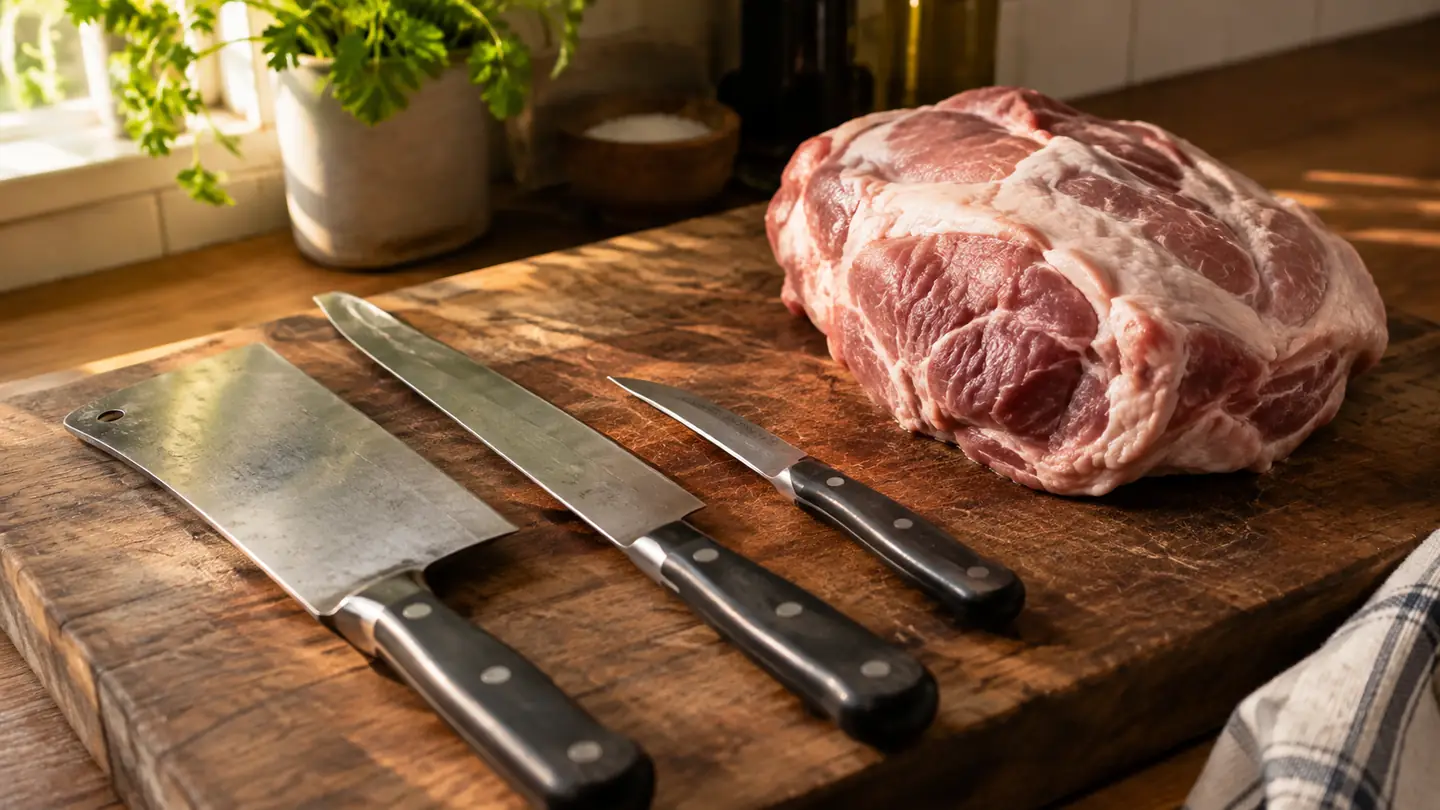
You can buy a stamped butcher knife for pocket change, or you can buy a hand-forged set like the COOLINA Meat Lover knives and spend real money. Both will cut a pork shoulder. I know, because I spent six months using both side by side in my own kitchen, breaking down everything from whole chickens to a bone-in pork shoulder that fed eight people. After thirty years of cooking, I have a pretty good feel for which tool is going to last, and which one is going to end up in a drawer, dull and forgotten. Here is where your money actually goes, and when the cheaper stamped blade is the smarter buy.
The short answer: if you break down meat more than once a week and you hate fighting a dull edge, the COOLINA hand-forged set is worth the jump in price. If you cook a roast a few times a year and sharpen once a decade, save your money and buy the stamped knife. The hand-forged blade earns its cost in edge life, balance, and how it feels when you push through cartilage. The stamped blade earns its cost at the register. Most of this article is about helping you figure out which one you actually are.
| COOLINA Hand-Forged | Stamped Butcher Knife | |
|---|---|---|
| Price | Costs more, and you are paying for the steel, the forging labor, and a handle that will outlast the blade | Costs a fraction as much, often a quarter of the price, and still cuts fine out of the box |
| Steel | High-carbon steel forged from a single billet, hammered to align the grain | Punched from a sheet of steel, then hardened and ground to an edge |
| Edge retention | Held an edge for weeks of regular meat prep in my six months of testing | Dulled sooner, especially on bones and frozen cuts |
| Sharpening | Takes a fresh edge quickly on a whetstone, the steel responds to a few minutes of work | Harder to bring back once it goes, thin edges chip if you push too hard |
| Weight and balance | Blade-heavy, carries through big cuts with momentum, feels like a real tool | Feather-light, less fatigue on a long prep session, easy to grab |
| Durability | One piece of high-carbon steel from handle to tip, nothing to come apart | Fine for years of normal use, but the thin edge is more prone to chipping |
| Best for | Home cooks who break down meat weekly and want one set for the next twenty years | Occasional cooks, campers, anyone who wants a sharp blade without the investment |
How I Compared Them
I did not test these in a lab, and I am not going to pretend I did. I used the COOLINA set for six months as my everyday meat knives, and I kept a stamped butcher knife on the same magnetic strip as my control. I broke down whole chickens, trimmed brisket, cut through a bone-in pork shoulder, and sliced maybe forty pounds of beef into stew chunks. My wife used both knives too, and so did my neighbor Bill when he came over to help with a barbecue. I sharpened both on the same whetstone, on the same schedule, and I kept track of which one needed it first. That is the whole test, and it is the test that matters for a home cook. I am not a chef and I have never worked in a restaurant. I am a home cook who has been at it for thirty years, and this is how I actually live with a knife.
Where the COOLINA Wins
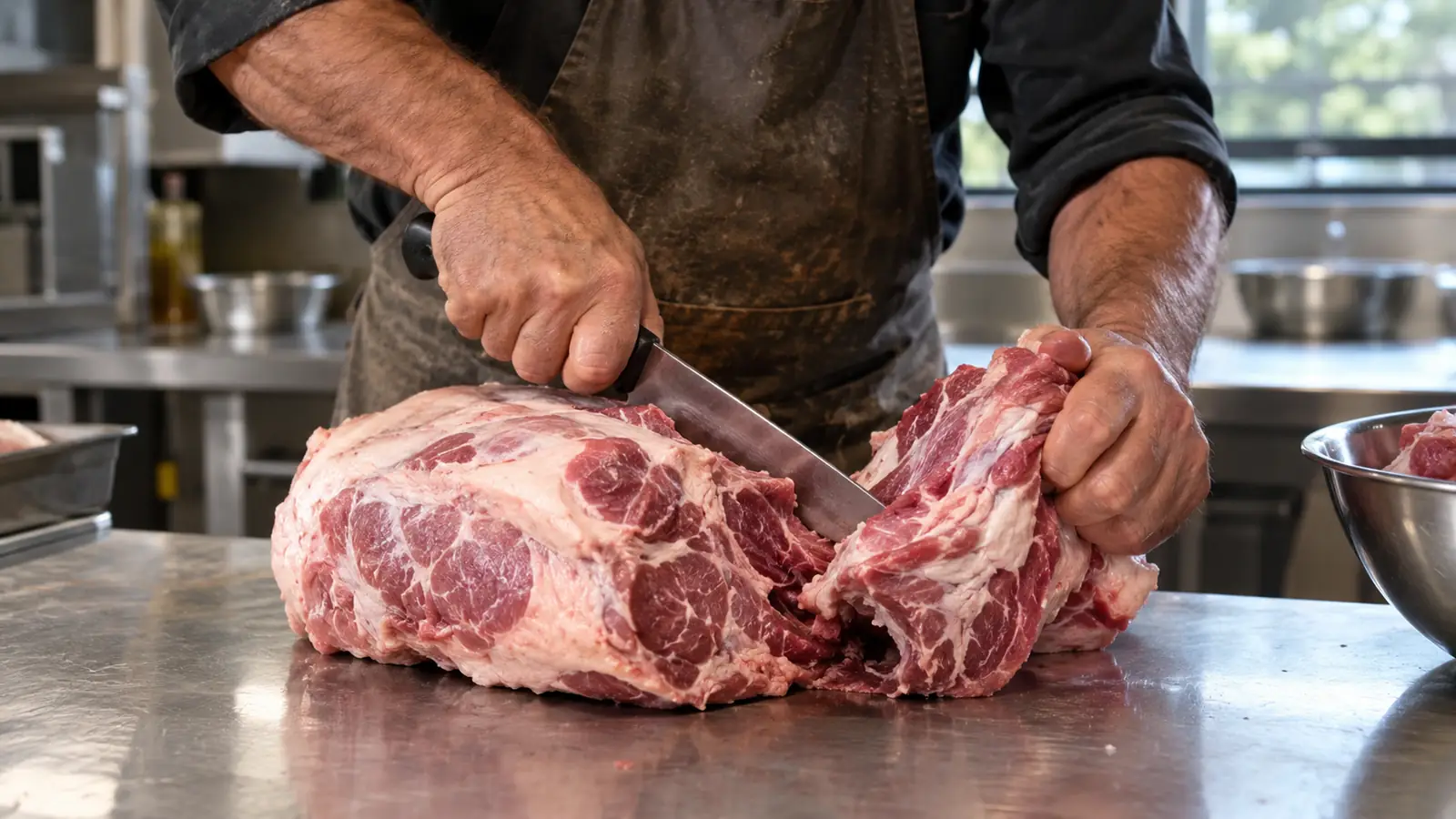
The first thing you notice is the weight. The COOLINA knives are blade-heavy in a way that does the work for you. When you cut through a pork shoulder and hit cartilage, the momentum carries you through instead of stopping you dead. My stamped knife does the same job, but it takes more effort, and after a big batch of stew meat my wrist knows the difference. That is not a small thing when you cook for a family the way I do, and it is the reason I reach for the COOLINA blade first on a Sunday cook. Weight is the spec nobody puts on the box, but it is the one you feel every single time.
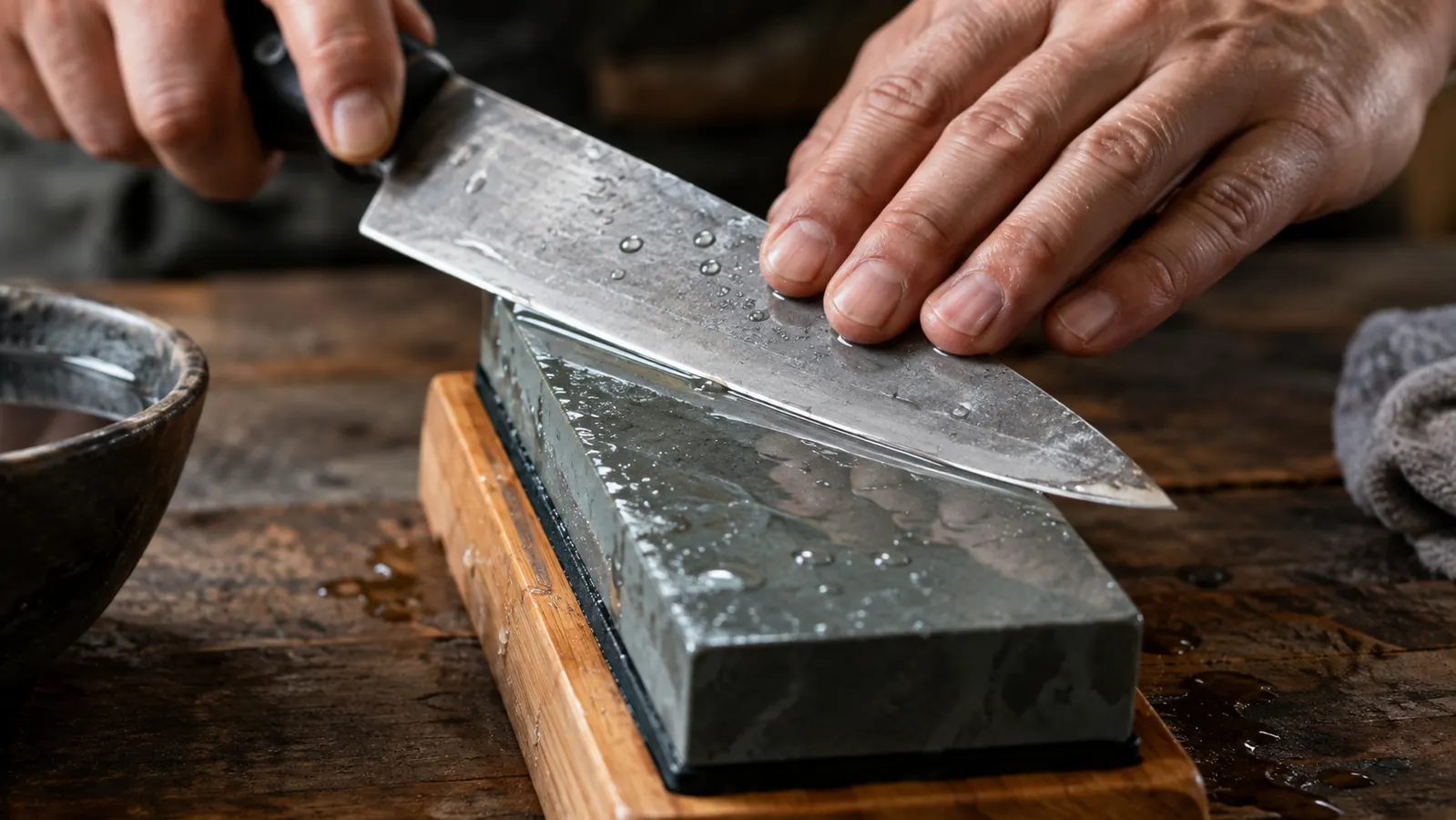
The bigger difference is the edge. I sharpened both knives on the same stone at the same time, and the COOLINA blade was still gliding through tomato skins two weeks later while the stamped knife was dragging on pepper skins. High-carbon steel that has been forged and hammered holds an edge longer than a stamped blade, and when it finally dulls, it comes back fast. Ten minutes on a whetstone and it is like new. I keep a hangar at the local field, and I know the difference between a tool that needs constant fiddling and one that just works. This one just works. I have owned stamped knives that needed a steel every single time I used them, and I did not realize how much that chipped away at the pleasure of cooking until I did not have to do it anymore.
Where a Stamped Knife Wins
I am not going to sell you the hand-forged knife by lying about the alternative. The stamped blade wins the only argument that matters to a lot of people: the price. It costs a fraction of what the COOLINA set costs, and out of the box it will cut a roast, trim a chicken, and slice a tomato perfectly well. For a cook who does that a few times a year, paying hand-forged money makes no sense. The stamped knife is not a bad knife. It is a good knife at a different price point, and for a lot of kitchens it is the right call.
The stamped blade also wins on weight and on worry. It is light, which matters if you have smaller hands or you are doing a long prep session, and it is inexpensive enough that you do not baby it. You can throw it in a drawer, let the kids use it, take it camping, and not lose sleep. My wife actually reaches for the lighter stamped knife for quick jobs because it is easy to grab. There is a real argument that the best knife is the one you are not afraid to use, and that argument has a lot of truth in it. I will be the first to admit that I keep a stamped knife in the drawer for the jobs I do not want to think about, and it has its place.
Two weeks after a single sharpening, the COOLINA blade was still gliding through tomato skins while the stamped knife was dragging on pepper skins.
The Hand-Forged Set I Reach for on Meat Night
Four hand-forged high-carbon blades that hold an edge weeks longer than the stamped knife I compared them against. If you break down meat more than once a week, this is the set that will still be on your counter in twenty years.
Amazon Check Today's Price on Amazon →What the Forging Actually Buys You
Here is the part that gets lost in the marketing. Forging means the knife starts as a solid billet of steel, gets heated, hammered, and shaped instead of being punched out of a sheet like a cookie cutter. That process aligns the grain of the steel and compresses the metal around the edge, which is why a forged blade holds an edge longer and resists chipping. It is also why it costs more: it takes real time and skill to hammer a blade into shape, and you cannot rush it. A stamped blade is cut, ground, and hardened, which is faster, cheaper, and perfectly adequate. You are not paying for hype. You are paying for better steel, more work, and a longer edge life, and whether that is worth it is exactly the question this article is answering.
Here is the thing about that edge life in real numbers from my kitchen. I carved a standing rib roast for Christmas, broke down two chickens the next week, and sliced a pork shoulder for sandwiches, and the COOLINA knife still did not need the stone. The stamped knife needed a few passes on the steel just to get through a raw pepper. I am not measuring this with lab equipment. I am measuring it the way a home cook does, by whether the knife does what you ask without a detour to the sharpener.
What Comes in the Set
The COOLINA Meat Lover set ships as four blades sized for different jobs, from heavy breaking-down work down to trimming and detail. In six months, I have used all four enough to know that none of them is a filler piece. In cheaper sets, there is always one knife you never touch. Here, I reach for all four, which is the best thing I can say about a set.
What About Maintenance?
Hand-forged high-carbon steel needs one thing stamped blades do not: a little care. You want to hand wash it, dry it, and keep it on a magnetic strip or in a block instead of bouncing around in a drawer. High-carbon steel can take on a patina and can spot if you leave it wet, and anyone who tells you otherwise is selling something. The trade is simple. You spend two minutes wiping down a knife after dinner, and in return you get an edge that stays sharp for weeks. I have had this set for six months, and it has not been a burden. It is just a habit, the same way I check the oil in the car before a long drive.
The stamped knife does not ask for any of this. You can run it through the dishwasher, and it will survive, which is exactly why so many stamped blades live in a drawer next to the takeout menus. There is a kind of freedom in owning a knife you do not have to think about. I get that, and I am not going to argue with it. I will only say that a few minutes of care has never once felt like work to me, and the payoff shows up every time I carve a roast without stopping to re-sharpen.
Who Should Buy Which
Buy the COOLINA hand-forged set if you cook meat on a regular basis, hate dull knives, and want to buy kitchen gear once instead of three times. That is me, and after six months I have zero regrets. Buy the stamped knife if you cook a roast a few times a year, want the lightest option, or need something you can abuse without thinking about it. There is no wrong answer here, and anyone who tells you the stamped blade is garbage has not actually used one. The right question is how often you cook, how much you hate sharpening, and whether you would rather spend money now or spend effort later. That is where your money actually goes.
For what it is worth, I bought the COOLINA set for myself after years of cheap stamped knives that lived in a drawer. My wife rolled her eyes at the box, then used one on a whole chicken and stopped rolling her eyes. Bill asked about it at the barbecue, and my son has already hinted that he wants one for his own kitchen. That is the kind of reaction a tool gets when it actually does its job better. If that sounds like your kitchen, the decision is already made.
The Bottom Line
Six months of side-by-side use settled it for me. The COOLINA hand-forged set holds an edge weeks longer, takes a sharpening better, and feels like a real tool in your hand. The stamped knife is lighter, cheaper, and easier to replace. For a home cook who breaks down meat weekly, the hand-forged set is the better long-term buy, and I say that as someone who is not easily impressed by kitchen gear. I have been cooking for thirty years, and this is one of the few sets I would buy again without hesitation. The stamped blade wins at the register. The COOLINA set wins on the counter, every week, for years. That is where your money actually goes, and now you know which side of that trade you are on.
Ready to Stop Fighting Dull Edges?
The COOLINA Meat Lover 4-Knife Set is the hand-forged set that won my six-month comparison. If you cook meat more than once a week, this is the one to get.
Amazon Check Today's Price on Amazon →