
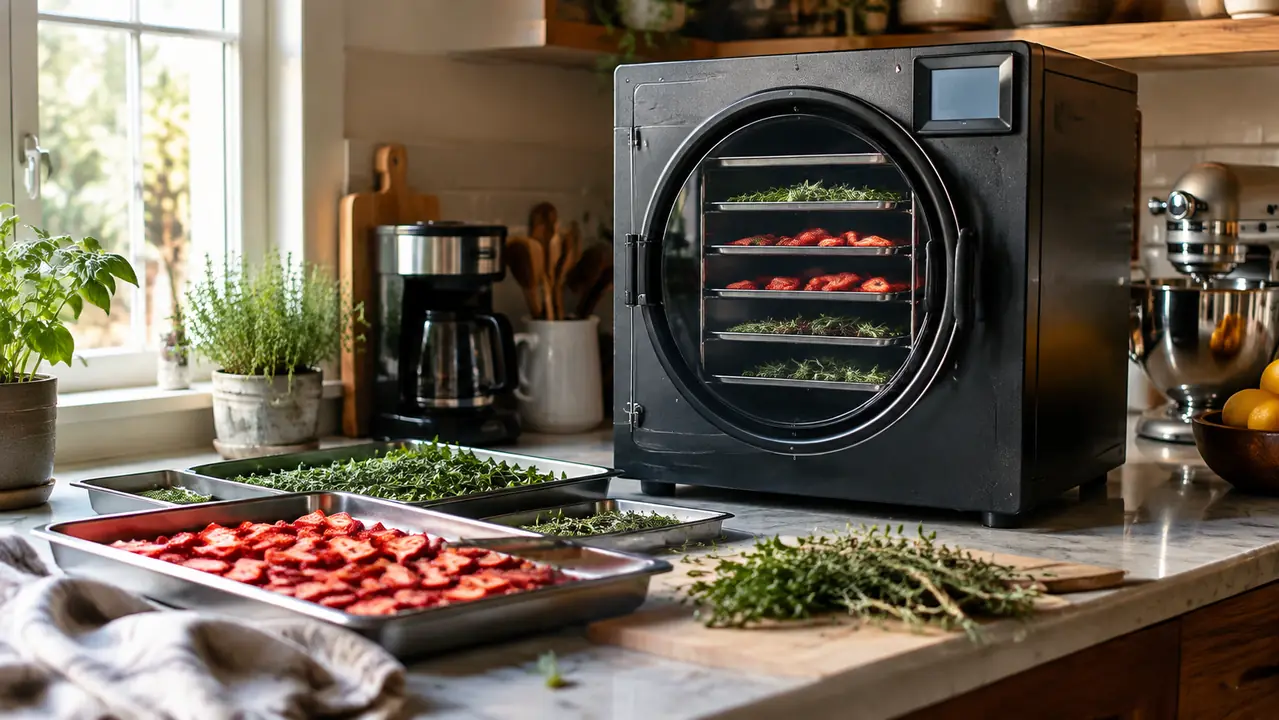
For a year now, the VEVOR freeze dryer has sat on my counter between the stand mixer and the coffee maker. My wife rolled her eyes when I unboxed it. My son asked if I was planning to feed the whole neighborhood. Twelve months and more than sixty batches later, nobody is rolling their eyes. The machine has earned its spot, and I have learned exactly what it will and will not do for your kitchen.
I will be straight with you. A freeze dryer is not a small purchase and it is not a small appliance. It is a serious machine that runs for a day or more per batch, makes noise while it works, and asks you to plan your cooking around it. But if you garden, buy meat in bulk, or just hate throwing food away, it changes how you think about your kitchen. Here is what a year of real use looks like, with real numbers.
The Quick Verdict
The VEVOR freeze dryer does what machines several times the price do, as long as you accept long runtimes, pump maintenance, and a real learning curve. A year and sixty-plus batches in, I would buy it again.
Amazon Check Today's Price →The freeze dryer that made the math work for my kitchen
After a year of weekly batches, the VEVOR is still running strong. Four trays, 8.8 to 13.2 lbs per batch, and it plugs into a standard outlet. See what it goes for today.
Amazon Check Today's Price on Amazon →How I've Used It
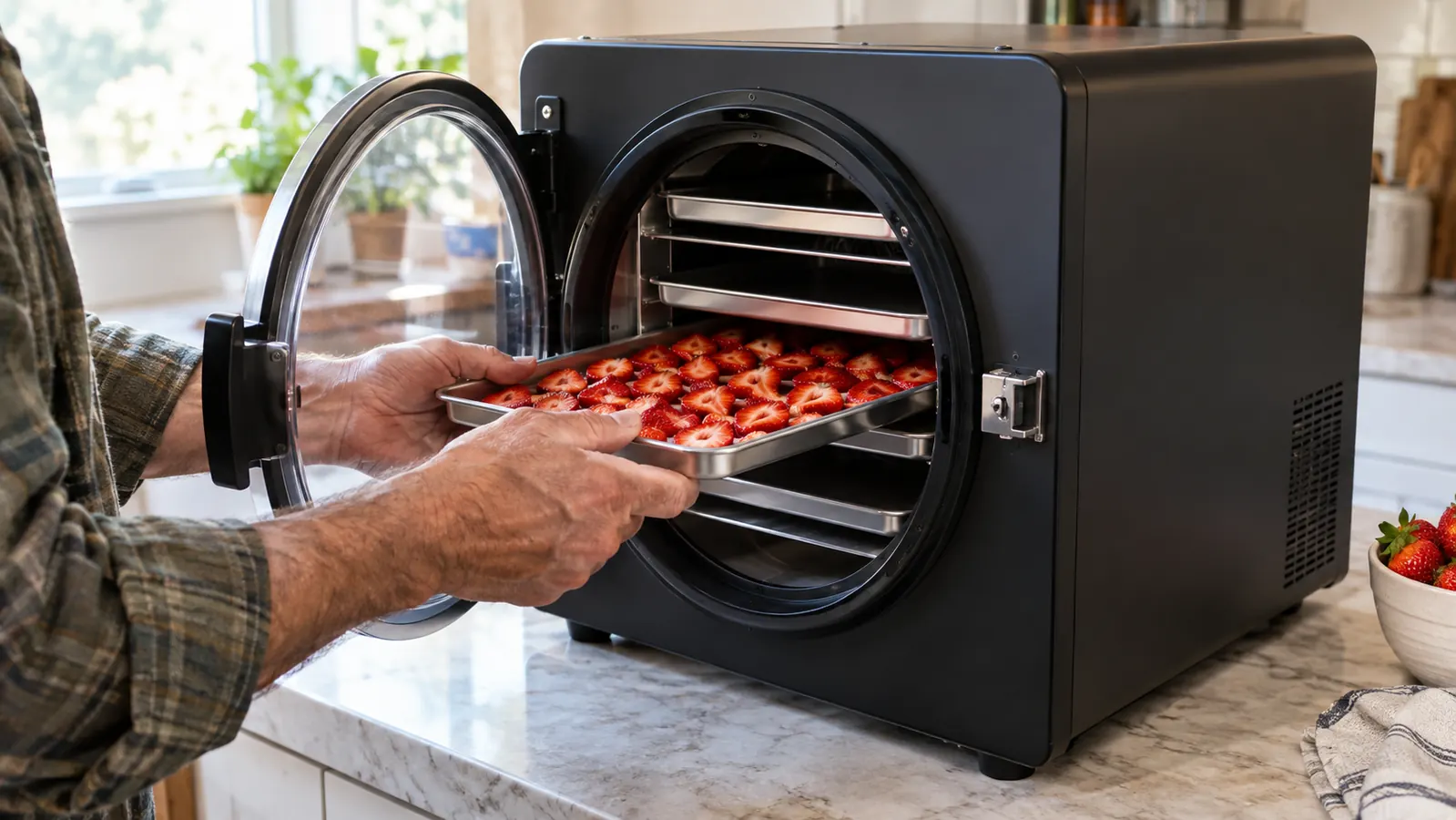
The first batch was strawberries from my wife's garden patch. I followed the manual, spread the berries across the four trays, closed the door, and let the machine do its thing. Twenty-two hours later I had a bag of freeze-dried strawberries that tasted like the fruit had been picked that morning. That first batch is the one that hooks you.
Since then I have run the gamut. Garden herbs, peppers, onions, zucchini, cooked ground beef, chili, soup, scrambled eggs, and more candy than I care to admit, because the grandkids demanded it. I keep a notebook on the counter and write down every batch: what I loaded, how long it ran, and what it weighed going in and coming out. The numbers in this review come from that notebook, not from a spec sheet.
The rhythm is simple now. Saturday morning I load a batch, it runs through Sunday, and by Sunday evening I am bagging food for the pantry. It has become as routine as putting out the trash. The first batch taught me more than the manual did. I loaded the trays too full and the run went long. Now I leave space between pieces and the runs come out closer to the short end of the range.
Not every batch is a winner, and you should hear about the failures too. The worst one was a tray of sliced avocado I threw in out of curiosity. It came out oily, stale-tasting, and went straight in the trash. The machine did what it was supposed to do. I loaded the wrong food. That is the kind of lesson you only learn by running batches, and it is why I tell people to start with cheap produce and short runs, not a thirty-hour chili on your first night.
Why Freeze Drying Beats Dehydrating
If you have only ever used a dehydrator, the difference is night and day. A dehydrator uses heat to drive moisture out of food, and that heat changes the food. It cooks it a little, darkens it, and leaves enough moisture behind that dehydrated food still needs careful storage and a shelf life measured in months, not decades. Freeze drying works differently. The food is frozen solid, the vacuum pump pulls the air out of the chamber, and the ice goes straight from solid to vapor. The food never gets warm enough to cook.
The result is food that looks, smells, and tastes like the original. Rehydrated, it is close to fresh. And it keeps. Properly sealed, freeze-dried food holds for twenty years or more. That is the whole reason people buy these machines, and it is the reason I bought this one.
The VEVOR's job in all of this is simple. Four trays, 8.8 to 13.2 pounds per batch, and a vacuum pump that does the heavy lifting. It is not a complicated machine. The complication is in the timing, and the timing is what you learn as you go. If you want the full breakdown of how the two methods compare, the short version is this: dehydrators are for snacks, freeze dryers are for storage.
Batch Sizes and Run Times: The Real Numbers
Here is the number that matters most, and nobody tells you this on the product page. The 8.8 to 13.2 pounds is what you put in, not what you get back. Freeze drying removes about 90 percent of the water weight. Eight pounds of strawberries in gives you a pound and a half of dried fruit out. The first time you see that, you will think something went wrong. Nothing went wrong. That is the water leaving.
Run times vary more than the weight. Herbs and sliced mushrooms finish in twelve to fourteen hours. Berries and chopped vegetables run twenty to twenty-four. Cooked meals, the ones with meat and sauce, are the long ones, thirty hours and up. My chili batches have run as long as thirty-six hours. A batch of ground beef, cooked and crumbled, is usually done overnight.
That is the trade you make with a machine in this class. The bigger home units run faster and hold more, but they cost several times as much and take up a lot more room. The VEVOR asks for patience. You load it Friday night and you are not bagging food until Sunday. If that rhythm works for you, the machine works. If it does not, no freeze dryer in this price range will fix it.
What It Costs to Run
The running cost is real, so let us be honest about it. The machine runs on a standard 110-volt household outlet, so you do not need an electrician. But the pump runs for the entire cycle and the cooling plate runs with it, so a long batch is a full day of continuous draw. You will notice it on the power bill, though not the way you would notice a month of running a window air conditioner. The honest way to think about it is per batch: a long run is real electricity, but it is turning cheap garden surplus into food that keeps for years.
Maintenance is the other cost, and it is mostly oil. The vacuum pump needs its oil changed every few batches, more often if you run heavy loads back to back. It is a twenty-minute job with a wrench and a catch pan, and the manual walks you through it. The pump also makes noise. It is not loud enough to wake the house, but it is present, and the first week my wife asked if something was wrong with the refrigerator.
The last cost is space, and it is the one people underestimate. This is a full-size appliance that needs clearance around it for airflow. Mine lives on the counter and it has become part of the kitchen. If your counters are already full, figure out where this goes before you buy it, because it is not going to fit in a cabinet.
What It Dries Well and What It Doesn't
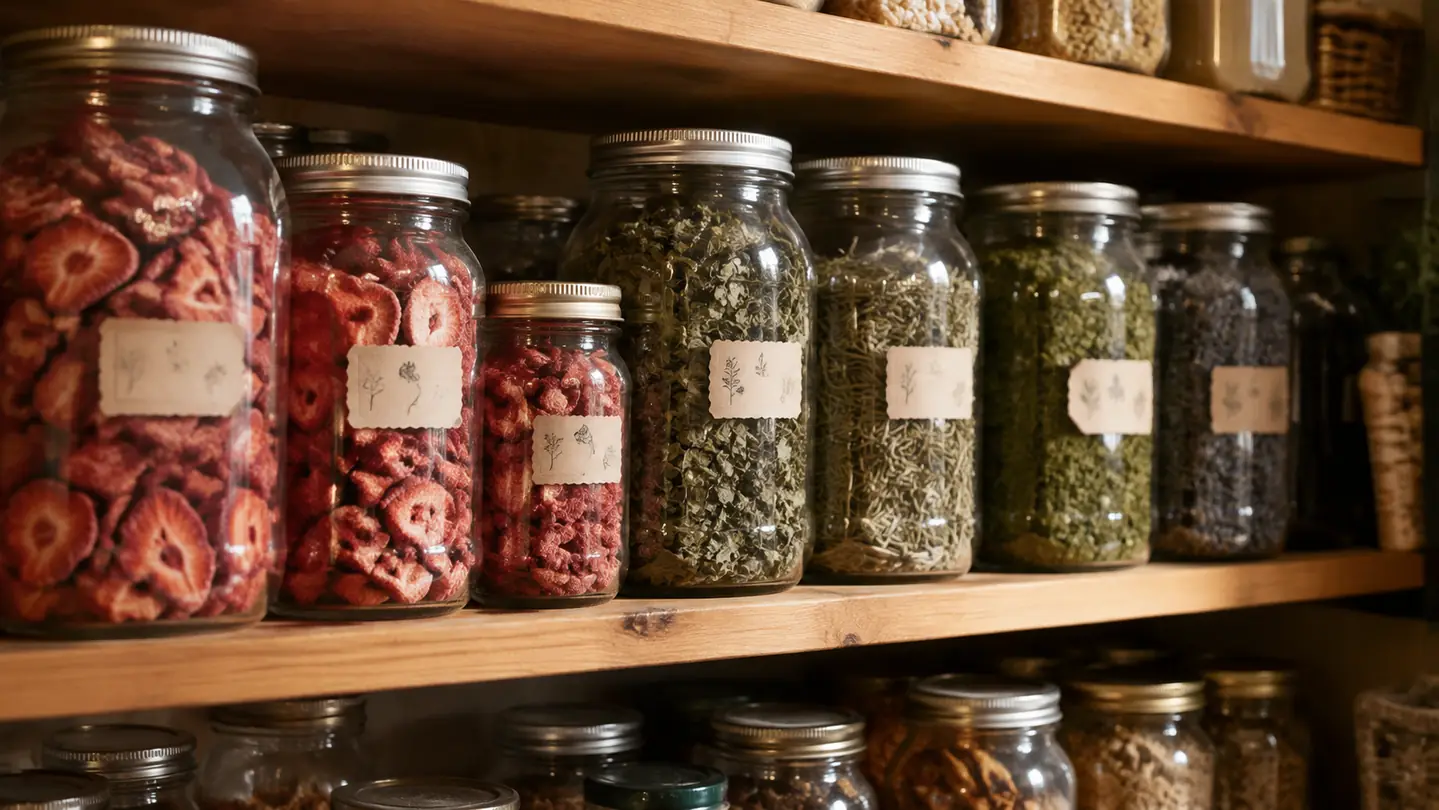
After sixty-plus batches, I can tell you exactly what this machine excels at. Garden produce is the obvious one: strawberries, blueberries, raspberries, corn, peas, green beans, peppers, and onions. Herbs are almost too easy. They dry in half a day and keep their color and smell better than anything I have ever gotten out of a dehydrator. Cooked ground meat is a staple in my pantry now, ready to rehydrate into tacos or pasta sauce in minutes.
The surprises were soup and chili. I freeze-dry leftover chili in cubes, and rehydrating it brings back a bowl that tastes like it came off the stove. Scrambled eggs are another one. Dried and reconstituted, you cannot tell them from fresh. And freeze-dried candy, which I thought was a gimmick until my grandkids cleaned out an entire batch in one visit.
The things that do not work are worth knowing too. High-fat foods are the big one, and I learned that one the hard way. Avocado, nuts, and fatty cuts of meat go rancid faster freeze-dried than they would in the freezer, because the fat has no water left to protect it. Watermelon and cucumber are mostly water and come out as a crumbly nothing. And some things are just better dehydrated: jerky, fruit leather, dried tomatoes. A dehydrator is still worth owning alongside this machine.
How It Compares to Harvest Right
You cannot talk about home freeze dryers without naming the big American brand in the room. Harvest Right dominates this category, and their machines are excellent. They are also priced like it. The VEVOR costs a fraction as much, and after a year of use, I can tell you exactly what that fraction buys you.
What you give up: batch capacity, for one. The bigger units handle two to three times the food per run. They also run faster on some foods and have a more polished control panel. The VEVOR's controls are basic, a dial and a few buttons, and the manual reads like it was translated twice. You will figure it out, but you will earn it.
What you keep: the same freeze-drying process, the same shelf-stable result, and the same satisfaction of opening a jar of strawberries in January that taste like July. For my kitchen, which is two people and the occasional grandkid visit, the VEVOR's batch size is plenty. If I were feeding a family of six or running a small farm stand, I would want the bigger machine, and I would pay for it.
What I Liked
- Real freeze-dried results at a fraction of the cost of the big-name machines
- Four trays and 8.8 to 13.2 lbs per batch handles a serious home garden
- Runs on a standard 110-volt outlet, no electrician required
- Survived a year of weekly use without a single breakdown
- Basic controls that are easy to master after a batch or two
Where It Falls Short
- Long runtimes: 24 to 36 hours for cooked meals and full batches
- Vacuum pump needs regular oil changes and makes steady noise
- The batch rating is wet weight in, you get back a fraction of that
- Takes up real counter space and needs airflow clearance around it
- Customer support is thinner than the big-name brands, you are mostly on your own
Sixty batches in twelve months, and the only thing I have replaced is the vacuum pump oil. That is the whole review in one line.
Who This Is For
If you garden and you have ever watched a third of your harvest go soft in the crisper drawer, this machine is for you. If you buy beef in bulk or hunt, it is for you. If you like the idea of a pantry that feeds you for months when the nearest store is an hour away, it is for you. I keep a jar of freeze-dried chili in my hangar, and it is the best lunch I have out there.
It is also for anyone who just hates waste. My wife stopped rolling her eyes the week she found a bag of freeze-dried corn from August and put it in October's soup. The machine turns surplus into storage, and that feeling does not get old. Bill, my neighbor, watched me bag a batch of soup one Sunday and asked if I was stocking for the apocalypse. I told him I was stocking for February. He bought a dehydrator the next week, which tells you everything about the difference between the two machines. If you are still weighing whether a freeze dryer pays for itself, that is the argument that settled it for me.
Who Should Skip It
If you only want jerky and dried fruit, buy a dehydrator. It is cheaper, faster, and does that one job better. A freeze dryer is overkill for snacks, and the long runtimes will frustrate you.
If you will not run it at least a couple of times a month, skip it. This is a machine that rewards habit. It sits on your counter, takes up space, and makes noise for a full day every time you use it. If that sounds like a chore, it will be a chore. And if your kitchen is genuinely small, the space question alone might be the answer. There is no shame in that. The machine is honest about what it is, and you should be honest about whether it fits your kitchen.
A year in, I would buy it again
The VEVOR freeze dryer has earned its counter space in my kitchen. If you are ready to turn surplus into shelf-stable food, check today's price and see whether the math works for you.
Amazon Check Today's Price on Amazon →