
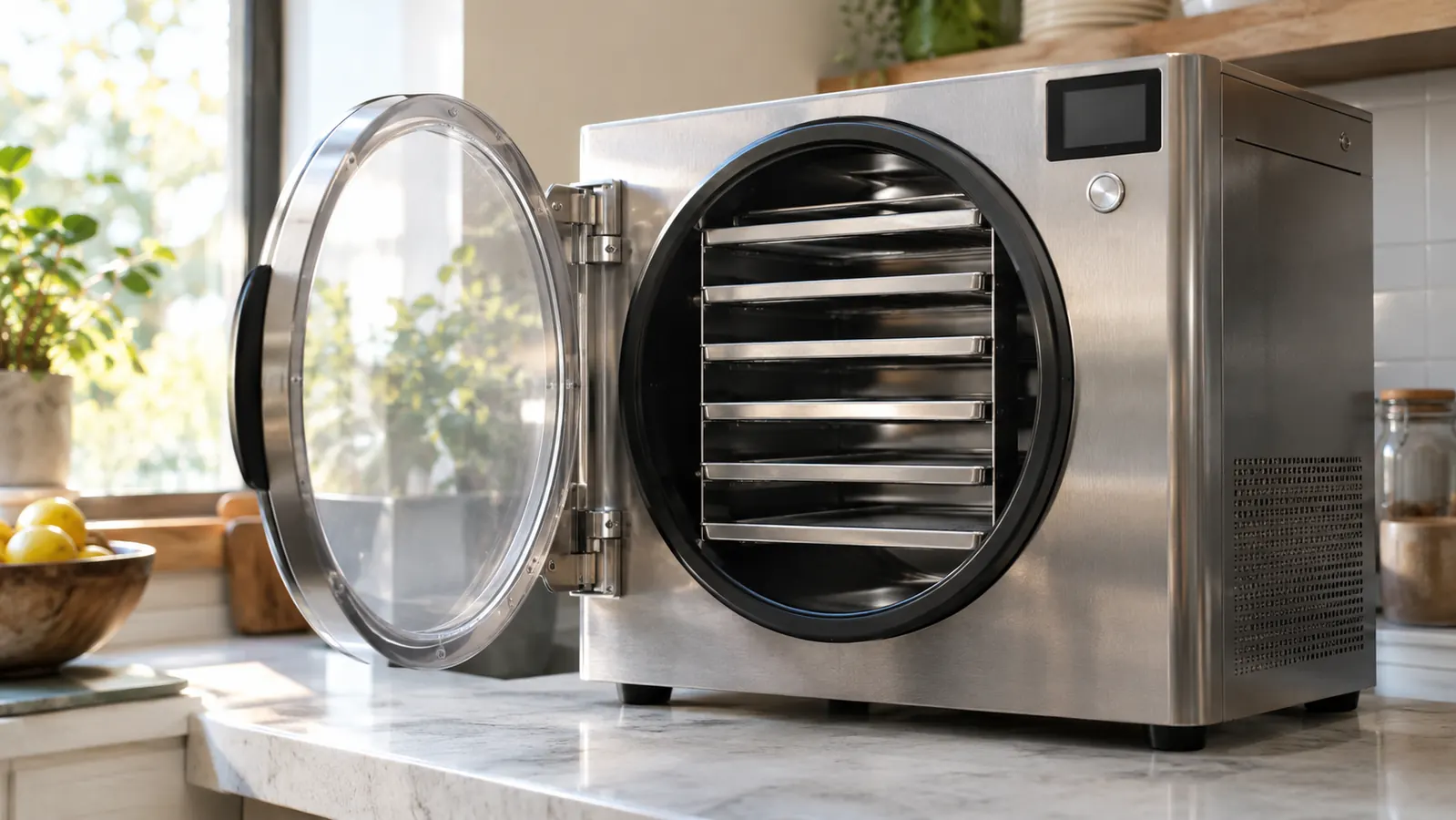
Freeze drying and dehydrating both pull water out of food, but they do it in completely different ways, and the end results are not interchangeable. I've been putting up food in my home kitchen for thirty years, and when I finally ran a VEVOR freeze dryer through a real season of use, it changed how I think about food storage. If you're weighing the two methods for your own pantry, this is the comparison I wish I'd had before I bought anything.
The short answer is that a freeze dryer is for food you want to keep for years, and a dehydrator is for food you'll eat within a few months. Both have a place, but they solve different problems. Here's how they actually differ once you start using them.
| VEVOR Freeze Dryer | Dehydrator | |
|---|---|---|
| Water removal | Sublimation under vacuum, preserves structure | Evaporation with warm air, collapses cells |
| Texture | Crisp, airy, rehydrates like fresh | Chewy, leathery, denser |
| Shelf life | Years when sealed properly | Months to a year |
| Nutrition retention | Retains most vitamins | Loses more heat-sensitive vitamins |
| Time per batch | 20 to 40 hours, hands off | 6 to 12 hours |
| Energy use | Higher per batch | Lower |
| Upfront cost | Higher initial investment | Lower initial cost |
| Space | Takes up counter space, runs for a day | Smaller, easier to store |
| Best for | Long-term storage, full meals | Quick snacks, jerky, fruit leather |
How Each Method Works
Freeze drying, or lyophilization, works by freezing the food first, then placing it in a vacuum chamber. The frozen water sublimates, meaning it goes directly from solid to vapor without ever becoming liquid. That's why the cell structure stays intact. Dehydrating, by contrast, uses warm air to evaporate moisture. The heat causes the cell walls to collapse, which is why dehydrated food comes out denser and chewier.
The difference shows up in the numbers. A freeze dryer runs a vacuum pump and a compressor, pulling the chamber down to a fraction of atmospheric pressure. The whole process takes anywhere from 20 to 40 hours, depending on the food and how full the trays are. A dehydrator just circulates warm air at around 125 to 145 degrees Fahrenheit, and most batches finish in 6 to 12 hours.
The freeze dryer also operates at a much lower temperature than a dehydrator. The food stays frozen through most of the cycle, so it never sees heat above about 80 degrees. That's why vitamins survive. A dehydrator runs at 125 to 145 degrees, which is enough to destroy some heat-sensitive nutrients. For anyone preserving food for nutritional value, that temperature difference is a big deal.
How I Tested Both
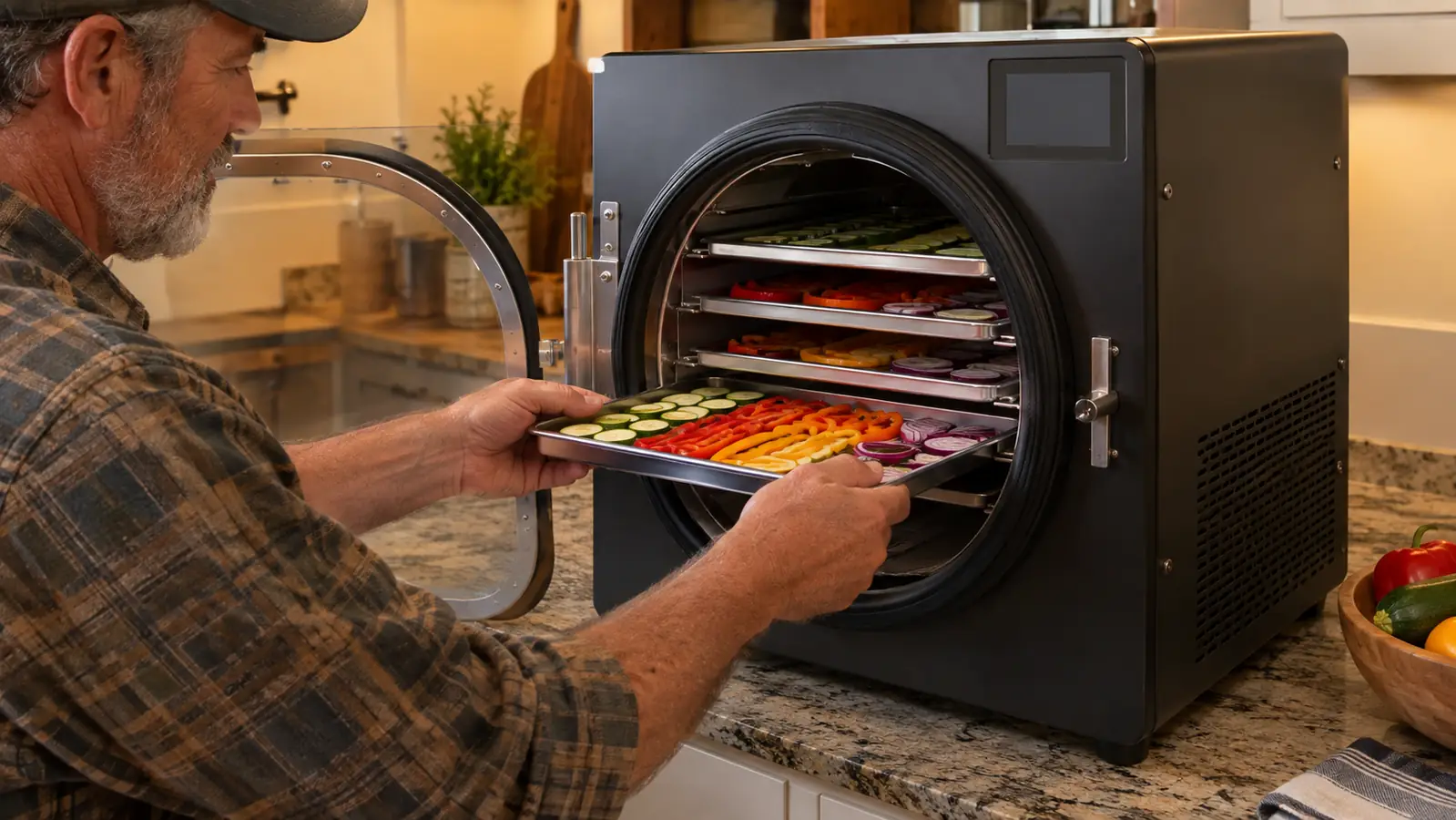
I ran both machines side by side for three months, using the same produce from the same farmers market. I did batches of strawberries, green beans, chili, and even eggs. For each batch I recorded the time from load to dry, the texture after rehydration, and how the food held up after two weeks, two months, and six months. The results were consistent enough that I stopped guessing and started planning around the strengths of each method.
The freeze dryer I used was the VEVOR 8.8 to 13.2 pound model. It sat on my counter next to the dehydrator, which I've had for about six years. I loaded both with the same weight of food each time to keep the comparison fair. I also measured the electricity draw with a cheap watt meter, because that matters when you're running a machine for a full day.
One thing that surprised me was how different the same food came out. A batch of strawberries that went through the freeze dryer looked like the original berry, just lighter. The same strawberries from the dehydrator looked like shriveled, dark red raisins. My wife noticed the difference immediately. For any dish where texture matters, the freeze dryer is the clear winner.
I also tested how each machine handled a complete meal. I made a pot of chili, split it into two batches, and ran one through each. The freeze-dried chili rehydrated in boiling water in about ten minutes and tasted like I'd just made it. The dehydrated chili turned into a dense paste that needed a lot of stirring and still had a leathery mouthfeel. That single test sold me on the VEVOR for anything I want to keep for a year or more.
I tested eggs both ways. Scrambled eggs that went through the freeze dryer rehydrated into fluffy, tender eggs that tasted like they were just cooked. The dehydrated version came out as a tough, rubbery sheet that never really softened. That was the clearest test of all. If you're planning to store protein for emergencies, the freeze dryer is the only way to get a usable product.
Where VEVOR Wins
The freeze dryer's biggest advantage is texture and rehydration. When I freeze-dried a batch of strawberries last August, they came out so light they floated off the tray, and after five minutes in water they looked and tasted like fresh-picked berries. My wife couldn't tell the difference in a shortcake. A dehydrator turns fruit into chewy leather, which is fine for snacking but not the same. The vacuum process keeps cell walls intact, so you're not collapsing the structure the way hot air does.
The other big win is shelf life. I sealed a jar of freeze-dried green beans in September and opened it in March; they were still crisp. With dehydration, you're lucky to get six months before quality drops. I also like that the freeze dryer handles complete meals. I've run a full batch of chili, another of beef stew, and they rehydrate into something close to fresh-cooked. That's something I never got from my old dehydrator.
The VEVOR unit also gave me consistent results across different foods. I didn't have to fiddle with settings for every item. Once I learned the basic cycle, I could load trays at night and have a finished batch by the next evening. The four trays let me process a decent amount at once, and the vacuum gauge let me know when the batch was done. It took a couple of runs to get the hang of the cold trap, but after that it became routine.
I also found that freeze-dried food takes up less space than dehydrated food, because it's lighter and airier. I packed a quart jar with freeze-dried corn and it weighed almost nothing. The same amount of dehydrated corn filled the jar to the same level but felt heavier and denser. For long-term storage, that weight difference matters when you're moving boxes to a root cellar or loading a bug-out bag.
The VEVOR machine itself is solidly built. The stainless steel chamber and the four trays feel like they'll last. The vacuum pump is separate, but it's well made and has held up through dozens of runs. I've had mine for eight months and nothing has loosened or leaked. That matters to me, because I've had cheap dehydrators that cracked and fell apart within a year.
Rehydrating freeze-dried food is also faster. I just add boiling water and let it sit. Green beans were ready in four minutes. Carrots in three. Even the chili was back to a proper stew consistency in under ten. With dehydrated food, you have to simmer for a long time and sometimes it still doesn't fully recover. That convenience matters when you're cooking on a camp stove or trying to get dinner on the table quickly.
Where Dehydrating Wins
Dehydrators are far easier on the clock and the wallet. A typical run on my dehydrator takes about eight hours for apple slices, while the freeze dryer runs 24 to 36 hours for the same volume. You're also looking at a much lower electricity draw. I measured my unit and it pulls maybe 300 watts, where the freeze dryer runs a vacuum pump and compressor that easily go through several times that over a day. If you're preserving food to eat this season, a dehydrator gets the job done faster and cheaper.
Dehydrators are also simpler to operate. No need to watch a vacuum gauge or worry about a cold trap. I can load a tray of jerky before work and have it done by dinner. The texture is denser, which some people prefer for things like jerky and fruit rolls. And if you're just doing small batches, a dehydrator takes up less counter space and stores away in a drawer. I still use mine for herbs, mushrooms, and any time I want something done in a single afternoon.
For certain foods, dehydration is actually better. Mushrooms dry faster and keep more flavor in a dehydrator. Herbs like rosemary and thyme come out brittle and easy to crumble. And fruit leather is a treat you can't make in a freeze dryer the same way. The freeze dryer makes a crisp, airy version, but it's not the same chewy snack. So I don't see the dehydrator as a compromise; it's a different tool for a different job.
The learning curve is also gentler. My dehydrator has a single dial and a timer. I set it and forget it. The VEVOR freeze dryer has more settings and a vacuum pump that needs attention. You have to make sure the drain hose is clear, the cold trap is empty, and the oil in the pump is at the right level. That's not hard, but it's more involvement than most people expect from a kitchen appliance.
The electricity cost is real. Running a freeze dryer for a full day uses several times the power of an eight hour dehydrator run. On my last batch of corn, the freeze dryer pulled about 2.4 kilowatt hours over 30 hours, while the dehydrator used about 1.2 kilowatt hours in 10 hours. Over a season of preserving, that difference adds up. If you're on a tight energy budget, that alone might push you toward a dehydrator.
Check the VEVOR Freeze Dryer's Current Specs
It's the machine I keep coming back to for long-term food storage. See the exact model I tested and its current specs.
Amazon Check Today's Price on Amazon →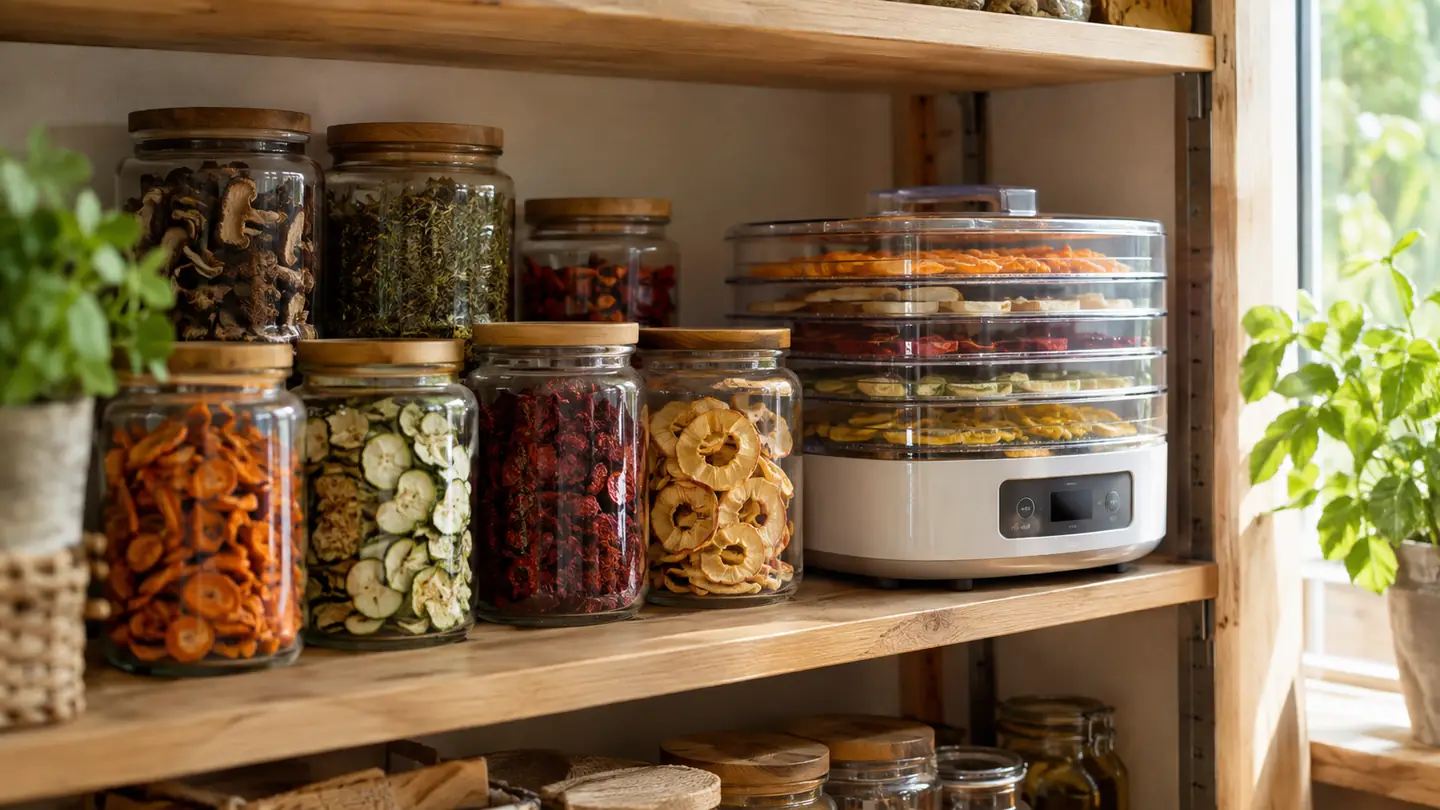
Who Should Buy Which
If you're stocking a long-term pantry, have a garden that overproduces, or want to make backpacking meals that actually taste good a year from now, the VEVOR freeze dryer is worth the space and the power draw. If you mainly want to preserve this week's harvest for the next few months, or you like jerky and dried fruit for snacks, a dehydrator will do fine and cost a fraction of the money. I run both in my kitchen, but they serve completely different jobs.
I'd put it this way: buy a dehydrator first if you're just getting started. It's cheaper, faster, and teaches you the basics of water removal. Then, if you find yourself with a surplus that you want to keep for a year or more, add a freeze dryer. That's the path I wish I'd taken. Instead I bought a cheap dehydrator, used it for six years, then moved up to the VEVOR. Both have earned their place on my counter.
For my money, the freeze dryer is the better long-term investment, but it's not for everyone. If you're the kind of person who preserves a few quarts of tomatoes each summer, a dehydrator is plenty. If you're putting up a year's worth of food for a family or planning for emergencies, the freeze dryer is the tool that does the job right. I'd rather have one good freeze dryer than a pile of dehydrated food that loses quality after a few months.
Maintenance and Noise
The freeze dryer is not quiet. The vacuum pump hums and the compressor cycles on and off, so you'll hear it from the next room. My dehydrator is nearly silent, just the whisper of a fan. If you're planning to run a freeze dryer overnight, put it somewhere you won't mind the noise. I keep mine in the laundry room, and I can still hear it from the kitchen.
Maintenance is also different. The dehydrator just needs a wipe down and occasional cleaning of the trays. The freeze dryer has a drain valve that has to be emptied after every batch, and the cold trap needs to be defrosted. The vacuum pump oil has to be checked and changed every few months. None of it is hard, but it's more than I expected when I first bought it.
My Final Take
If I had to pick one machine to keep, it would be the VEVOR freeze dryer. The shelf life and quality of the food it produces is that much better. But that's because I'm the kind of person who cans, freezes, and dries enough to feed a family of five through the winter. If you're not doing that scale of preservation, the extra cost and hassle of a freeze dryer isn't worth it.
The best move is to own both. Use the dehydrator for quick snacks and small batches. Use the freeze dryer for the heavy lifting. That's what I do now, and I've never had a pantry that looked this good. The VEVOR sits on the counter ready to go, and the dehydrator lives in a cabinet until I need it. Together they cover every preserving job I've come across in thirty years.
One more thing: don't let the long cycle scare you off. The freeze dryer runs unattended overnight, so the actual hands-on time is maybe twenty minutes per batch. You load it, turn it on, and come back the next day. My dehydrator needs more babysitting because you have to rotate trays and check for even drying. For me, the hands-off aspect is a huge win.
Ready to Put Food Up for Years?
If you're serious about long-term preservation, the VEVOR freeze dryer is the tool. See the model I used and why it earned a permanent spot on my counter.
Amazon See the VEVOR Freeze Dryer on Amazon →