
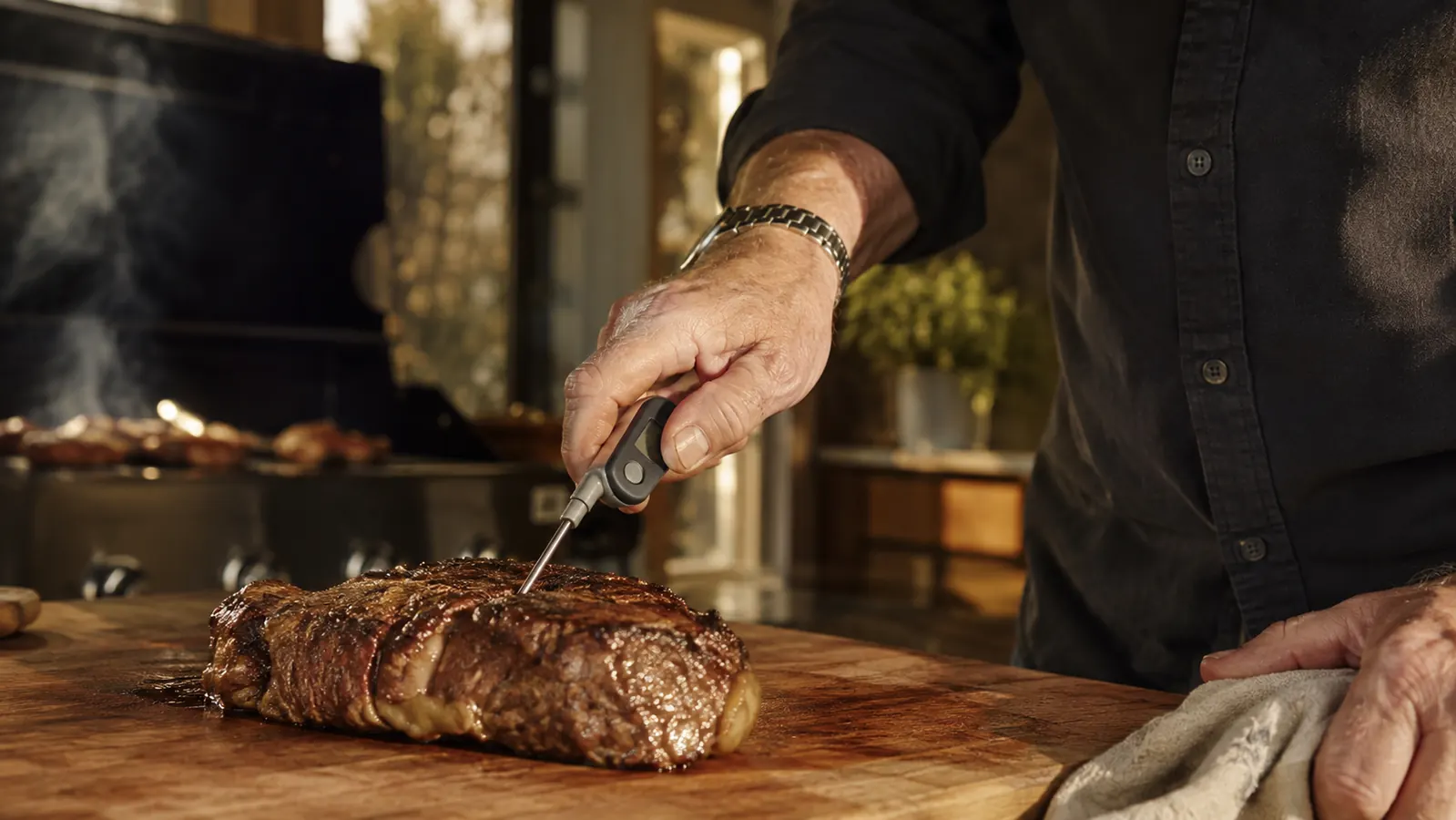
Fifty-five thousand ratings on Amazon, and a big share of them are five stars that all read like the same sentence: quick, clear, cheap, works. I believe that crowd, I just do not think they tell the whole story. The TempPro TP19H, the folding-probe instant-read thermometer that most people still search under its older ThermoPro name, has lived in my kitchen for over a year now. Same company, same model number, new name on the box. I have used it on a 12-pound turkey, a brisket that ran long, chicken thighs, burgers, a fryer full of oil, and a lot of nighttime grill checks I will not date-stamp. The five-star crowd is not wrong. It is a genuinely good thermometer for the money. It is also not the one-second, zero-effort instrument the listing makes it sound like, and its quirks only surface after a few months of weekly cooks. That is the part we are going to talk about.
If you have been cooking as long as I have, you know the exact failure this thing is built to fix. The timer says the roast has been in long enough. Your hand says the thick part still feels cold through the foil. So you cut into it to peek, and that is how a good bird dies slowly in the oven. I bought the TP19H for one reason and one reason only: I wanted the number instead of the guess. What the first year taught me is that the number only helps if you trust it, and trusting it means knowing exactly where this little thermometer stretches the truth. None of that shows up in a five-star headline.
Which gets to why an honest version matters. A five-star Amazon review is usually written the day the box arrives, sometimes before the first dinner is even off the stove. A man rates a thermometer after one chicken breast and calls it a day. The things that would have cost it a half-star, the wake sensor that nods off mid-grab, the printed label that rubs away, those only show up after the sixtieth cook. Nobody comes back to edit a four-star review down to three. So the aggregate score is a picture of the first weekend. This is a picture of the first year.
The Quick Verdict
A fast, accurate check thermometer that earns the fridge-door magnet spot, with a wake sensor and a read-speed claim that are each a little more optimistic than the ad copy.
Amazon Check Today's Price →You Have Read the Reviews. Here Is the Verdict.
Fifty-five thousand ratings and a year of my own oven time point the same direction. The short version: buy it, keep it in the drawer, and read the part below about where the probe goes, because that is where the whole skill lives.
Amazon Check Today's Price on Amazon →How I've Used It
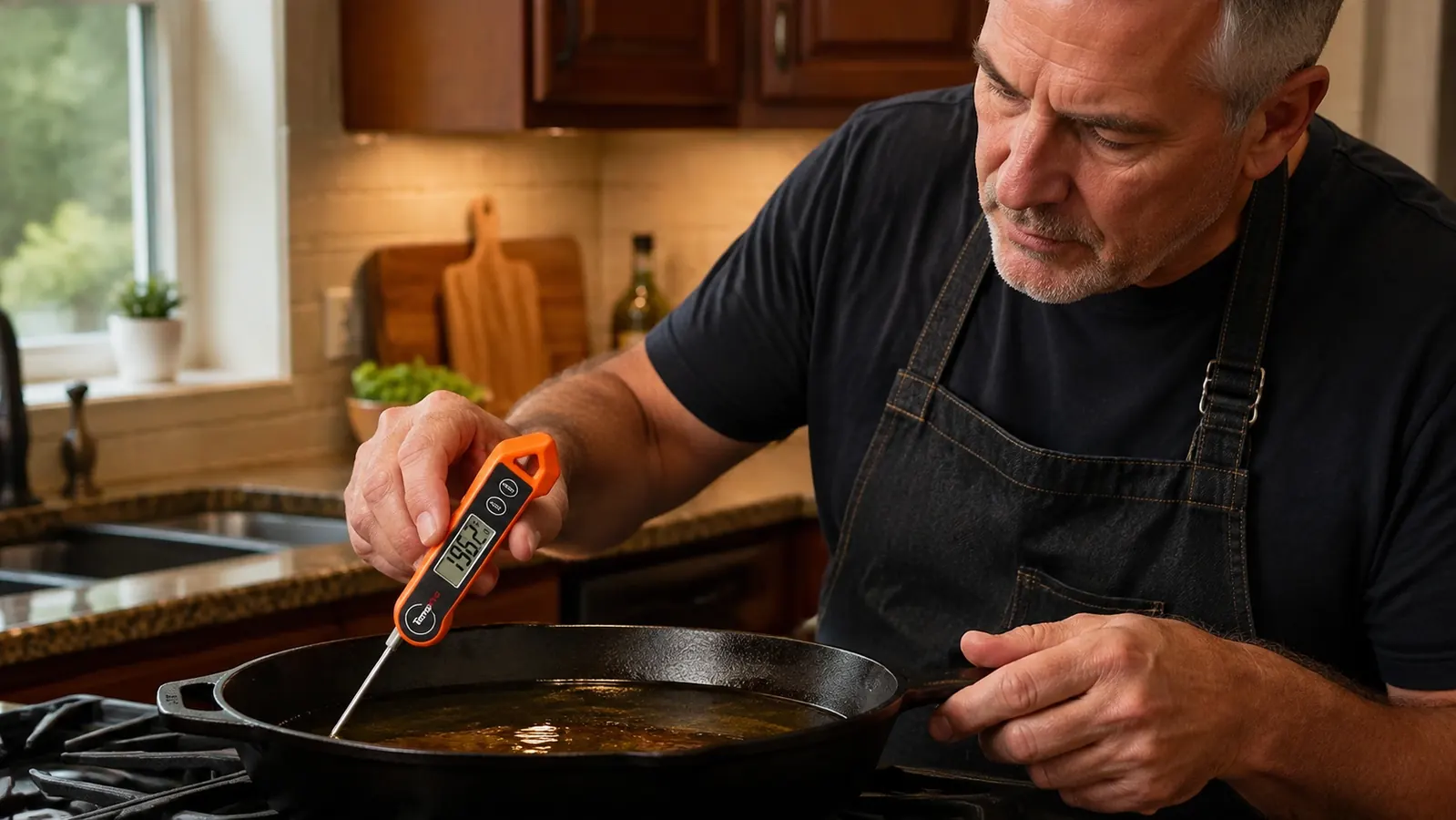
The TP19H has four regular jobs in my kitchen. It checks the thickest part of a roast before I pull it from the oven. It checks a pan of oil before I drop chicken in. It sits on the counter when I cook burgers, so I can poke each one as it comes off the griddle. And the rest of the week it lives on the fridge door, because the magnet on the back and the folding probe mean it disappears into kitchen noise until I actually need it. That last part is the one the reviews underrate.
My test run was the 12-pound turkey last Thanksgiving. Twenty-two years I pulled birds by the drumstick jiggle, and last year it became a numbers game. Probe into the thickest part of the thigh, ignore the breast until it catches up, and pull when both sit at their targets. The display climbs fast enough that you can watch it move once the heat sinks in. That bird rested thirty minutes and came out at a temperature I had only read about in cookbooks. Carving a turkey you did not have to gamble on is a quiet pleasure.
Since then it has verified a steak sear in cast iron, caught fried chicken at a done center without burning the coating, and told me when the fryer oil was back down between batches. I also use it the way the paperwork intends. Candy sugar hits its stages at very particular numbers, and guessing across three hundred degrees of molten sugar is a bad idea in a way that leaves burns. It has never let me down there, not once.
What 50,000 Five-Star Reviews Get Right
Start with read speed, because that is the whole point of the machine. The one-second sticker is marketing, and I will get to why in a minute, but the practical speed is the difference between checking the chicken and babysitting the grill. In practice the display has settled in about two seconds on cold meat and faster on anything near room temperature. For a cook juggling a lid, a towel, and a schedule, that is fast enough that you stop dreading the check.
Next, the probe tip is thin, and that matters more than most buyers realize. A fat probe leaves a channel in a steak and then reads the cold air in that channel instead of the meat. The TP19H tip is thin enough to read a three-quarter-inch burger patty without blowing through it, and that is the difference between reliably medium and randomly gray. Third, the backlight. I grill after dark more than I would like to admit, and the display is genuinely readable at arm's length with no porch light on.
Fourth is the one the reviews underrate most. It wakes when you pick it up, so the display is already live by the time the probe reaches the meat, no tapping a dead screen with oily fingers. That is the feature that made me reach for it daily instead of on Sundays. My thermometer hangs where I can grab it, and that constant availability is worth more than a tenth of a degree of extra accuracy ever was.
What Nobody Tells You About the TP19H
Now the part where I earn my skepticism. The motion wake is the feature that sold me, and it is also the one that occasionally disagrees with you. Grab it at the angle the sensor does not like and the screen stays dark until you jiggle it. More annoying, it wakes when it should not, so set it down near a vent or drop a cabinet door and you will find it showing you the temperature of the room for nothing. Neither is a dealbreaker. Both are real, and neither shows up in the review grid.
The read speed, promised. On a roast coming straight from a hot oven, the display jumps to the neighborhood almost instantly, then fusses over the last degree or two, and by the time the digits stop moving I count two and a half seconds, not one. For a turkey that is nothing. For a delicate fillet, or a sous-vide cook where two degrees are the whole ballgame, you want a thermometer that costs a lot more. The TP19H knows where it lives.
Two more small things that read as nothing until they bite. First, the display keeps reading after you pull the probe out, so thirty seconds later it is showing you 74 degrees of kitchen air, and a tired cook will have at least one 'wait, did I just serve that?' moment before the brain catches up. Second, the serial label on the back wears off. Again, minor, but it is the only marking on the entire unit, and mine was gone by month six.
And one structural limit worth naming before you buy. This is not a leave-in thermometer. It goes to sleep after a few minutes without motion, so you cannot clip it into a brisket, close the lid, and come back in four hours. For that job you want a probe and receiver setup, and there are good ones. The TP19H is a check thermometer. It is exceptionally good at being a check thermometer, and the most common complaint buried under the five stars is people who bought it expecting leave-in behavior.
The Rebrand Nobody Explains
Here is the thing that will trip up half the people who land on this page, because it tripped up me. You searched ThermoPro, the reviews are under ThermoPro, and then the box shows up saying TempPro. Same company, same TP19H model code, same folding probe, same thin tip. The manufacturer now brands the line as TempPro, and the listing itself carries the note '(Previously ThermoPro)'. If your search history and your kitchen drawer say ThermoPro, you have found the right thermometer.
Why should you care? Because every rebrand starts a whisper that the old version was better and the new one is the budget clone. On the TP19H that is simply not the story. The unit I have, bought after the name change, carries the same model code the five-star army reviewed, and it behaves the way the five-star army described. TempPro is not the knockoff. It is the same tool wearing the current label, and sellers who list it under the old name bank on your confusion.
It also tells you the star rating is worth something. When a listing survives a rename and still carries 55,000 ratings at a high four-plus average, that is the same product being reviewed before and after the box changed. A rebranded clone usually starts from zero. This one did not, because it is the same tool, which is as close to independent verification as kitchen gear gets.
The practical takeaway is short. Do not pay extra for a listing that still leads with ThermoPro on the theory that it is the 'real' one. Compare today's price on this model under the current brand, check the TP19H model code when it arrives, and you will get exactly what the reviews describe. Buying the TempPro labeling is buying the same instrument with its paperwork in order.

How It Compares to the Thermometers I Almost Bought
Every thermometer conversation has to touch the ThermoWorks Thermapen, the hundred-dollar unit that food writers treat as the gold standard. It is faster, its stated accuracy is tighter, and it is built to outlive the cookbook. I have used one and it is a genuinely better instrument. It is not four times better for someone checking a chicken three times a week, and I go through the honest tradeoff point by point in the comparison I wrote between the two.
Below the TP19H, the cheap end of the market is full of no-name folding probes that drift by ten degrees and display little pictures of a cow and a pig instead of numbers. If that is what you have now, this model will feel like a real instrument, because it reads actual degrees you can decide from and asks you to defend nothing. That gap, between a guessing toy and a tool, is the whole market this thermometer owns.
The model's job is to replace the poke test and the timer, and the day it stops being amazing is the day you stop noticing it. If you want the full year in one place, my long-haul writeup covers the same twelve months with fewer opinions and more oven time. For this page, the point is simpler: it has earned the magnet spot on my fridge, which is a higher honor than any rating.
What I Liked
- Fast enough to check without babysitting the grill
- Thin probe reads burgers and thin breasts without a cold-air channel
- Backlight readable on a dark porch at arm's length
- Motion wake and a magnet, so it lives where you can actually grab it
- Real numbers, not doneness icons, so the decision stays yours
Where It Falls Short
- The one-second claim is optimistic; the last degree or two costs another second
- Motion wake can sleep on you and wake when it should not
- Not a leave-in meter: it sleeps after minutes and cannot stay in a brisket for hours
- The serial label on the back wears off within months
The first turkey I pulled at a measured 160 in the thigh was the best bird I have cooked in twenty-two years, and I did not have to cut it open to find out.
Who This Is For
This one is for the cook who grills and roasts often enough that timing by feel has started to feel like gambling. You do not cook for a living, you cook for people you like, you want dinner on the table at a defensible hour, and you do not want to be the house that serves dry chicken twice in a row. If that sounds like you, a check thermometer in the drawer changes the outcome more than any single pan or knife at twice the money. You probe, you read, you pull at the number, and dinner stops being a nervous event.
I spend my weekends with engines and airplanes, so I do not ask a tool to be beautiful, I ask it to be repeatable. This thermometer is the most repeatable thing in my kitchen. If you want the same deal, one honest reading every single time at a price that never gets mentioned at the dinner table, it is the easiest buy on the counter.
Who Should Skip It
If your cooking never goes past a steak you can judge by pressing on it with a thumb, you may not need it. If you mostly smoke meat low and slow for six to ten hours, skip this and buy a leave-in probe with a receiver instead. And if you cook sous-vide, where a single degree is the entire point, spending up on a certified-instrument brand is defensible. The TP19H is at its best in the middle of the market, and it is comfortable saying so.
That is the whole thing, told once. Fifty-five thousand ratings and a year of my own oven time point the same direction. It reads fast, it reads thin, it reads after dark, and it will not do leave-in duty. Buy accordingly, probe the thickest part, and stop trusting the timer.
The Number Beats the Feeling, Every Time
A check thermometer you will actually reach for, at a price that makes the decision easy. That is the whole pitch, made once. If a dry Thanksgiving bird keeps you up in October, this is the cure.
Amazon Check Today's Price on Amazon →