
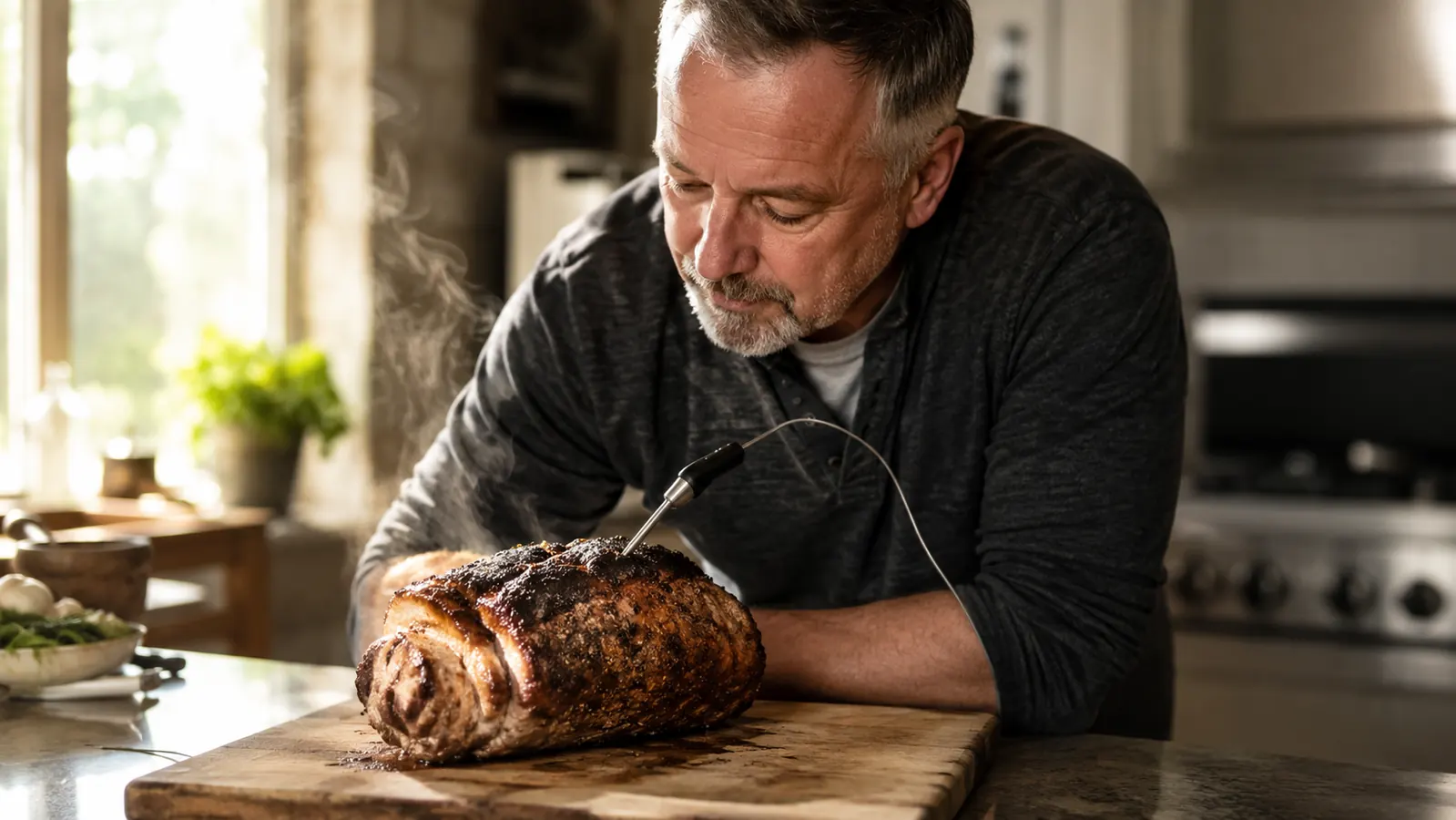
My Sunday roast used to be a coin flip. Same cut, same pan, same oven, and it came out medium-rare one week and dried to shoe leather the next, because I was cooking to the timer instead of to the meat. A TempPro TP19H instant-read thermometer, the same probe that sold for years under the old ThermoPro name, put an end to that the first Sunday I used it. I trust instruments. I would not fly a pattern without reading the gauges, and it never made sense to me to give the most expensive meat of the week a guess instead of a number. This is the plain list of why a probe beats every timer, poke test and palm trick I trusted for thirty years.
I am not a chef and I do not want to become one. I want chicken thighs at 170 so they actually get eaten, a pork shoulder that pulls instead of fighting the knife, and a burger I do not have to saw in half to check. The TempPro TP19H does all three with a one-second read, wakes by motion, and lives in the drawer next to the tongs. Nothing here needs a culinary degree. It needs one number read in the right spot and a minute of patience while the meat rests. Here are ten specific reasons it stopped dry meat for good.
Stop Cooking to a Timer That Never Met Your Oven
The TempPro TP19H reads the meat in about a second and shows you the number that actually decides dinner. Check today's price on Amazon and end the guesswork.
Amazon Check Today's Price on Amazon →The Ten Reasons
It tells you when, not what the recipe guessed
A recipe gives you minutes, and minutes are guesses about your pan, your oven, your altitude and the exact thickness of the cut. A probe skips all four. When the TempPro TP19H reads 130 in the center of a thick ribeye, I pull it, whatever the recipe claimed, because that recipe was written for someone else's kitchen. Mine is a gas oven that runs hot on the left burner and a cast iron skillet that holds heat like a bank vault. Neither one cares what the recipe says.
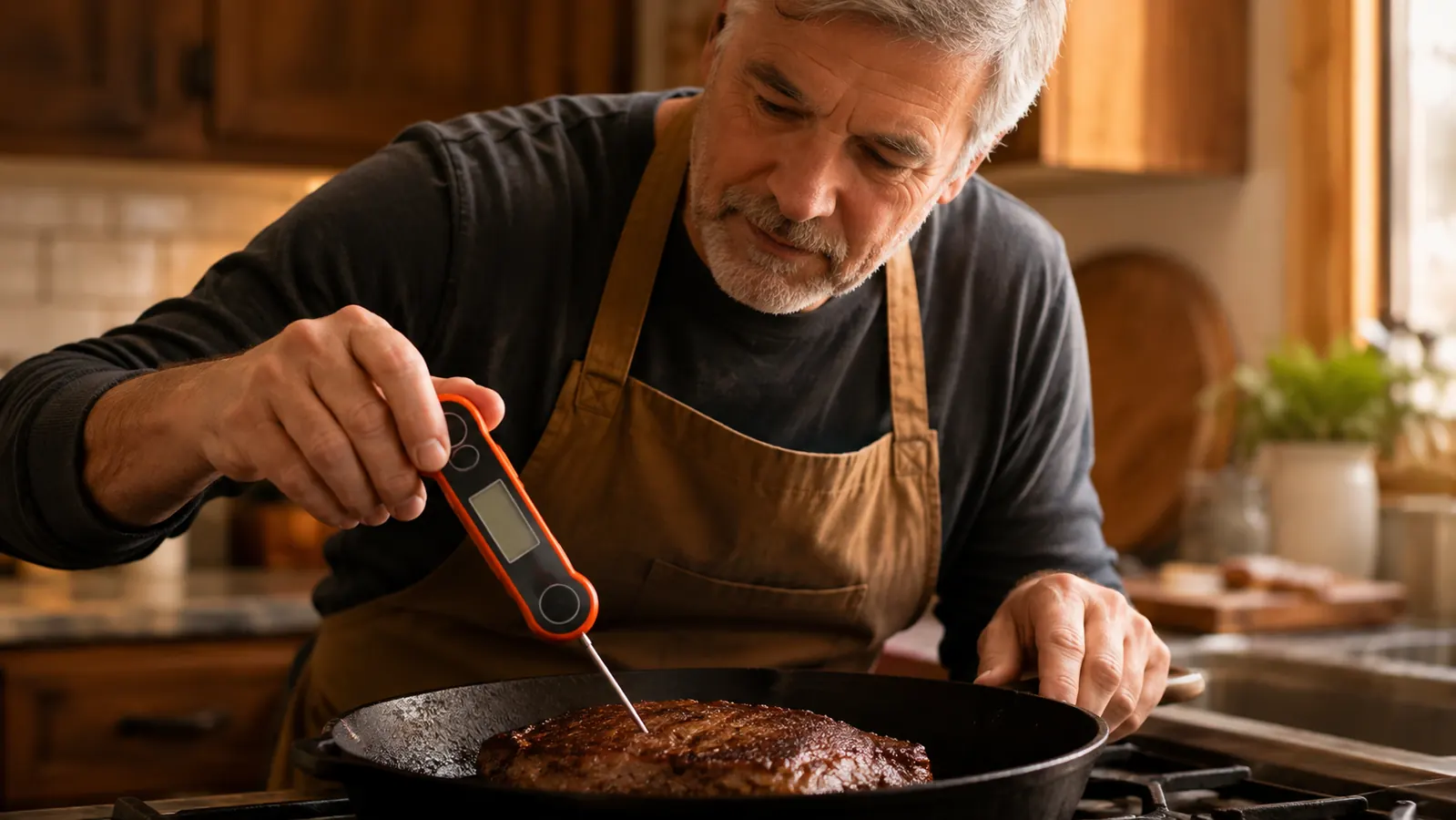
It retires the poke test for good
The poke test compares the meat under your finger to the meat on your hand, and my hand never once told the truth. Firmer means more done, supposedly, so my steaks ran medium-well for a decade. A one-second read at the thickest spot is a hard number I can write down, not a guess about muscle tone. Cooking to my own hand instead of to the meat is how I built ten years of medium-well steaks and called it practice.
It shows you the carryover you always forgot
A big roast keeps climbing five to ten degrees after it leaves the heat. Pull a bone-in ribeye at 135 and it settles at 140 on the board, which is perfect. Pull it at 145 and it walks past medium. The TempPro TP19H gives me the number I am actually working with, so I can pull early on purpose instead of by accident. The carryover grows with the size of the roast, so it matters most on the exact meals that used to go wrong.
It makes cheap cuts taste like expensive ones
Pork shoulder and chuck go on sale for a reason, but only if you finish them at the right number. Pull a shoulder at 203 and it shreds like a pulled-pork poster. Pull it at 178 because the timer said so and it slices into something that fights the knife. Buy the cheap meat, cook to the probe, and eat like the pricey stuff. That is the whole trick to cheap meat, and it costs nothing but one number read twice.
It handles thick and thin meat on the same fire
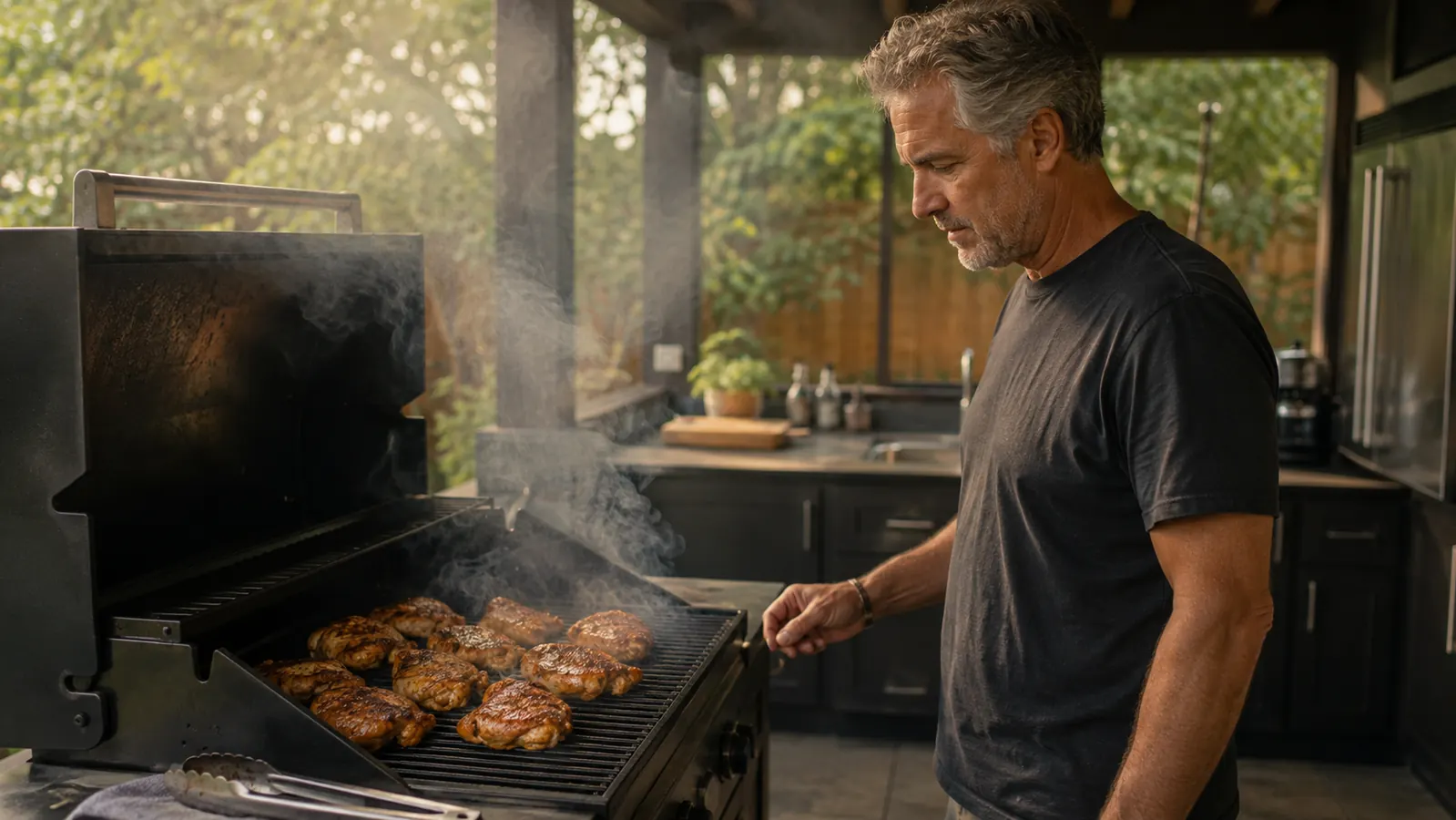
One chicken breast at a full inch and another at half that means the thin one is done five minutes before the thick one. On a gas grill that is a whole trip across the patio with a spatula. I probe each piece where it counts with the TempPro TP19H and pull them one at a time. Nobody eats dry chicken at my house anymore. Separate pull times stop being a chore you skip once the checking takes a second.
It nails the oil and candy temps your nose cannot
Frying oil needs 350 to 375 and candy needs 235 to 310 depending on the stage, and neither has a reliable smell. Guessing the oil is how I learned what a smoking kitchen looks like twice in one summer. The TempPro TP19H reads the oil in about a second, so the first batch goes in at the right number every time. If you fry more than once a month, that alone earns the drawer space.
It makes resting real instead of routine
A thin steak needs almost no rest and a three-pound roast wants a full fifteen minutes, and I used to give everything ten out of habit, which meant cold food on the table. Now I pull the big roast early, probe it as it rests, and carve when it settles where I wanted it. Resting is where a good share of the tenderness comes from, and you can only hit it when you know where you started.
It saves the holiday bird once a year, every year
A fourteen-pound turkey is exactly where timers fail, because the cavity cooks ahead of the breast and the breast ahead of the thigh. One probe in the thigh at 175 and the white meat lands at the same moment, and that is five straight years on my table. That single Thanksgiving paid for the thermometer, and it has not missed one since. It is the proof I hand to friends who still cook the bird on the pop-up.
It makes reheats stop being a gamble
Leftover roast and last night's lasagna come up at different speeds, and the two-minute default gives you lava one day and cold mush the next. I probe the thick part as it warms: 140 is eating temperature, and the TempPro TP19H tells me when it arrives, so the microwave gets one stop instead of seven. Reheating deserves a probe more than first cooking does, because nothing down there warns you from the inside.
It costs less than one ruined roast and keeps working
I checked today's price before writing this, and it lands right about where a decent steak dinner for two costs. One ruined large roast covers that, and then some. The TempPro TP19H has sat in my drawer for years, wakes when you pick it up, reads in about a second, and I have changed the battery once. It is not the cheapest probe on the shelf, and it is far from the most expensive. It is the one that reads fast enough that checking feels like no effort at all.
What I'd Skip
To be honest about the other side: if you only cook frozen burgers and boxed pasta and never want to hover a probe over a pan, skip this, you will not miss it. And if what you really want is a probe that stays inside the roast and beeps at you from the garage, this is not that tool; you want a leave-in model with a wireless base unit. The TempPro TP19H is an instant-read: you poke, you read, you pull. Buy it for the active checking, not for remote alerts. If most of your cooking is quick weekday stuff where nobody fusses over the center of anything, you can pass on this and not suffer for it. The moment you start carving for company, the math shifts.
One probe in the thigh at 175 and the white meat lands at the same moment. That single Thanksgiving paid for the thermometer.
That is the whole case, in plain form. Whatever you cook this week, pull it at the number and rest it, and the dry-dinner problem is done. The TempPro TP19H is the cheapest insurance a meat-cooking person keeps in a drawer. One reading on Sunday night tells you more than any recipe page ever did, and that is the honest summary of the whole argument.
One Probe Ends the Guesswork for Good
A one-second read, motion wake, and the honest number that tells you exactly when to pull the meat. Check today's price on Amazon.
Amazon Check Today's Price on Amazon →