
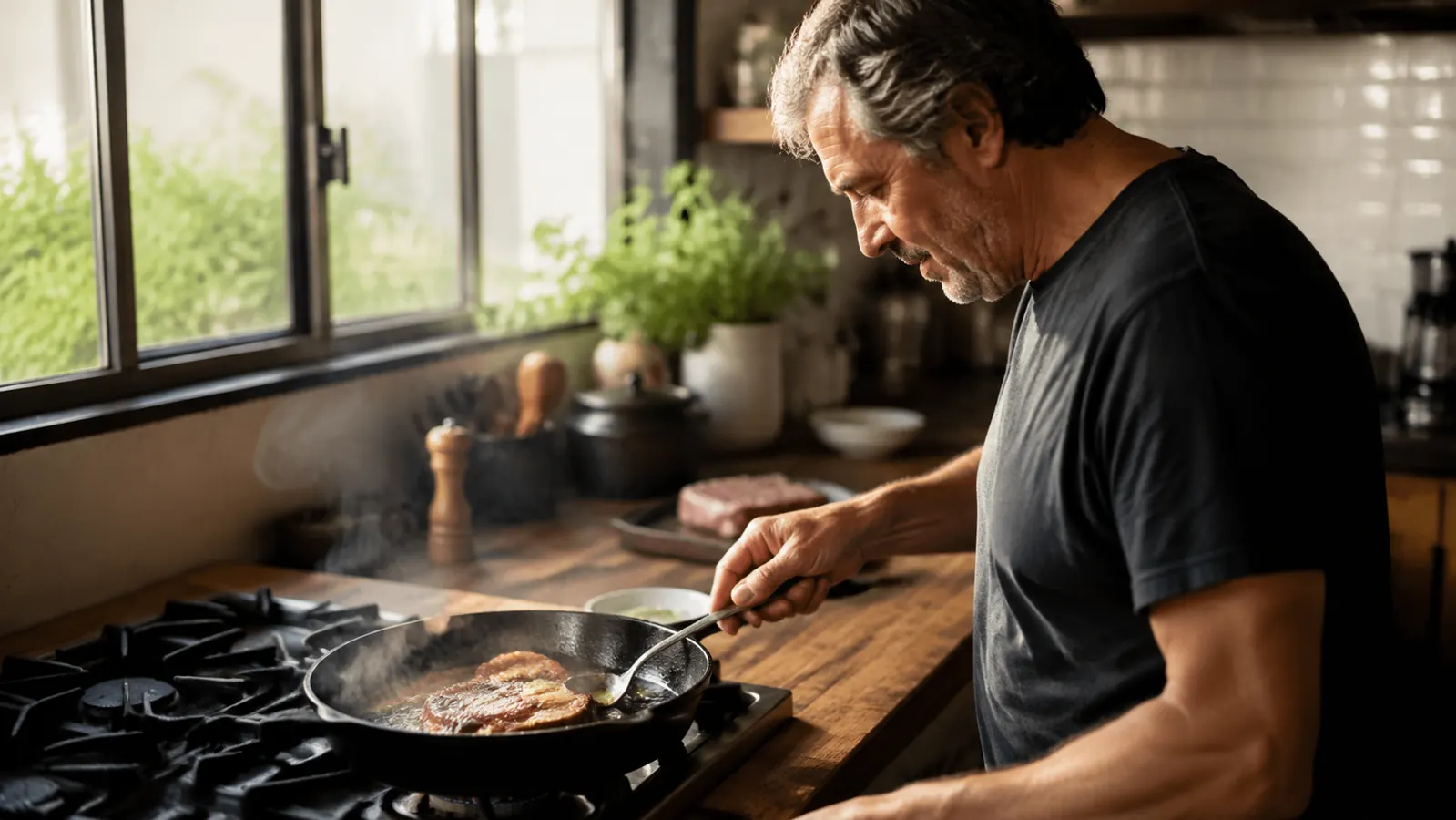
After my fourth nonstick skillet in eight years quit releasing eggs, I stopped being mad at the pans and got mad at myself. I had read every coating warning, I had babied the surfaces, and none of it mattered. I had bought the cheap nonstick, then the mid-range, then the expensive, and the expensive died exactly like the cheap one, just a season later. Meanwhile, the same cast iron pans in the camp kitchen and the hangar break room had been pounded on for decades, and nobody had ever mentioned replacing one. So a year ago I bought a 12-inch Lodge skillet and ran it head to head with the stainless steel pan already living in my kitchen, same burners, same meals, same weeknights.
Here is the straight short answer before the details. Buy the Lodge cast iron if you want a pan that sears the way a good pan should, costs about as much as a couple of dinners out, and will still be cooking when your grandkid moves out. Buy a stainless steel skillet if you do fast weekday cooking, want to deglaze a pan sauce without guilt, or refuse to hand-wash anything. Most kitchens should own both. If I could keep only one for the rest of my life, it is the cast iron, but that answer comes with real caveats, and the table below lays every one of them out straight.
How I Tested These Two Pans
Neither pan left my daily rotation for a full year. The Lodge did steaks, burgers, cornbread, fried chicken, hash, and camp breakfasts. The stainless handled tomato-heavy sauces, flaky fish, soft eggs, and every pan sauce worth making. I cooked for two on a gas range most nights and kept rough notes on what each pan did well, what it fought, and what it cost me in time and care.
I am a home cook in his 60s who would rather spend the weekend at a race track or working the hangar than babysitting cookware, so every minute of maintenance counts against a pan. What follows is what these two actually did in a working kitchen, not what the marketing says they should do.
| Lodge 12-Inch Cast Iron | Stainless Steel (Tramontina 12-Inch) | |
|---|---|---|
| Price | A one-time buy at today's price for a 12-inch pan that outlasts you. | Costs more up front, a real value in stainless but still more than the iron. |
| Weight | Roughly 8 lb empty. It is a strength test to lift and flip one-handed. | Roughly 4 lb. Your wrist knows the difference by the second dinner. |
| Heat retention | Soaks up heat and holds it. A steak keeps searing with the burner off. | Holds heat fine for stainless, but dips when cold meat hits the surface. |
| Temperature control | Sluggish both ways. Minutes to heat, stays hot long after you power down. | Reacts in seconds. Kill the heat and the pan backs right off. |
| Cleaning | Scrape, rinse, dry on a burner, thin oil coat. Never a dishwasher. | Hot water and a sponge. Dishwasher safe and it will not rust. |
| Maintenance | Seasoning is a small system. Acid strips it and bare iron hunts rust. | Nothing to protect. Heat tint scrubs back and the surface recovers. |
| Acidic food | An all-day tomato sauce strips the seasoning and can add an iron edge. | Simmer tomatoes and deglaze with wine all night with no complaint. |
| Oven use | Oven safe past 500 degrees F once you pull the silicone handle holder off. | Oven safe to about 500 degrees F, handles and all. |
| Longevity | A hundred-year pan if you do not drop it on tile. | A strong decade or two, with warping the main risk. |
| Best for | Searing, frying, cornbread, anything that wants steady, brutal heat. | Fast sautes, delicate fish, pan sauces, weeknight speed. |
Where the Lodge Cast Iron Wins
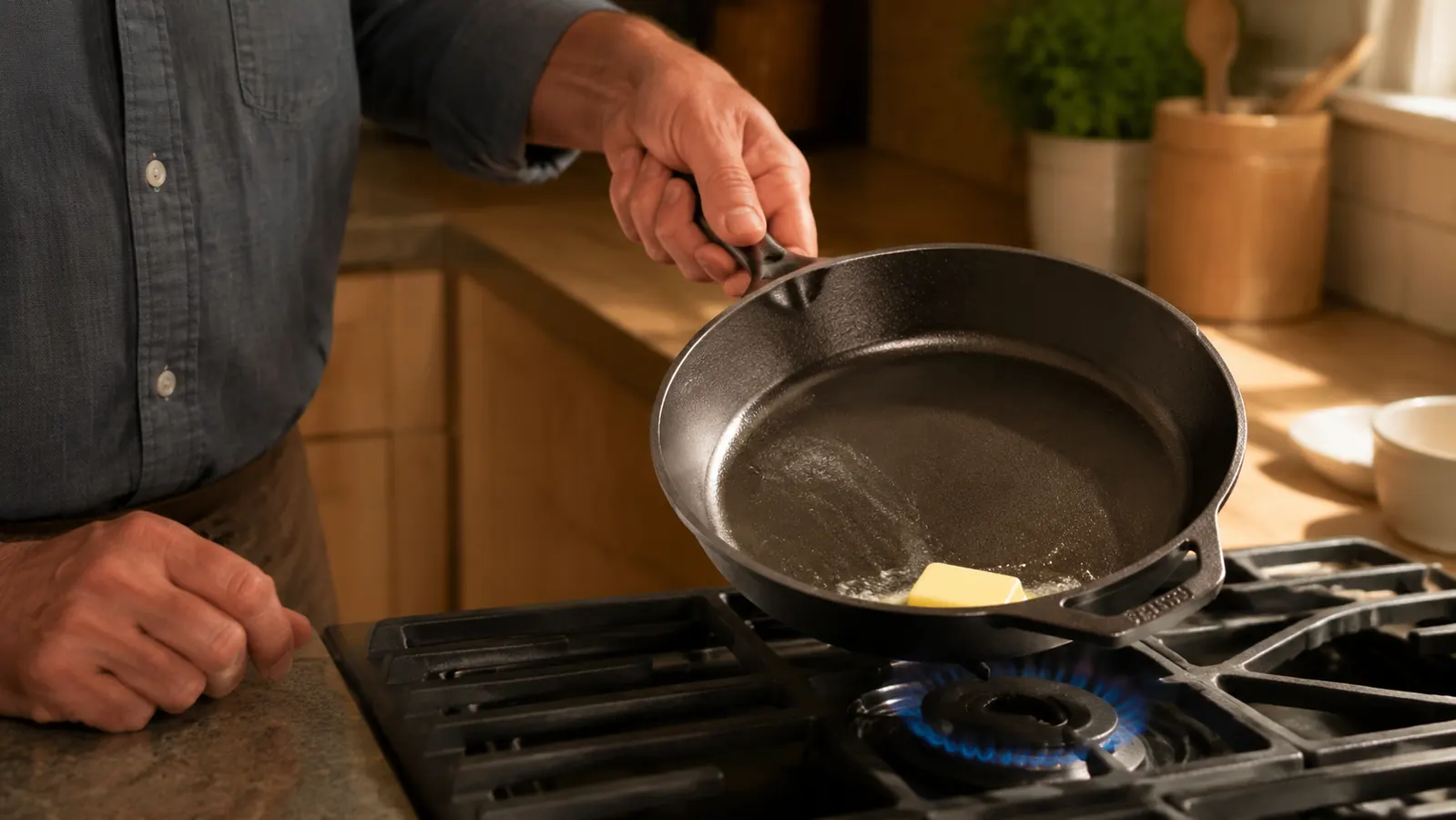
The Lodge wins on the only thing that matters when I want a serious sear: stored heat. A ribeye hits the hot surface and the pan does not care, because there is so much heat banked in eight pounds of iron that the meat keeps browning while its center comes up to temp. That is what builds the crust that makes a modest cut eat like one three times its price, and the browning keeps going for a good three minutes after the meat lands, so even a busy cook gets the result without hovering. My stainless pan sears well, but it visibly dips the moment the steak touches it, and it punishes me if I skip a patient preheat.
It also wins the infantry work of the kitchen. Cornbread baked in a hot cast iron skillet comes out with a buttery crust all the way around the pan, which a baking dish simply will not do. The Lodge goes from burner to a 450-degree oven to the table, and it keeps a meal warm at the table for half an hour. Then there is pizza: I preheat this pan in the oven, dock the dough, and slide it under the broiler, and the crust comes out with the same brute force a baking steel gives. My stainless pan cannot touch any of that.
One honest note on the weight, since it is the first question anyone asks. Eight pounds of iron is a real pan, and if your wrists or shoulders are done with heavy, that alone is a reason to look at stainless. I cook mostly with my right hand and I still lift the Lodge with two hands most of the time. The trade is that you feel the mass in the sear: the pan throws heat at the food instead of just sitting under it.
Where the Stainless Steel Wins
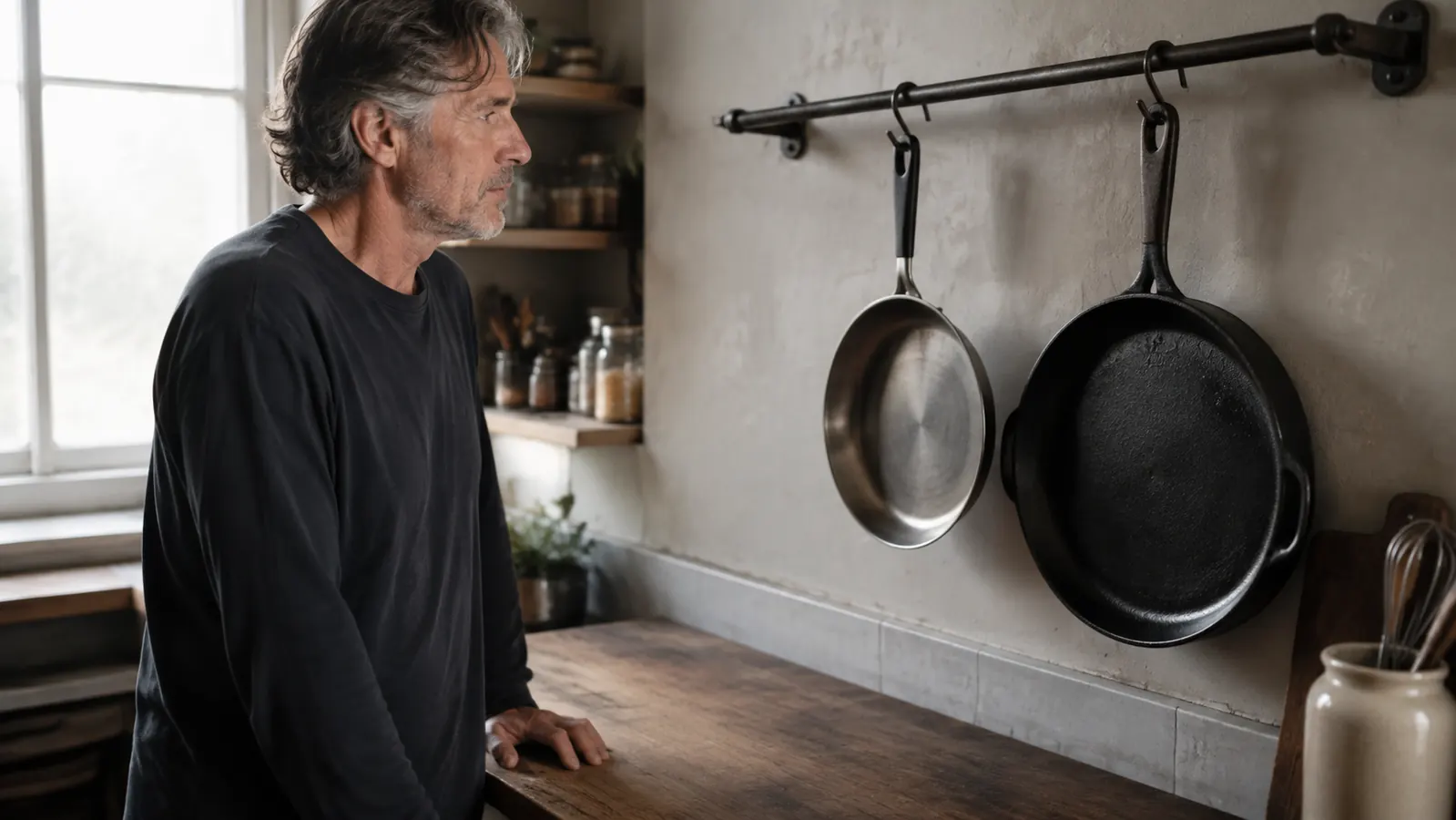
Stainless wins every minute that speed and control count. When I want to go from cold to hot in two minutes, or kill the heat and stop the cook exactly on time, stainless answers immediately. The Lodge is a freight train, slow to build speed and slow to shed it, which is exactly wrong for flaky fish, soft eggs, and anything else where I am racing a timer. For Tuesday-night speed, the stainless is the easier pan, no contest, and the Tramontina tri-ply I picked is one of the better values in stainless cookware.
It wins again on the pan sauce. After a chicken saute, a splash of wine into the fond, a quick scrape, and a lump of butter, and I have a two-minute sauce that stainless does perfectly, because it builds fond and controls the reduction. Cast iron can do the same, but the wine is nibbling at the seasoning at exactly the moment I am trying to look like a hero, so on date nights the stainless does the saute and the Lodge waits for the weekend steak. And then there is cleanup: after a meal like that the stainless goes in the dishwasher while the Lodge gets scraped, rinsed, dried on a low burner, and oiled. That is eight minutes of work I do not always feel like doing at ten at night.
Care, Cleaning and the Daily Routine
The real divide between these pans is not cooking, it is upkeep. Cast iron asks you to learn one small routine and never skip it: scrape, rinse, dry over low heat, rub on a few drops of oil. Do that every night and the pan gets better for a decade. Skip it for a week and you are hunting rust and a sticky surface. Stainless only asks that you not leave tomatoes in it for a weekend, and even then it recovers with a scrub. If you already know you will never hand-wash a pan, the choice basically makes itself.
The flip side is that the routine pays. A year in, my Lodge's seasoning has built into a slick, deep finish that releases eggs without a fight, which surprises people who assume cast iron always sticks. The stainless has a light heat tint from a few over-ambitious preheats, cosmetic only, and it scrubs back clean. Neither pan has failed me in a year. They are simply different animals for different nights.
What 21,000 Reviews Actually Say
The Lodge sits at 4.7 stars across more than 21,000 Amazon reviews, a number that usually promises either a genuinely good product or a well-bought pile of fluff. Here it is the real thing. The recurring complaints in the reviews are the same three I kept running into myself: the weight, the slow preheat, and the rookie-seasoning panic. Every one of them is a usage issue, not a defect, and each one disappears after two weeks of ownership.
The few genuine defect complaints are the ones cast iron owners in general should hear. A pan dropped on tile can crack, and the factory pre-season can arrive with a rough patch here and there, which the reviewers flag loudly. Neither has happened to mine, and both would be obvious the day it arrived. This is stamped iron with molded handles, a working pan, not an heirloom art piece, and that blunt honesty is a big part of why the ratings stay high.
If You Want One Pan That Outlives Your Oven
The 12-inch Lodge is the pan I reach for every time a crust matters. It sears, it bakes, it lasts, and at today's price it costs less than two dinners out. The full year of notes is in my long-term review.
Amazon Check Today's Price on Amazon →What Not to Overthink
People overthink two things. The first is seasoning: it is oil and heat, and it self-heals, so stop treating it like a science project. The second is health claims, which come up constantly online, and the honest answer is that both pans are fine for normal daily cooking. Cast iron adds a trace of iron to acidic food, which only matters if a doctor has told you to watch your iron, and stainless steel is a neutral workhorse. Pick the pan for the job, not for a rumor thread. And drop the idea that you need a premium skillet to cook well: the Lodge is proof that a budget-priced pan can be the best tool in the drawer.
When You Leave the Stovetop Behind
This is where the cast iron separates itself for anyone who cooks outside the kitchen. My Lodge travels: to the camp kitchen, onto the grate over coals, into the smoker, and under the broiler of a borrowed cabin oven. Stainless does fine on a normal stove, but nobody I know carries stainless to a weekend camp, because a thin steel pan does not want to sit on an unsteady coal bed and does not forgive a flare-up. The iron shrugs all of it off. If it scorches or strips, you scrub it, re-season it, and move on, which is exactly what you want when you are three drinks into a camp weekend and nobody is following a care chart.
There is a mechanic's version of this same truth. In the hangar I would rather have a heavy socket that cannot be broken than a light one that fits every adapter, and the Lodge is that socket. It is not the most elegant tool on the bench, it does not do everything, but the jobs it does, it does the same way every single time, and it refuses to die. That is a rare quality in any piece of kitchen gear, and it is the whole reason the cast iron keeps the permanent spot in my kitchen.
Who Should Buy Which
Buy the Lodge cast iron if you cook steaks and chops, if you bake cornbread, if you want one pan that travels from stovetop to oven to table, or if you want cookware you can hand to your kids. Buy the stainless if you cook fast and light most nights, if you refuse maintenance, or if your dishwasher is part of the weekly plan. Buy both if the budget allows, because they cover different jobs and neither one fully replaces the other.
Where I landed after a year: the Lodge lives on my stovetop full time, and the stainless stays in a lower drawer for the nights I am in a hurry. If you have never cooked on cast iron, plan on one week of learning its heat personality. After that, the upkeep is eight minutes a night, and honestly it becomes a small ritual I look forward to the way I look forward to a thorough preflight check.
Here is the summary in plain terms, the way I wish someone had handed it to me years ago. Cast iron is not hard, it is just different. It rewards patience, and the payoff is the best searing pan money can buy at any price. Stainless is the practical workhorse for a busy household. If you want one answer, buy the Lodge first, because it is the pan that will still be in your kitchen in thirty years. For every gripe I have about it, the long-term review and the honest review cover the details; this page is about choosing between the two materials, and the choice is easier than people make it.
The One to Start With
For searing, for bakes, for a pan that outlasts every appliance around it, the 12-inch Lodge is the first pan I would buy and the last I would give up.
Amazon Check Today's Price on Amazon →