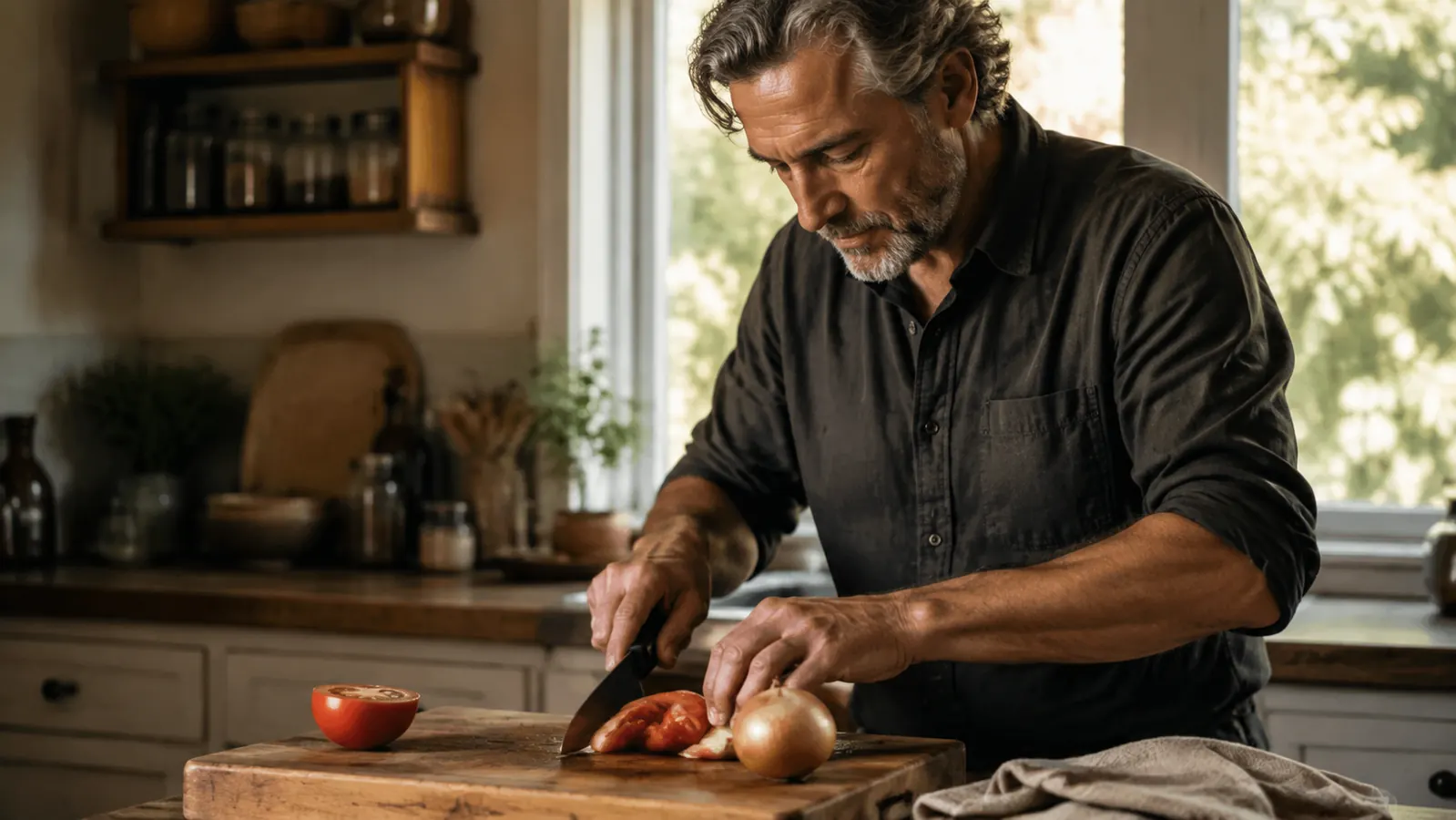
You have bought a cheap chef's knife two or three times a decade since the late eighties, same as I did. The edge rolls in the first week, you touch it up on the stone, it comes back for a month, and then you are sawing through a tomato again, so you buy another. I kept that cycle running until I bought one forged, full-tang knife and stopped. For the last year that knife has been the Wüsthof Classic 8-inch, and it has cost me less of my time than any knife I have owned. I kept a running log on every prep for the long-term review, and this is the honest short version of what that year taught me.
A forged knife looks like a lot of money when all you have used are stamped blades. I thought the same for thirty years, and it cost me several knives and a lot of bad cuts. Here are the ten reasons it is actually the cheaper buy, in the order I would explain them to a friend who is about to waste another cheap knife at the department store. Every one of these is something I have lived with for a year, not a feature I read off the box.
Quit the Dull-Knife Cycle for Good
The Wüsthof Classic 8 has been my daily prep knife for a full year and I have sharpened it once. If you want one good knife that holds an edge instead of a drawer of disposable ones, check today's price.
Amazon Check Today's Price on Amazon →One Solid Piece of Steel, Handle and All
The tang is the strip of blade that runs inside the handle, and on the Wüsthof it runs the full length. That makes the handle part of the blade, not a separate piece glued on. A stamped knife is thin steel with scales riveted over a stub, and those rivets work loose over time. I have never had the handle on a full-tang knife move, which is more than you can say about the last cheap knife you owned. Pick it up once and you feel the difference before you ever cut with it.
The Weight Does the Cutting for You
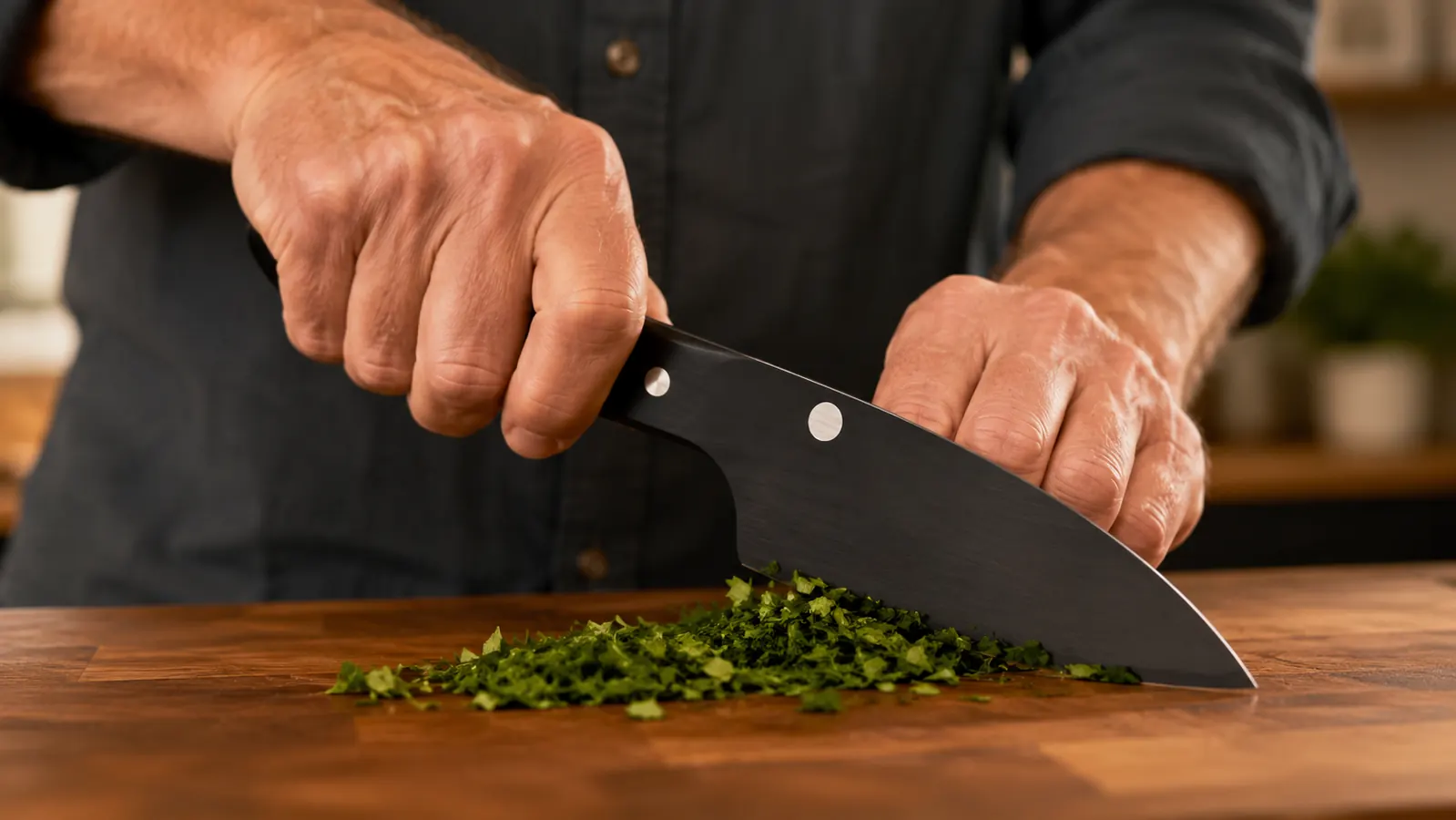
An 8-inch forged blade carries real steel right where you need it, so it drops through food instead of you forcing it. Butternut squash, sweet potatoes, a whole cabbage for slaw, they all part under their own weight. It is the same idea as flywheel effect on a heavy crank: momentum carries the work and the blade holds speed all the way down. You stop sawing and start slicing, and that is not a small thing on a busy prep night.
It Holds Its Edge Between Sharpenings
Wüsthof forges this blade from X50CrMoV15 German stainless, hardened to a 58 Rockwell rating. In plain language, the edge resists rolling, so it stays useful between honings instead of dying in a week. My stamped knives needed a real sharpening every month just to stay mediocre. This one has needed one proper sharpening in a year of daily use, and I stopped keeping track of the calendar long ago.
It Is Cheaper Over Ten Years Than the Cheap One
Spread the cost out and the forged knife wins by year five. A stamped knife at today's price, replaced every eighteen months because the edge rolls, outspends the Wüsthof long before a decade is up, and you still finish each cycle with a dull blade. The forged knife is bought once and paid for. Expensive up front, cheap over the long haul, which is exactly the kind of math I respect in a garage or a hangar.
The Bolster Keeps Your Fingers Off the Edge
The bolster is that thick collar where the blade meets the handle. It stops your hand from sliding forward while you work and it anchors the grip in the same place every time. Mincing four onions for chili or dicing a bag of carrots on a Sunday, my fingertips have never once been near the blade. That is a safety feature you only notice when you no longer need it.
It Gets Re-Ground Instead of Thrown Away
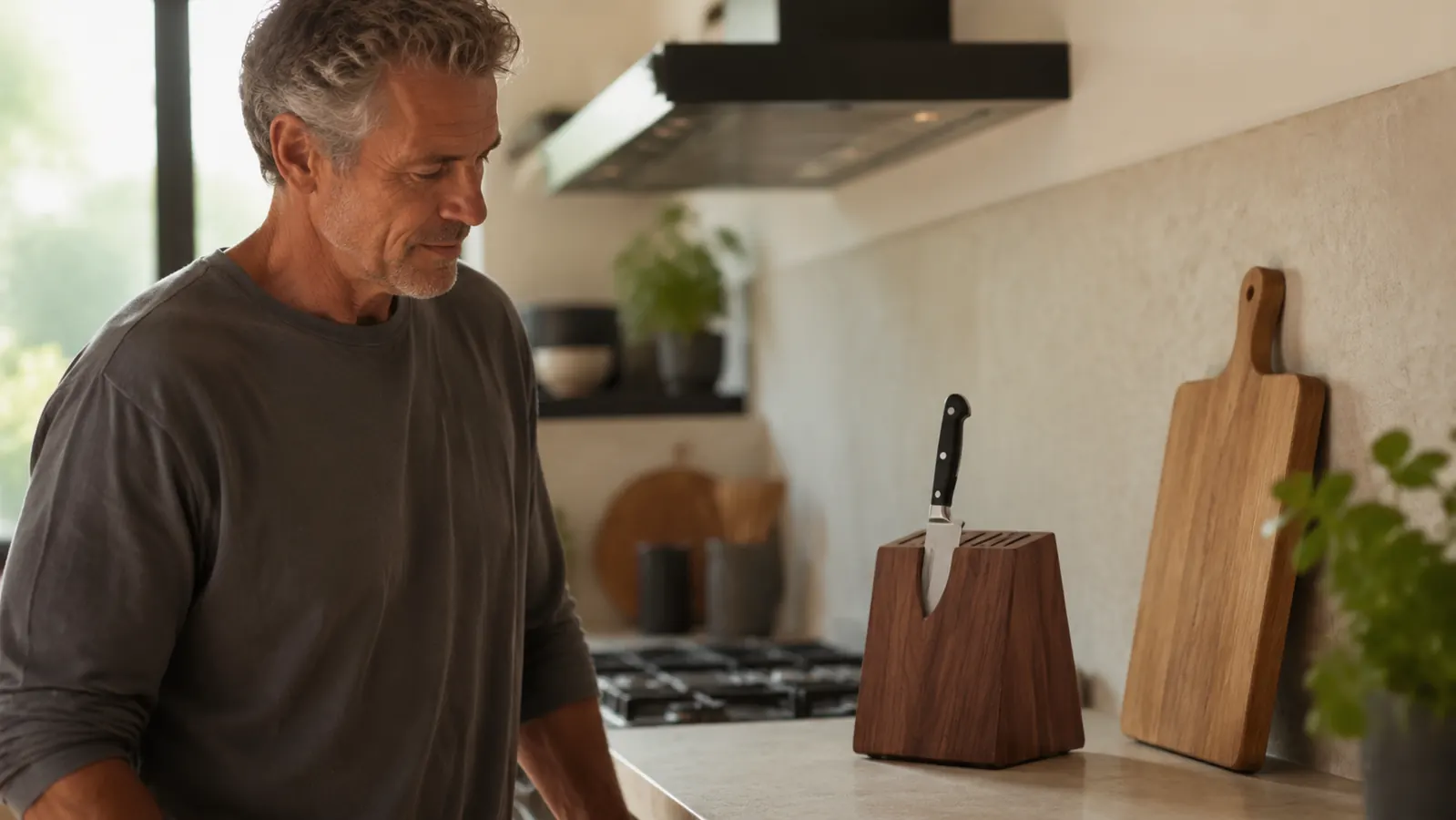
When the edge finally chips or the profile wears down, a knife with real steel behind the edge gets re-ground on a stone and comes back to shape. A stamped blade is too thin to re-profile, so it goes in the bin. That repairability is why forged knives get passed down instead of replaced. Mine will outlive my kitchen, and I have stopped thinking of it as a thing that has a life span.
Comfort That Holds Up All Day
The handle is shaped to sit in a hand without hot spots, and the balance means you are not fighting to hold the blade up. I spend one Sunday a month trimming brisket and dicing four pounds of peppers for a race-weekend cookout. My grip hand is not cramping when it is done, and no spec sheet tells you that. It is the kind of thing you only learn by slicing for three hours straight.
A Stiff Blade That Cuts Straight
A forged blade is thicker and stiffer than a stamped one, so it does not flex or rock when it meets something dense. That stiffness is the difference between a straight cut through a firm squash and a blade that bends and wanders off line mid-cut. If you have ever cursed a knife for veering on you, this is the fix, and it comes from the steel itself rather than anything you have to do.
Thirty Seconds of Honing Is the Whole Routine
Honing and sharpening are different jobs, and a hard German blade responds to the cheap one. Run the edge down the steel rod five times per side every couple of days and it stays trued up. I sharpen on the stone twice a year now, and that is the entire maintenance budget on this knife. The endless sharpening sessions of my stamped-knife years are gone, and I do not miss them.
You Will Cook More From Scratch and Like It
The honest one. When the knife cuts clean you stop dreading prep, so you cook more from scratch and buy less convenience food. I break down whole birds and make stock instead of buying parts, and the knife is why it does not feel like a chore. That habit change is worth more than the knife itself, and it is the reason I keep recommending this one over anything cheaper.
What I'd Skip
The honest part. If you cook twice a week or less, or if you refuse to touch a steel rod or a stone, buy a good stamped knife like the Victorinox and do not feel bad about it. And the Wüsthof is not a set-and-forget tool. It does not go in the dishwasher, it does not sit wet in the sink, and it wants thirty seconds on the steel now and then. My long-term review covers all of that in detail, and the sharpening guide walks through the whole home routine if you want it. But if you cook most nights and you are tired of buying knives, buy this one once and close the file.
So is it worth the money? After a year, yes, and it is not close. I paid the stamped-knife tax for thirty years and got a drawer full of dull blades for it. The Wüsthof quietly engineered that whole habit out of my kitchen. If you want one good knife and you plan to keep cooking for the next decade, this is it, and the only number that matters is how many knives you will not buy anymore.
Thirty seconds on the steel every few days, one real sharpening in a year, and the blade still lands flat on a ripe tomato.
One Good Knife Beats a Drawer Full of Dull Ones
The Wüsthof Classic 8 has been my only chef's knife for a year, and it is the last one I expect to buy. If that sounds like your kind of tool, check today's price and close the file on cheap knives for good.
Amazon Check Today's Price on Amazon →