

For thirty years my fridge was a museum of Tupperware without lids, lids without bottoms, and the occasional white bowl holding something that had gone well past guessing. Every Sunday the same ritual: open the door, catch a smell I could not place, and throw out three containers of food I could not remember cooking. My wife called it the graveyard. I called it the graveyard too, which is perhaps the most damning part. A fridge that neat should hold food, not archaeology.
The problem was never my cooking, and I say that without flattery to myself. It was storage. The lids did not seal, the plastic drank in smells, and because every container came from a different clearance rack or holiday turkey tray, nothing stacked. A casserole dish balanced on a bowl balanced on a takeout container, and the whole pile swayed when the door swung open. Anything with a real seal would have been an improvement. Most of it never sealed at all.
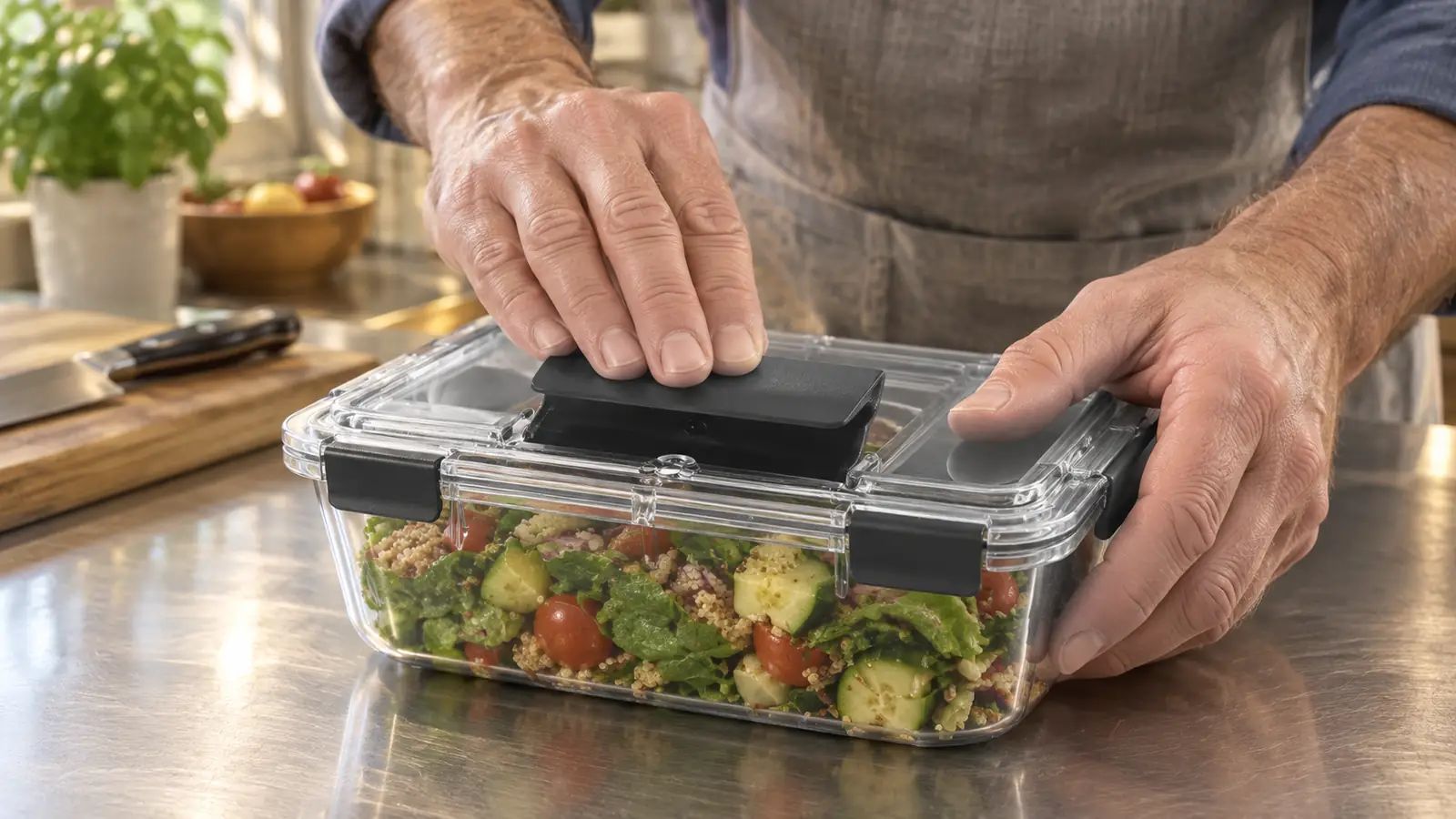
What finally changed my kitchen was not a renovation, because my wife would have vetoed one anyway. It was a ten-piece set of Rubbermaid Brilliance containers that my daughter dropped off after sorting out her own kitchen. 'Try these, Dad,' she said, 'these actually seal.' I gave them the look I give anything a kid calls an upgrade, the same look I give a new part for a race car someone assures me is better. Two weeks later I quietly ordered a second set.
The difference is the lid, and I am not being dramatic. Every other container I own seals with a vague push until it sort of sits there. The Brilliance lid has four plastic latches around the rim and a gasket set into the lid itself. Press the center, each latch clicks, and it is sealed the way a Mason jar is sealed, full stop. The day the set arrived I turned one upside down with soup inside just to check. Not a drop, and I have repeated that check a dozen times since.
I abuse test kitchen stuff the same way I test shop gear before a long flight: if it survives my handling, it qualifies. The Rubbermaid containers spent a weekend sideways in a cooler on the way to the hangar, went into a fridge door crammed behind jars, and one small one rode the truck door pocket for a week holding olives and brine. Every one of them sealed, every time. Nothing leaked, nothing wept, nothing grew a smell.
The second thing that sold me is clear plastic. Brilliance is Rubbermaid's optical-clear line, and seeing into every box is the quiet superpower here. Pot roast on the middle shelf, rice behind it, Thursday's chili down low, all visible the second the door opens. Nothing hides, so nothing dies in the back corner. The shelf my wife and I used to call the event horizon is a shelf now, and she notices the difference most, because she runs the actual kitchen in this house.
I turned a Rubbermaid Brilliance container upside down with soup inside just to check the seal. Not a drop, and I have repeated that test a dozen times.
The Set That Finally Sealed My Fridge
Five containers, ten pieces, four-latch lids that seal like a jar and clear walls that show you Thursday's chili. This is the exact set that ended the graveyard in my kitchen.
Amazon Check Today's Price on Amazon →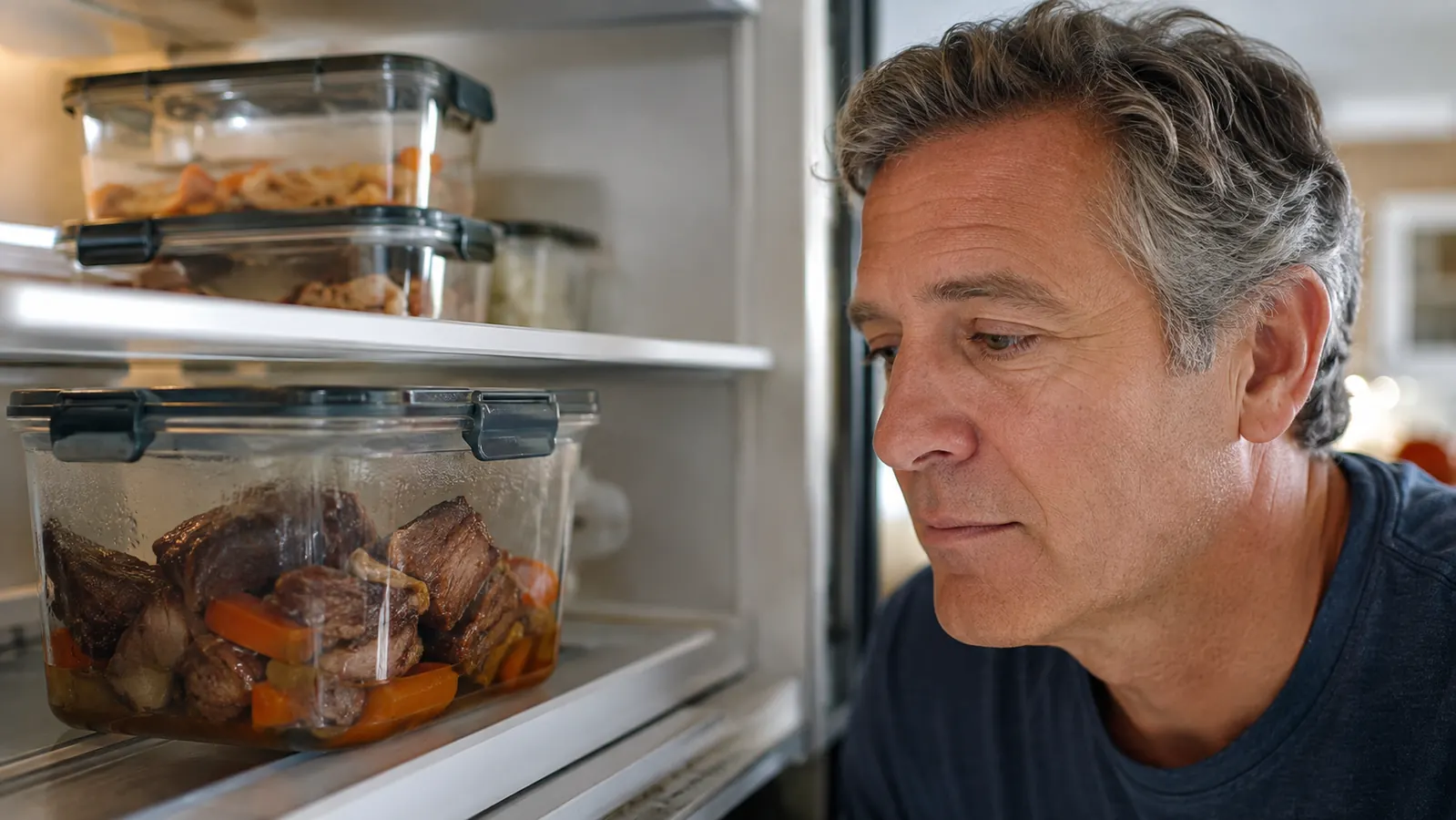
Stacking is the other half of the clean-up. Five containers share one footprint, they nest when empty, and they stack without wobble when full. Three live on the pantry cereal shelf, two more in the meat drawer, and nothing leans on anything. In a fridge where every inch has a job, that is real shelf space back. Getting space back was half the fix, to be honest, because a tidy fridge is easier to keep tidy.
Now the honest part, because you have earned it. After six months of daily use, tomato sauce left a faint orange tint on one of the small bases. It is cosmetic, it comes down with a warm soak, and it stays away if I rinse tomato things promptly. The latch on one lid also clicks a little looser than it did on day one, and I expect one day it will spring, but the container will still seal on the other three. These are real nicks. They are nothing compared to wrestling a cracked takeout container full of last week's casserole.
Care is plain. These go on the top rack of the dishwasher, though I hand wash most of mine because I already bought one set and I would rather not buy a third. They are BPA-free, freezer safe, and microwave safe without the lids, which matters because nothing in my house gets put away hot. The lids go in the dishwasher every time and they have not warped, not once, in six months. Worn parts arrive free through Rubbermaid's warranty program, which I have not needed yet, but it is the kind of backing that stops me from shopping for a different rack of storage.
The real measure is what is missing. The graveyard is gone. The fridge has room in it, leftovers get eaten because they get seen, and I stopped buying food twice because I could not find what I already owned. For a guy who grew up eating casserole covered with a pan lid and a prayer, that is not a small thing. Some of the best kitchen fixes I have made cost more and did less.
What I'd Tell You If We Were Sitting at My Kitchen Table
Here is the plain version, the one I would give you across the table. Buy one set of Rubbermaid Brilliance containers, the ten-piece, and use them for two weeks. The latches will change how you store food, the clear walls will change how you shop, and you will toss a shopping bag of old lids on the way out. It is close to the cheapest clean-up of a real kitchen habit I have found in forty years of cooking, one purchase, explained once, done.
If You Buy One Storage Set, Make It This One
Rubbermaid Brilliance, ten pieces, leak-proof lids, and clear enough to see Thursday's chili. This is the set that cleaned up my fridge, and it can clean up yours. One purchase, explained once, done.
Amazon Check Today's Price on Amazon →